



Dragićević claims restaurants in northern Montenegro serve game meat, but inspectors found no irregularities

Inspections carried out at catering establishments in northern Montenegro found no game meat on the premises, nor any information in food traceability documentation indicating that it was being used, the competent inspectors from the Administration for Food Safety, Veterinary and Phytosanitary Affairs told ETV Portal.
Environmental activist Aleksandar Dragićević said during an appearance on the television programme “U retrovizoru” (In the Rearview Mirror), broadcast by Vijesti Television on 4 October, that some restaurants in the north of the country serve game meat, including venison, wild boar and products made from bear meat, both during and outside the hunting season.
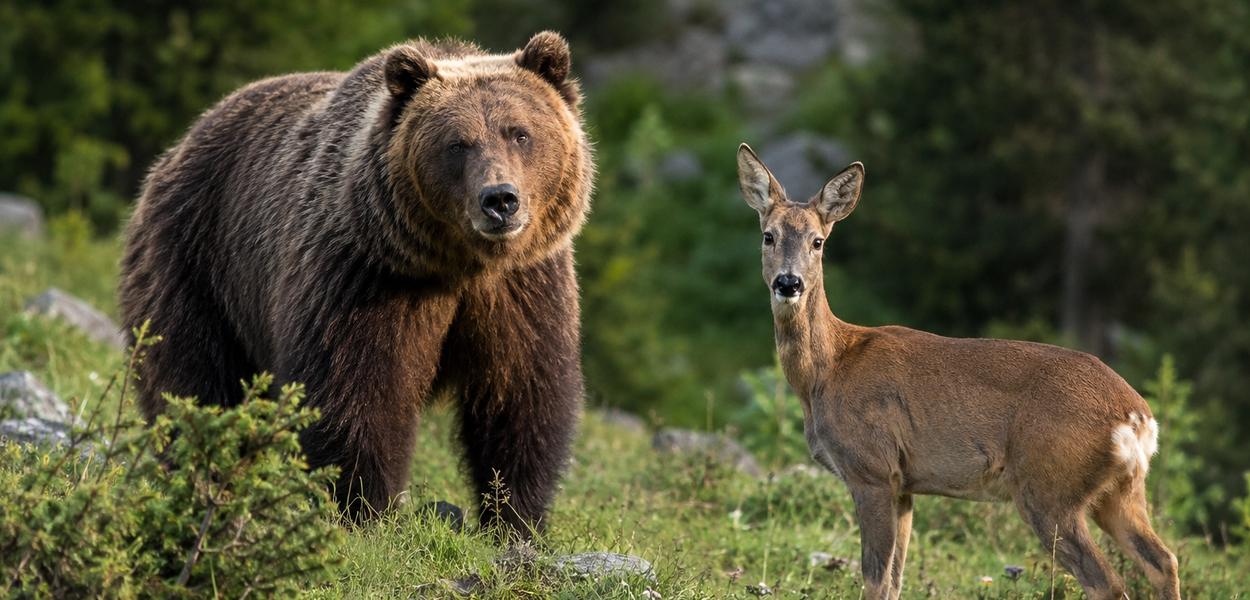
The Rulebook on Establishing the List of Protected Wild Plant, Animal and Fungal Species and the Procedure for Updating the List covers more than 540 animal species, including roe deer, bears, chamois and partridges.
Under the Law on Nature Protection, it is prohibited to capture, keep, possess, kill or disturb strictly protected wild animal species, particularly during breeding, rearing of young, hibernation and migration periods, at all stages of their life cycle. It is also prohibited to breed them, place them on the market, acquire them by other means or prepare them as specimens; as well as to buy, sell, transport for sale, keep for sale or offer for sale live or dead specimens, or any recognisable part or derivative thereof.
- There are restaurants in Šavnik, Žabljak, Mojkovac, Kolašin, Berane and Andrijevica where game meat is illegally served, both during and outside the hunting season. This includes venison, wild boar, bear-meat sausages, and venison and wild boar goulash. The competent inspection services, the state and the hunting sector are not monitoring this. Real hunters do not do this, but poachers certainly do - Dragićević stressed.
State Secretary at the Ministry of Ecology, Sustainable Development and Northern Region Development and a university professor, Zoran Dabetić, said he had not been aware of this information and called on all relevant inspection authorities to conduct field inspections and establish the facts.
- I am from Berane, and this meat is certainly not served in that town. This is undoubtedly part of poaching. Within the scope of my responsibilities, I can discuss having inspection services, such as the market and sanitary inspectorates, go out into the field - Dabetić said at the time.
Activities during the summer season
Meanwhile, inspectors from the Administration for Food Safety, Veterinary and Phytosanitary Affairs maintain that they conducted field inspections throughout the summer season and did not identify any of the alleged irregularities.
Chief Food Inspector Biljana Blečić told ETV Portal that the Food Inspection Service had participated in coordinated joint inspections in coastal municipalities and the aforementioned municipalities in northern Montenegro.
- An examination of the documentation concerning the origin of raw materials and food used to prepare meals at the inspected catering establishments (hotels and restaurants) in Žabljak and Šavnik found no evidence of game meat in incoming documentation, including receipts, invoices and food-receipt records, or in storage equipment such as refrigerators and freezers. None of the inspected establishments offered dishes containing game meat - Blečić replied to our portal. During the season, she was responsible for the municipalities of Žabljak, Šavnik, Plužine and Pljevlja.
Veterinary inspector Ćazim Nurković provided us with similar information concerning the municipalities of Kolašin, Andrijevica and Berane.
- With regard to the questions submitted concerning claims about the origin of game meat served at catering establishments in the municipalities of Kolašin (during the past summer tourist season), Andrijevica and Berane, which fall under my inspection remit, I would like to inform you that none of the inspections carried out found game meat at any of the catering establishments. This was confirmed by examining the quantities of meat found on the premises and the traceability documentation for products of animal origin made available to the inspector - Nurković stated in his response to ETV Portal.
Imported game meat subject to the same conditions as meat from other animal species
Blečić explained that, at all establishments where food is produced, processed, handled, prepared or sold, whether processed or unprocessed, the Food Inspection Service is responsible for verifying whether food business operators comply with the prescribed safety requirements established by law.
- One of the key requirements is that food business operators must have proof of origin for every product they use in food production and preparation, regardless of whether it is of animal or non-animal/plant origin. This includes beverages, spices and even materials that come into contact with food, such as utensils, foil, packaging bags and similar items. Food may originate from imports or from registered and approved domestic food establishments - she explained.
Blečić also noted that game meat is imported into Montenegro under the same conditions as meat from other animal species. She explained that, to be eligible for import, the meat must originate from approved establishments and be accompanied by a mandatory veterinary certificate.
- Wild game, whether free-ranging or farmed, including certain species of ungulates and birds, is subject to mandatory inspections after hunting, in accordance with the prescribed rules, before being placed on the market in the same way as all other types of meat - Blečić concluded.