




EU Delegation in Montenegro: Establish the Central Election Commission without further delay

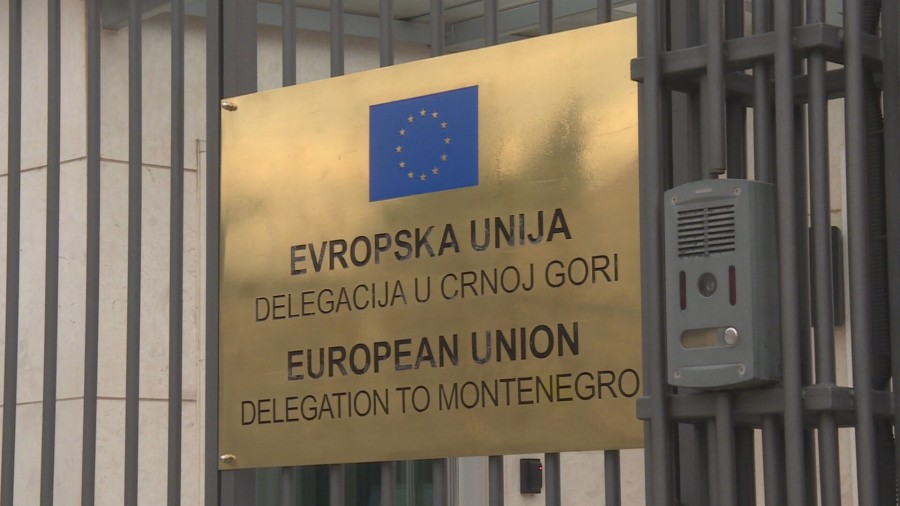
The Delegation of the European Union to Montenegro has repeatedly praised the country’s progress on its path towards EU membership, with the adoption of constitutional amendments being, in its assessment, one of the most important steps along the way. However, the EU Delegation stressed to Dan that Montenegro still faces key rule-of-law obligations, including the establishment of a Central Election Commission (CEC), and expects these to be fulfilled as soon as possible and with broad political support.
Strengthening confidence in the electoral process and establishing an electoral administration that is functional and independent of political influence are among the issues Brussels has consistently insisted on. They are directly linked to meeting the closing benchmarks in Chapters 23 and 24, which cover the rule of law. By adopting electoral reform, Montenegro took a significant step towards the professionalisation and depoliticisation of its electoral administration. However, that reform has remained little more than a dead letter for more than a year. Last summer’s amendments to the law provided for the State Election Commission to be replaced by a CEC, which would, among other things, move away from a model in which party representatives have the decisive say and reduce the scope for electoral irregularities. However, following five unsuccessful calls for applications, the establishment of the CEC remains on hold. The EU Delegation in Montenegro had previously expressed the expectation that the process would be completed by the end of August. Since that deadline has now passed, it is insisting that all rule-of-law obligations be fulfilled as soon as possible.
- We welcome the adoption of the latest constitutional amendments as an important step forward on Montenegro’s European path. The remaining key rule-of-law obligations, including the establishment of the Central Election Commission, the appointment of the missing members of the Judicial Council, and the adoption of a second package of constitutional amendments, should be fulfilled swiftly and responsibly, with broad political support. A fully functional Central Election Commission is an important element of Montenegro’s democratic institutions and should therefore be established without further delay. The EU expects all political actors to maintain momentum and fulfil the remaining obligations - the EU Delegation told Dan.
However, the pace at which the Central Election Commission is being established is not encouraging. The commission mandated to select and nominate candidates for the new institution has conducted five unsuccessful calls for applications during its eight months of work. In the meantime, the law was amended in an effort to make it easier for Parliament to arrive at a list of candidates on which it could vote, but a new public call for candidates for the CEC has yet to be issued. The next steps towards establishing the Central Election Commission are the publication of a call for applications to fill the commission responsible for selecting the members and president, followed by a public call for candidates for the CEC itself. However, this is only the initial step, and it is not certain that the CEC will be established immediately afterwards. If the competent institutions act efficiently, the new electoral administration could be established by the end of next month.
Another issue that has emerged ahead of the establishment of the new institution responsible for electoral processes is whether the amendments to the law, which changed the eligibility requirements for candidates, have preserved the principles that were intended to ensure that Montenegro would get a professional and credible CEC. This was precisely the reason why one member of the Commission for the Selection of the CEC President and Members resigned.
Public call to be issued today
Following the resignation of Dragan Koprivica of the NGO Centre for Democratic Transition, the commission tasked with selecting candidates for the CEC president and members was left with a reduced membership and unable to make decisions on potential candidates. Since the beginning of August, it had been awaiting the Administrative Committee’s decision to issue a public call for the selection of a new member of the body who would represent the civil sector. The process was delayed due to annual leave taken by parliamentary staff. Parliament is expected to issue the call today, after the competent committee formally acknowledges Koprivica’s resignation.