




Rabrenović warns: While Europe recalls products, Montenegrin consumers remain unprotected - health risks persist

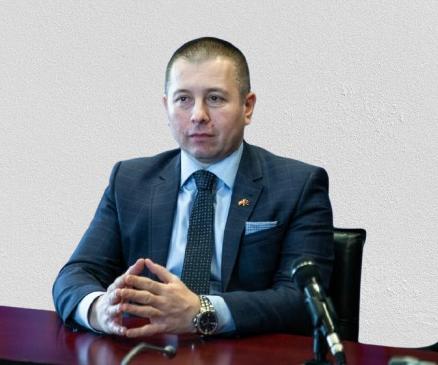
National consumer protection expert, dr of economic sciences Jovo Rabrenović, warned that the Montenegrin market remains stuck in a grey zone between formal regulatory alignment and real protection of citizens.
- While the European Union withdraws dangerous products on a daily basis – from cosmetics to automobiles – the Montenegrin market is left without an effective consumer protection mechanism - Rabrenović said in an interview with Portal ETV.
He emphasized that the situation is particularly alarming in the automotive sector.
- Hundreds of thousands of vehicles are being recalled in the EU due to critical safety issues, while Montenegrin owners of the same models receive no warning whatsoever - Rabrenović stressed.
Safety Gate – a key mechanism that remains unused
The Safety Gate system, previously known as RAPEX, is one of the key mechanisms for protecting consumer health and safety in the European Union. Although there is no official data confirming that specific products from this list are present on the Montenegrin market, Rabrenović underlined that these are mass-consumption goods.
- Large-scale imports from countries such as China and Turkey raise a serious question as to how well the Montenegrin market is actually protected from products that the EU has already declared unsafe - he said.
According to him, in the context of EU accession, this issue goes beyond being merely informational.
- This is a matter of the state’s systemic readiness to protect consumers in line with European standards - Rabrenović emphasized.
From shampoo to airbags: a gap that comes at a cost
Based on insights from the Safety Gate database and real market flows in Montenegro, four product categories have been identified where the gap between European bans and domestic practice is most pronounced.
Cosmetic products: a silent chemical risk
The cosmetic product RED ONE Hair Wax from Turkey was withdrawn from the European market because it contains butylphenyl methylpropional (Lilial), a substance banned since March 2022 due to its proven harmful effects on reproductive health.
Rabrenović said that Montenegro has formally aligned its legislation with the EU Cosmetics Regulation (1223/2009), but that practice remains far from satisfactory.
- Control is often reduced to checking product labels, without detailed laboratory analysis of composition - he explained.
He added that products from Turkey are widely available, affordable, and often enter the market without in-depth inspection.
- The consequence is long-term exposure to banned substances without any warning, particularly among young people and the reproductively active population - Rabrenović warned.
Toys: a direct threat to children’s health
The Sedola bathing toy from China was banned in the EU because it contains phthalates (DEHP) above permitted limits - substances that can cause developmental and reproductive disorders in children.
Rabrenović noted that the Montenegrin toy market largely depends on low-cost imports.
- Inspection oversight often relies on importer documentation instead of mandatory laboratory testing - he said.
Although EN 71 standards formally apply, he added that their implementation is not systematic.
- The most vulnerable group – children - is exposed to chemical and mechanical risks without parents’ knowledge - Rabrenović emphasized.
Small electrical devices: fire and electric shock risks
Generic LED chargers and heaters from China are being withdrawn from the EU market due to non-compliance with electrical safety standards (EN 60950 / EN 62368), insufficient insulation, and overheating risks.
- In Montenegro, the CE marking is often used without real verification, and there is no mandatory independent testing before products are placed on the market - Rabrenović said.
He noted that these devices are widely sold at open markets, in small shops, and through the grey economy.
- The result is an increased risk of fires, material damage, and serious bodily injuries - he warned.
The high cost of silence
According to Rabrenović, the most serious and dangerous case remains almost completely invisible to the Montenegrin public.
Mercedes-Benz is recalling vehicles produced between 2022 and 2024 due to defects in the airbag system that may prevent deployment in a collision, as well as braking system issues. The recalls include C-Class, E-Class, and GLE models.
- While the EU Safety Gate system publishes vehicle recalls daily due to critical safety issues, Montenegrin owners of the same vehicles remain completely in the dark - he said.
BMW is recalling vehicles produced between 2021 and 2023 due to critical software faults in the electronic stability control (ESC) system and issues with electrical components that may cause fires while driving.
The Volkswagen Group (Audi, VW, Škoda) is recalling vehicles manufactured between 2020 and 2024 due to fuel system defects that may lead to fuel leaks and explosions, as well as problems with automatic emergency braking.
Hyundai and Kia are recalling vehicles from the 2019–2023 period due to serious engine issues that can cause sudden shutdowns while driving, as well as defects in the ABS system.
Ford is recalling various models from 2018–2023 due to steering system linkage problems and fire risks caused by electrical short circuits.
According to Rabrenović, recall reasons most often include airbag defects, braking system failures, fire risks, safety software errors, and structural chassis defects.
The question no one is asking
Rabrenović raised a series of questions that, he says, remain unanswered.
- Have car brand distributors in Montenegro ever contacted owners of vehicles covered by EU recalls? Have the media informed the public about the recalled series - he asked.
Based on searches of media archives and public communications from authorized service centers in Montenegro, he said there is not a single recorded case of a public call for owners to bring vehicles in for free safety-related repairs.
- A vehicle purchased in Montenegro two or three years ago may have a critical safety defect known to the manufacturer and EU institutions, yet the owner has no idea they are driving a potentially dangerous vehicle - Rabrenović warned.
He added that distributors do not assume the obligation to inform customers, that no tracking and notification system exists, and that in the event of an accident or fire, the owner bears full responsibility - even though the defect is of factory origin.
- If a Mercedes or BMW is officially recalled in Germany due to an airbag problem, why does the same vehicle in Montenegro, with the same serial number, continue to be driven without any warning - Rabrenović asked.
False safety: the smoke detector case
A generic smoke detector from China was banned in the EU because it fails to respond to smoke within the prescribed timeframe, in violation of EN 14604 standards.
- A faulty smoke detector is not just a technical defect—it creates a false sense of security - Rabrenović said.
In the event of a fire, he warned, the consequences can be fatal.
Two systems, two standards
Rabrenović stressed that the core problem lies not in the laws themselves, but in their implementation.
The EU system, he explained, includes mandatory laboratory testing before products are placed on the market, active market surveillance and unannounced sampling, rapid product withdrawal within 24 to 48 hours of risk identification, high penalties for importers and distributors, mandatory vehicle owner notification within 30 days, and a publicly accessible recall database.
In contrast, Montenegrin practice, according to him, is limited to document checks instead of testing actual products, restricted laboratory capacity, slow or nonexistent recall mechanisms, weak coordination with EU alerts, a complete absence of vehicle owner notification systems, and distributors operating as a self-regulated zone.
Questions for competent institutions
Rabrenović also posed specific questions to the relevant authorities:
- Do competent inspections and services monitor the Safety Gate database and take action? Is there a registry of vehicles on the Montenegrin market covered by EU recalls? What obligations do car distributors have toward owners in the event of a recall? Is there a plan to introduce a functional consumer notification system - he asked.
A test of state seriousness
In conclusion, Rabrenović stressed that EU warning lists are not merely informational bulletins.
- They are a tool for assessing Montenegro’s readiness to protect its citizens - he said.
Any product declared dangerous in the EU and potentially available on the domestic market represents, in his words, a direct risk to health, property, and trust in institutions.
- The situation with automobiles is particularly alarming - the most expensive goods most citizens will ever purchase, and at the same time products that directly affect life safety - Rabrenović emphasized in his interview with Portal ETV.
He warned that the absence of a response by distributors and institutions to EU recalls is not merely an oversight.
- It is a systemic risk that manifests itself every day on Montenegrin roads - he concluded.
If Montenegro wants to position itself as a functional state in the process of European integration, monitoring the Safety Gate system must become an operational obligation of inspection authorities, not merely a recommendation.
Otherwise, the cost of the difference between what is permitted and what is safe is borne by consumers.
Rabrenović notes that all listed examples of banned products are taken from real data in the EU Safety Gate system. The availability of these products on the Montenegrin market has not been empirically confirmed, but remains realistic based on known import flows and weaknesses in the control system.