




Satire is necessary, regardless of who is in power
When the religious processions were taking place, a large number of online bots emerged, all working for the political forces that would later come to power. What I want to say is that it is wrong to be paid to do things like that. After all these years, I feel we are still on the right side. I would recall Albert Camus’s thought that the essential thing is to rebel - said Aleksandar Radunović Popaj

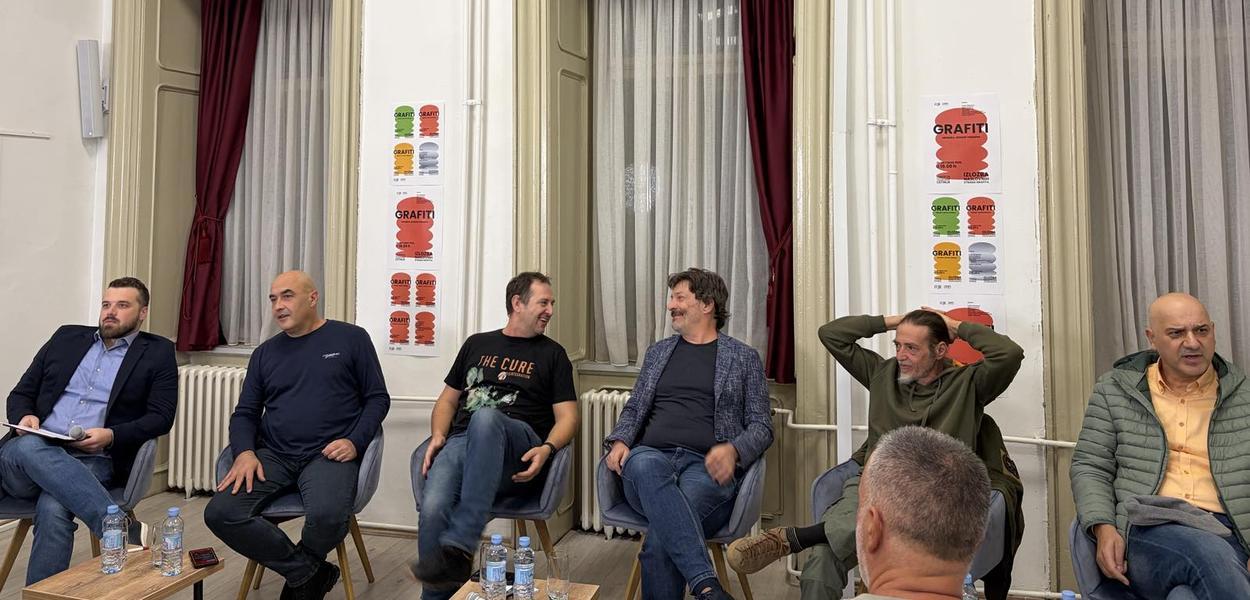
I believe satire has been necessary in Montenegro throughout all these years, regardless of who was in power and who was in opposition. What I took away from Grafiti and carried with me to the Associated Press (AP) and Voice of America was that story of freedom and improvisation in times of scarcity. We used to publish ourselves as a „katkadnik i beskućnik“ - said Alen Mlatišuma, a journalist and Director of the Eurasia Division at Voice of America, at the panel discussion „Grafiti - A Chronicle of an Era“, held at the Faculty of Montenegrin Language and Literature in Cetinje.
The event was organised by the Faculty of Montenegrin Language and Literature and the Montenegrin PEN Centre to mark the 25th anniversary of the final issue of the magazine „Omladinski Grafiti“ (Youth Graffiti), later titled simply Grafiti in its final few issues.
The magazine’s former executive director said he regarded Grafiti as an expression of the urban spirit.
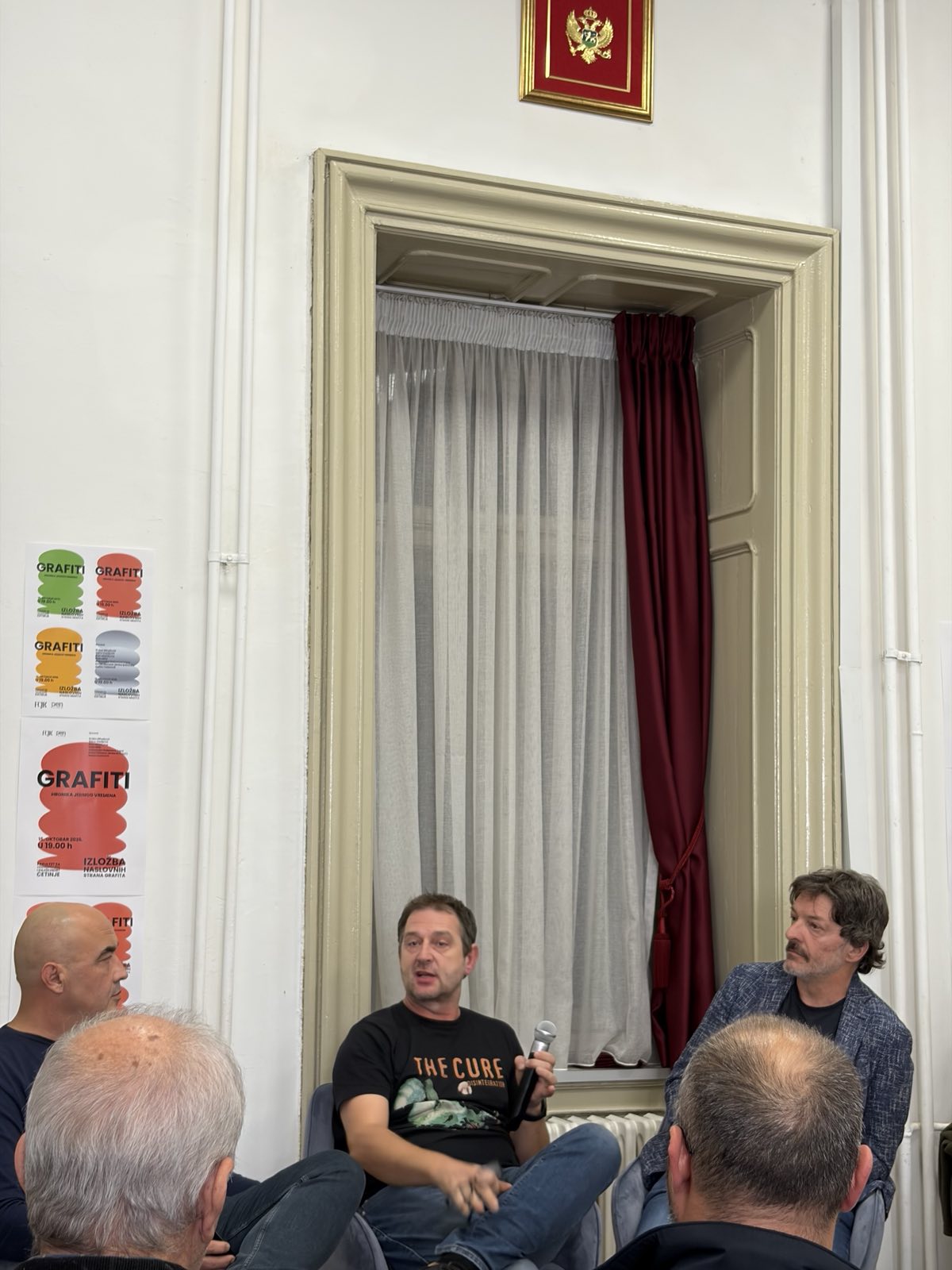
- We somehow all came together there. We were a top community back then. It was an extraordinary feeling to have so many people you care about, all wanting to contribute to a rebellious idea. What stayed with me throughout the rest of my life was the realisation that we did not need any expensive marketing to achieve something. We knew it was a good idea - Mlatišuma added.
He pointed out that political parties had controlled the country for as long as he could remember.
- Politicians want to be what they think they are - Mlatišuma said.
„We felt the need to shout about everything that was happening around us“
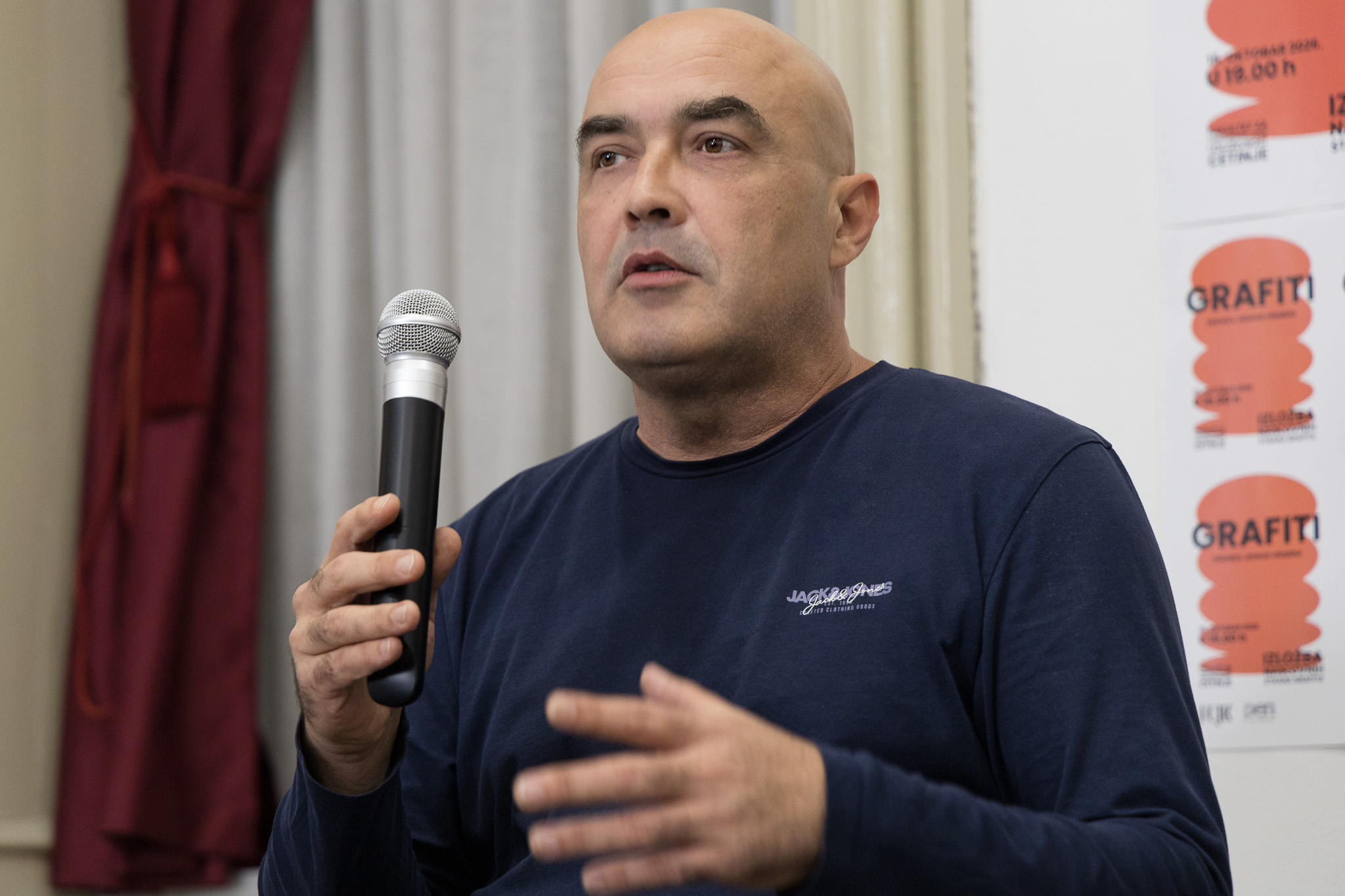
A large audience attended the panel. Duško Mihailović, one of Grafiti’s founders and a journalist, said they could never have imagined back then that so many people would be interested in hearing about the magazine today.
- The first issue of Grafiti was printed by the Young Ecologists’ Association, which was its publisher. The four of us practically took the publication over. The association was under the authorities’ control, but they let us do what we wanted. When the first issue came out, they were not pleased - Mihailović said.
As he recalled, the first issue was printed twice.
- What irritated them most was that we published an advertisement on the front page calling on our generation not to respond to the Yugoslav People’s Army’s call-up. That was how we became part of the main conspiracy, so to speak. We felt the need to shout about everything that was happening around us. We created a playground where we could play - Mihailović stressed.
Speaking about Saša Raonić, one of the magazine’s founders and an anti-war activist during the 1990s, Mihailović said Raonić was a symbol of that generation.
- Saša Raonić is much more than one of the founders of Grafiti. In 1992, he raised what is now Montenegro’s national flag on a flagpole at the Parliament of Montenegro for the first time since the occupation of 1918 – Mihailović said.
Mihailović also said that Raonić had a unique energy.
- Whoever mentions him brings a certain emotion to the surface - Mihailović noted.
„A window into freedom and a light in the darkness“
Peđa Milić, a journalist with the Associated Press, said that Grafiti still meant the same thing to him today.
- To me, Grafiti is still what it always was. That was where we became infected with a certain freedom of expression. It was both a window into freedom and a light in the darkness, because those were the war years, a time of inflation. I joined in 1994. Grafiti was sold almost like a ticket to a club. It was something completely different - Milić explained.
According to him, the split within the Democratic Party of Socialists (DPS) occurred during that period, dividing both the media and society as a whole.
- But we did not accept things that way, because we believed they should not be that way - Milić stressed.
„Every cover was meticulously assembled“
Photojournalist Stevo Vasiljević said that Grafiti had found its way to him.
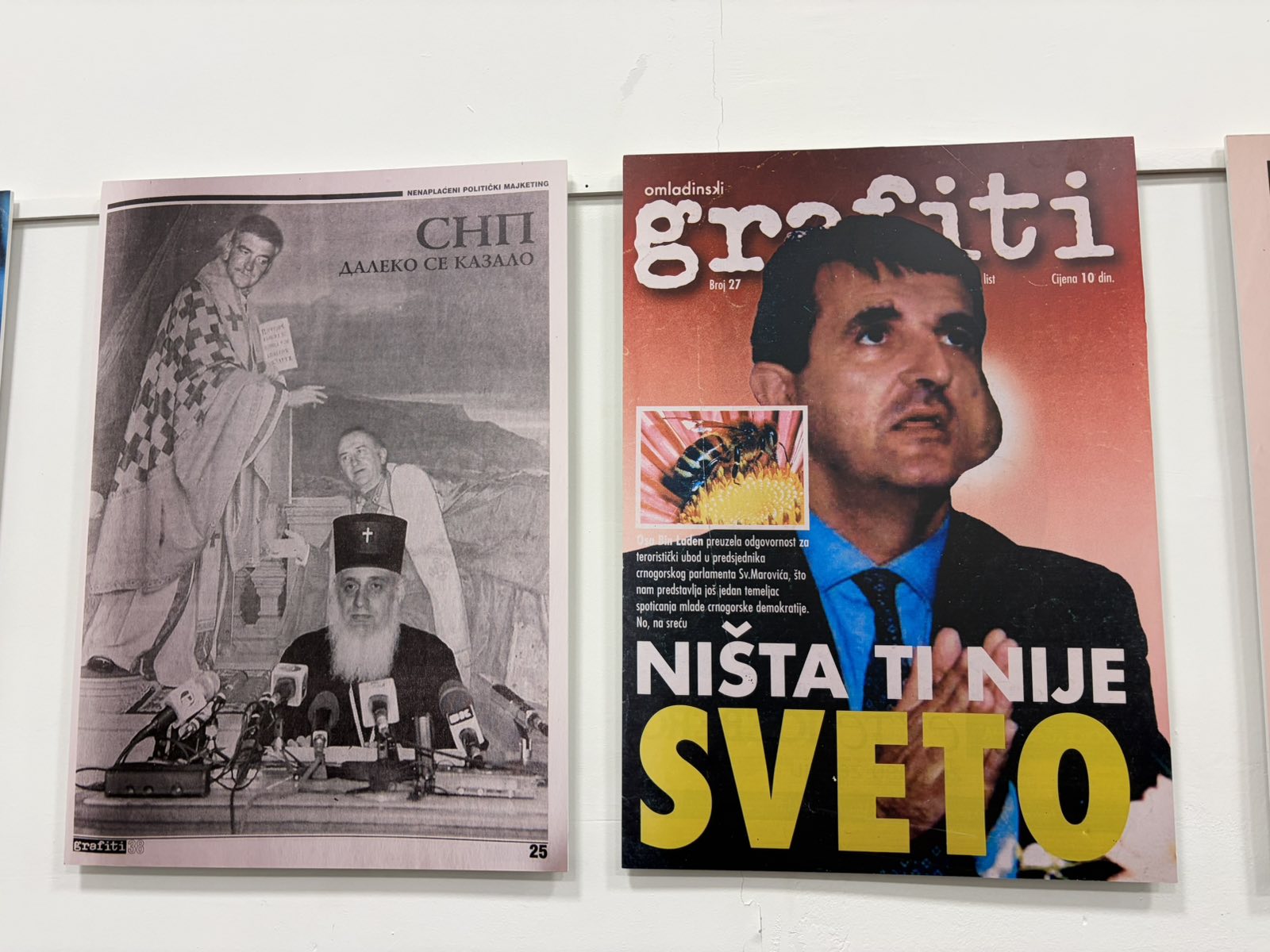
- I am somewhat bothered when people, in casual recollections, say that Grafiti was all about photomontages. What matters far more is what was written in it. Every cover was assembled with extraordinary precision, piece by piece. They were not created in a single moment; they were built up layer by layer. Each one can be broken down into several articles - Vasiljević said.
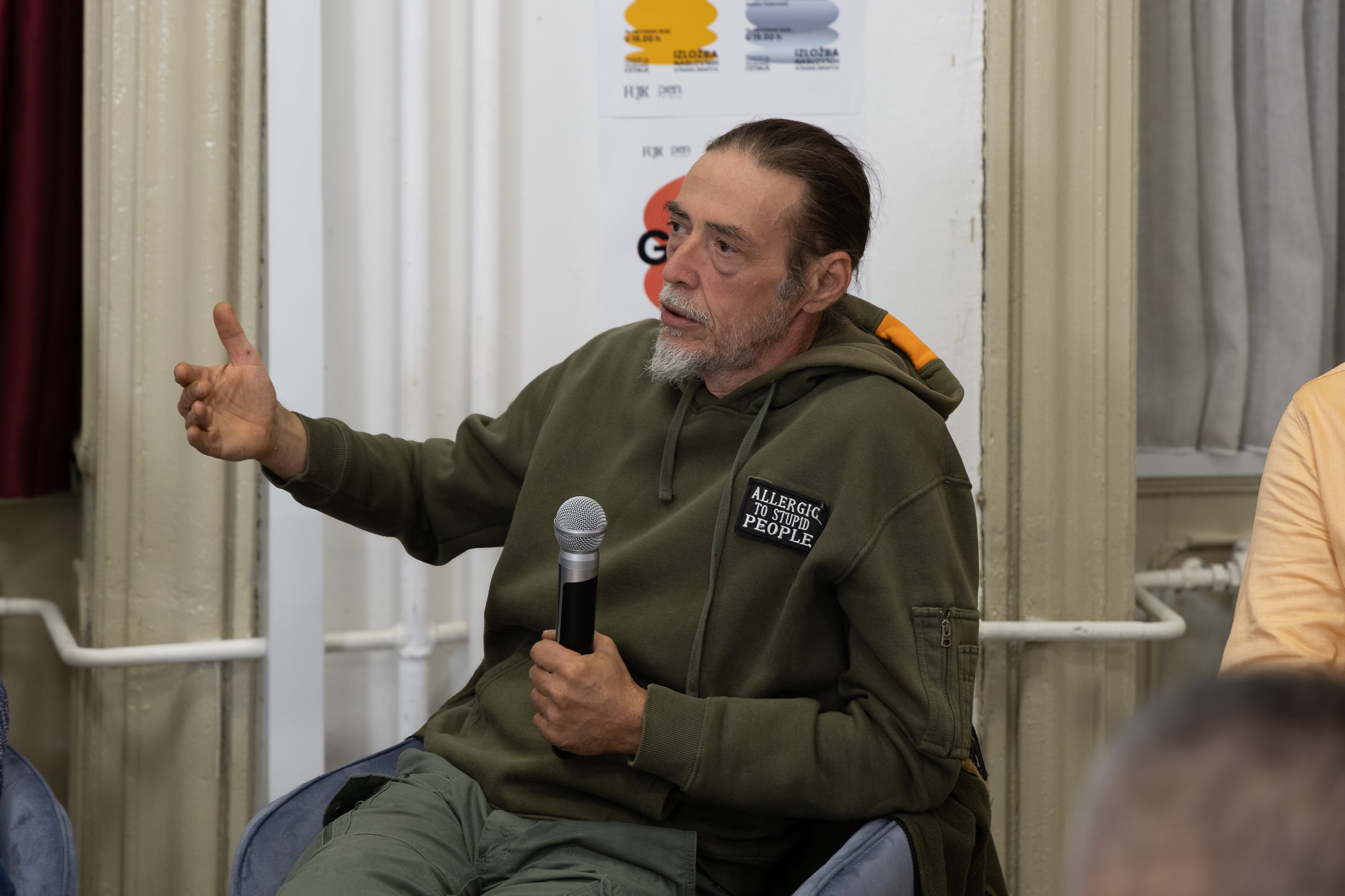
As he emphasised, the written content was much more important.
- ...the words themselves. The visual approach was simply a method we used to offer our readership a communication channel that we believed would reach them most effectively - Vasiljević added.
He explained that the magazine contained far fewer photomontages than there were issues published.
- When I think about Grafiti, I become rather disappointed because I feel people never actually read it. All those elites today are, in fact, the very people we were trying to communicate with. They are the same people we used to make fun of in the 1990s. Until tonight, I had lived with the belief that we had missed the point, that we had had no impact whatsoever. Seeing so many people here has dispelled that dark thought - Vasiljević said.
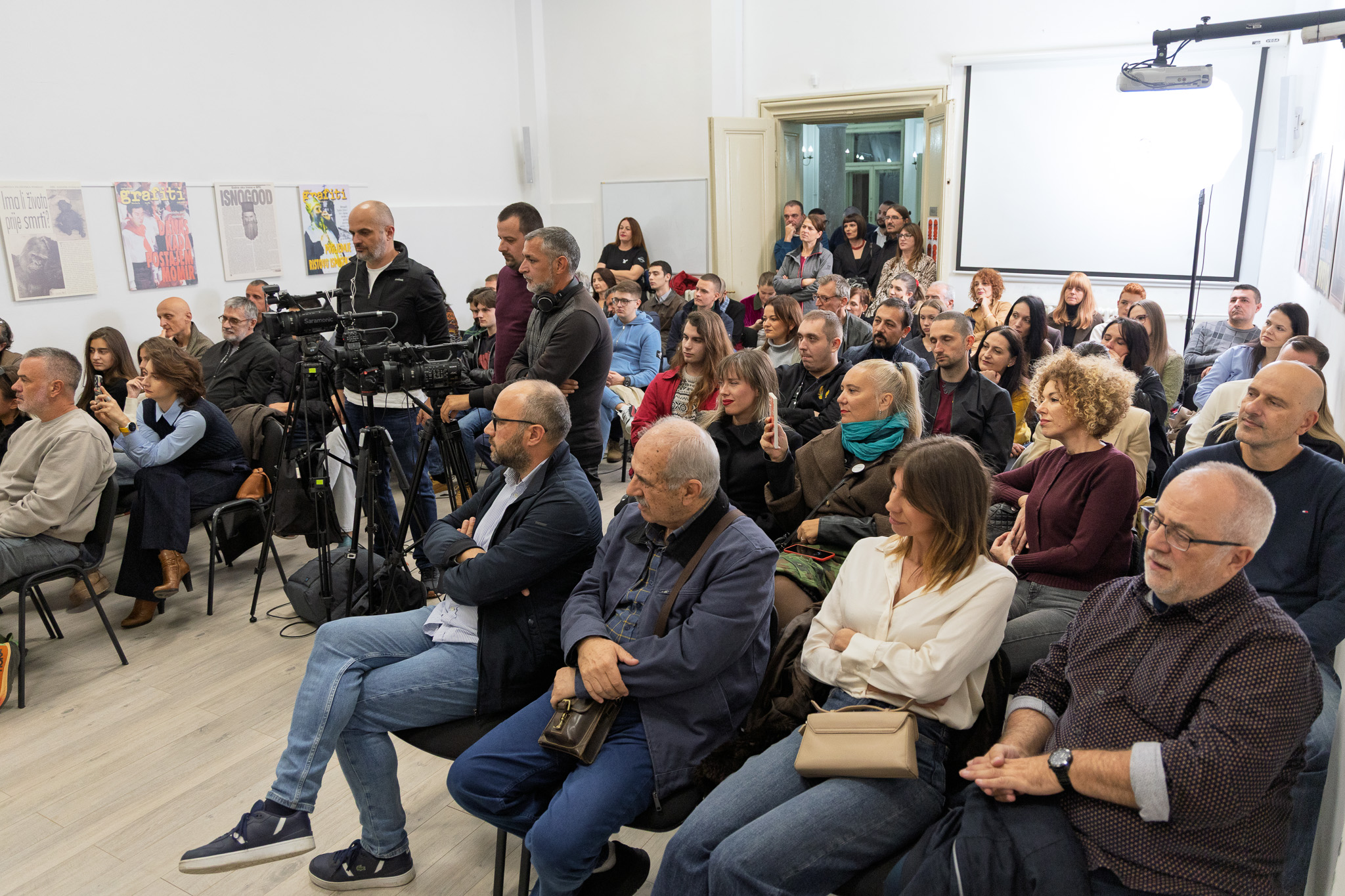
He also said that his generation had lived in a country that had neither cinema, football nor rock music.
- Today, it is extremely difficult to create something like Grafiti. What we read every day in the media, pseudo-media and on social networks is so ridiculous that I do not know how anyone could make something even funnier - Vasiljević remarked.
Still fighting against what society has come to accept
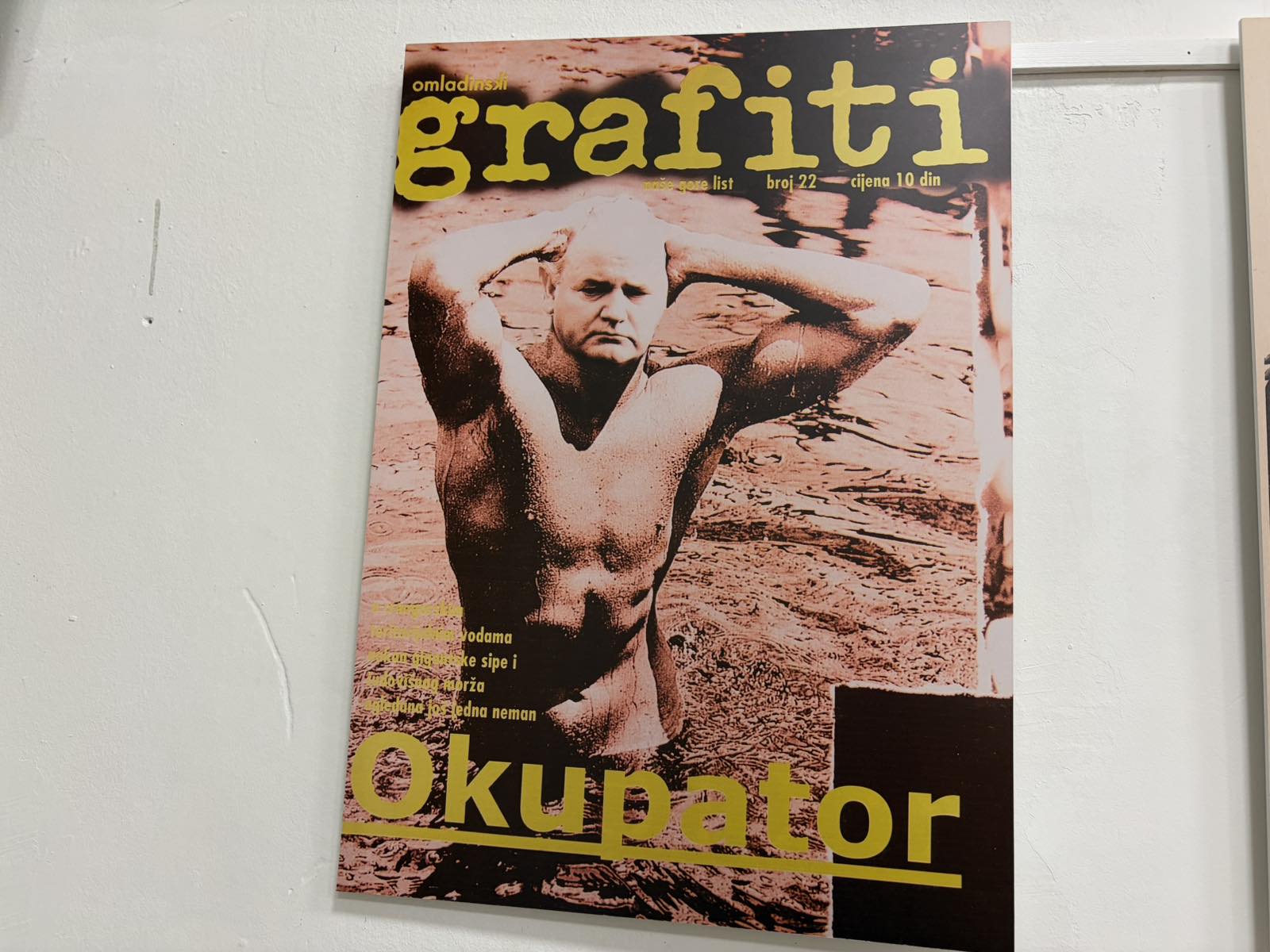
Aleksandar Radunović Popaj, a member of the comedy collective The Books of Knjige, said he remembered the atmosphere and how they had felt while working on Grafiti.
- We had the opportunity to rebel against things that were wrong. The general atmosphere in society was such that this was accepted. Then a group of people emerged. We all wrote under pseudonyms. I would say it is still a good thing that we have always stood by the same principles. We had the opportunity to align ourselves with the establishment and the political parties in power, but I feel that one of our greatest achievements is that we remain committed to the same principles today and continue to fight against things that society has come to accept - Radunović explained.
Milić had earlier asked Radunović how he managed to be funnier today than the events unfolding around them. Radunović replied that what they found funny was not necessarily funny to the majority of Montenegro’s citizens.
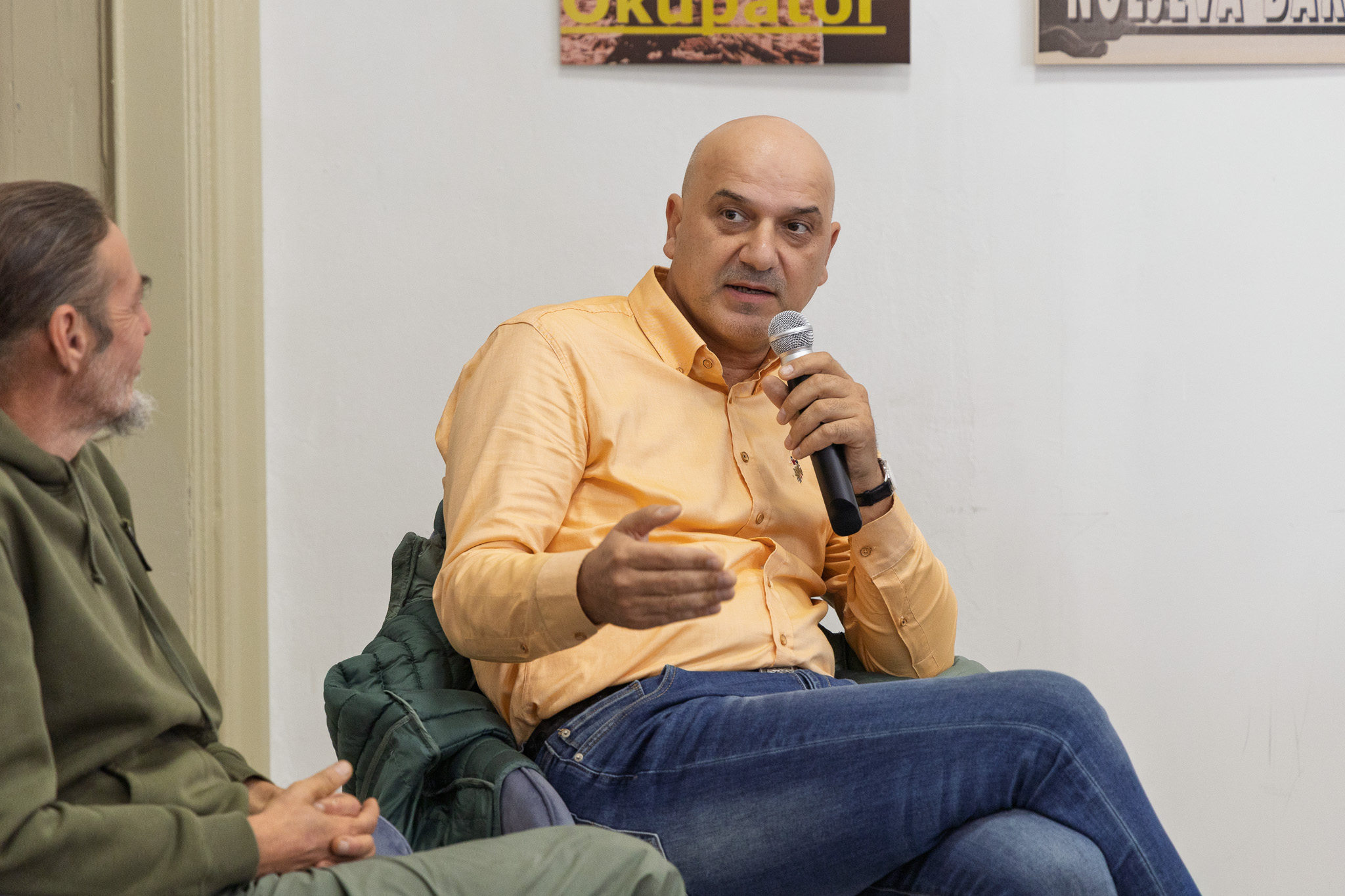
- Our perspective does not necessarily mean that the majority shares it. A great many people believe in things. Perhaps some do so because they do not want the world they believe in to collapse. What we did then, and what we continue to do today, makes some people laugh, while the majority simply says: „That’s fine“. What matters is that we continue to oppose all of this and have not been drawn into becoming part of party structures. I am convinced that those in power must be challenged, because I believe power corrupts people. I cannot understand a young person joining a political party that has been in power for 20, 25 or 30 years. Youth brings a spirit of rebellion, yet most young people join in the hope of securing themselves a comfortable position - Radunović stressed.
He also recalled the period of the religious processions.
- When the religious processions were taking place, a large number of online bots emerged, all working for the political forces that would later come to power. What I want to say is that it is wrong to be paid to do things like that. After all these years, I feel we are still on the right side. I would recall Camus’s thought that the essential thing is to rebel - Radunović concluded.
„The glorification of war criminals as heroes is the most direct and painful reminder of the 1990s“
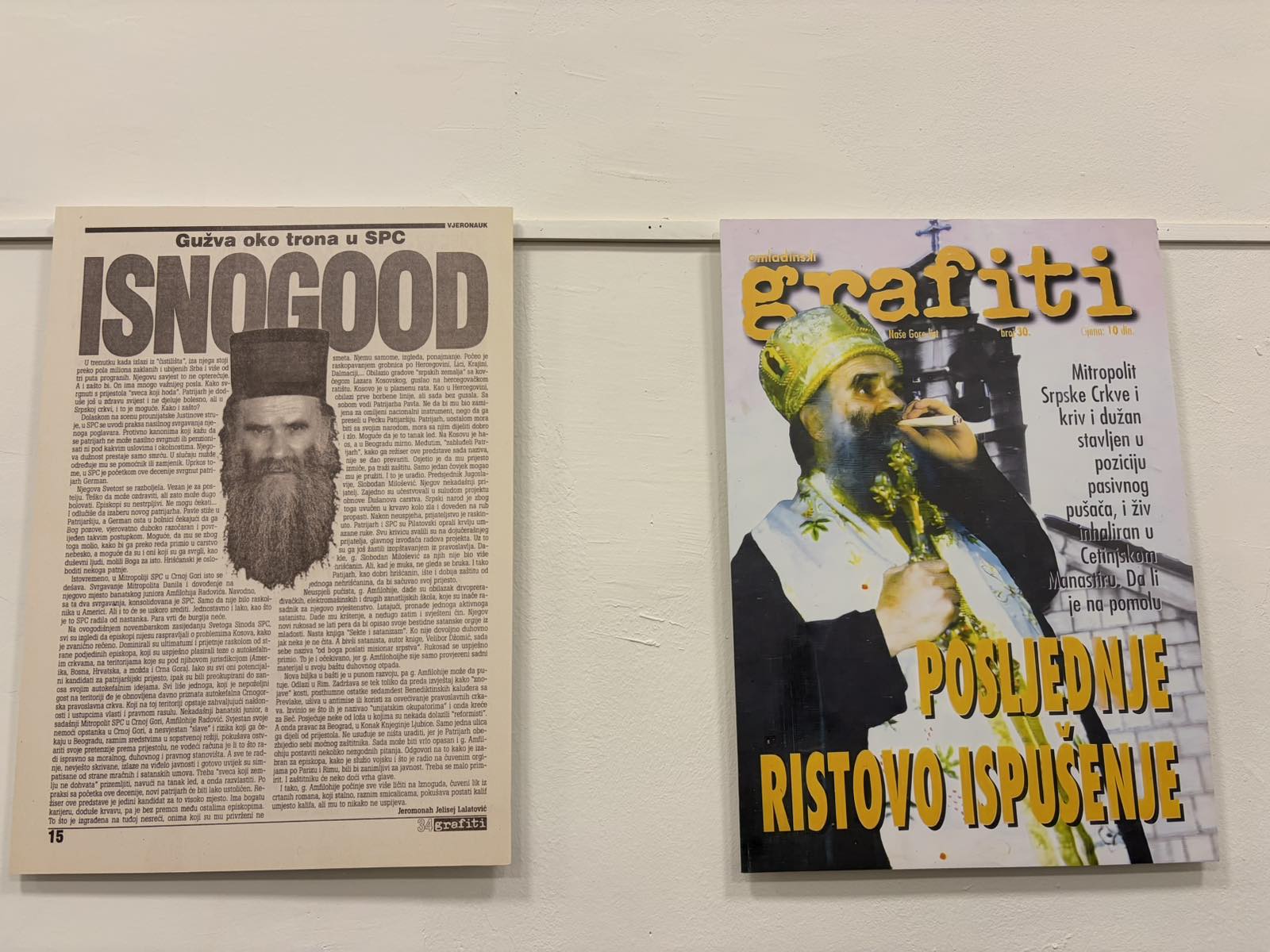
Moderator Stefan Todorović said that the magazine covers on display brought visitors back to the period when Grafiti was being created.
- It was the 1990s, a time of wartime madness, deep social divisions, upheaval and polarisation, as well as the breakup of the common state. Unfortunately, that period and its spirit are still alive today. When we look at the situation in Montenegro and the wider region, we see that they remain present in many areas of society, even though we thought they were behind us. The glorification and celebration of war criminals, and their portrayal as heroes, are precisely the most direct and painful reminders of the 1990s - Todorović stressed.
According to him, the creators of Grafiti were people who opposed war propaganda, hatred and the madness of the 1990s, fighting for a sense of normality.
About Grafiti
„Omladinski grafiti“ was a Montenegrin humour and satire magazine published in Podgorica from 1993 to 2001.
Initially, it was published under the subtitle „Independent Montenegrin Magazine for Young People“. Later, the subtitle changed to „katkadnik i beskućnik“ and „naše gore list“. The final few issues appeared under the title Grafiti.
Through humour and satire, „Omladinski grafiti“ explored everyday life in Montenegro during the 1990s. It became a key hub of urban culture in Montenegro, bringing together many of the era’s prominent subcultural groups, including Šurdi, Mozak Eliminatora, Republika Zabjelo and The Books of Knjige. The magazine’s editorial policy was critical of the Montenegrin and Yugoslav authorities and featured strong anti-war, anti-clerical and anti-nationalist themes. As a promoter of Montenegro’s cultural emancipation, the magazine came under pressure from official political circles.
Among its popular regular and occasional columns were Mićunova pošta, Pismeni zadaci The Books of Knjige and Śutri dan, as well as stories by Brčko Brčković, editorials by Peđa Milić, and columns by Tomislav Jokić, Republika Zabjelo and Zanosni Dugajlija, also known as Sejdo Alijaj. In addition to its witty, provocative and incisive writing, Grafiti stood out for its distinctive covers, which frequently used photomontage to parody current political and social issues.
The magazine was founded by Saša Raonić, Zoran Simonović, Nikola Đurković and Duško Mihailović. Other editorial staff members and contributors included Peđa Milić, Miško Đukić, Sejdo Alijaj, Goran Nikčević (Brčko Brčković), Željko Milović, Saša Radunović, Alen Mlatišuma, Vojo Mistović, Zoran Bojović, Peđa Vušurović, Stevo Vasiljević, Darko Ivanović Skočko, Andrej Nikolaidis, Sonja Joličić, Goran Gošović, Peđa Đonović, Danilo Radulović and others.