




Threats against journalists must not be punished like traffic offences, the state must show that no one is above the law

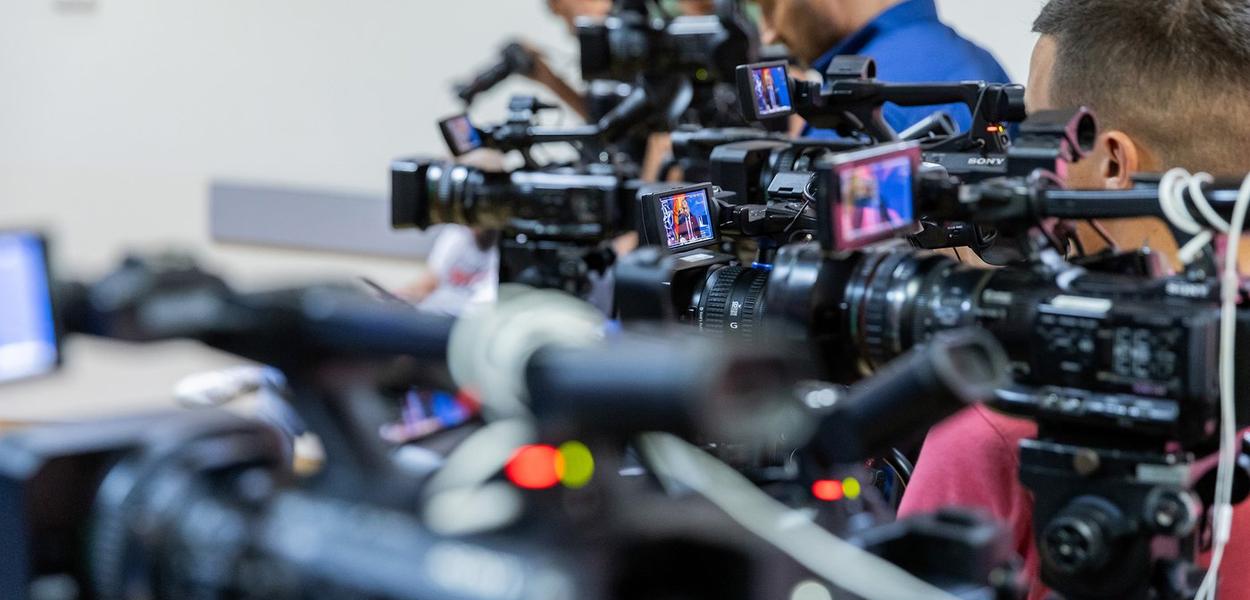
Faster action by prosecutors and courts in cases involving attacks on journalists represents progress. However, lenient and inconsistent sentences, as well as the failure to resolve the most serious cases for years, show that impunity remains a serious problem in Montenegro, the Media Self-Regulation Council warned ahead of 2 November, the International Day to End Impunity for Crimes against Journalists.
They called on the relevant institutions to ensure not only efficient proceedings but also penalties proportionate to the seriousness of the offences committed and capable of deterring potential perpetrators.
The Council recalled that the United Nations General Assembly proclaimed 2 November the International Day to End Impunity for Crimes against Journalists in 2013, while UNESCO is running this year's campaign under the slogan "Threats Change. Impunity Remains".
According to UNESCO data, impunity for crimes against journalists has increased for the first time since monitoring began in 2012, while as many as 86 per cent of journalist killings worldwide still remain unresolved by the courts.
- The Media Self-Regulation Council calls on prosecutors and courts handling cases involving attacks and threats against journalists not to focus solely on how quickly proceedings can be concluded. Penalties should reflect the nature and seriousness of the acts committed and must deter anyone else who might consider threatening or attacking a media professional simply for doing their job - the Media Self-Regulation Council said.
The Council warned that last year was a record-breaking year, albeit a particularly troubling one, in terms of threats to the safety of journalists and media workers.
According to the Media Union of Montenegro, 33 cases of attacks and pressure against media professionals were recorded last year, while the number of online threats was twice as high as in the previous year.
Since the beginning of this year, the Union has recorded 18 cases, only two of which have resulted in court rulings.
A total of 21 reports were submitted through the Journalist Safety Mechanism, which has been operational since March, by the end of August. Insults and online threats were the most frequently reported incidents, while one case involved a death threat.
The Media Self-Regulation Council warned that bringing proceedings to a swift conclusion means little if the penalty imposed does not reflect the seriousness of the attack.
- When proceedings are swift but the penalty is lenient, the message is not much different from the one conveyed by silence - the Council said.
They cited the attacks on photojournalists in Gornje Zaostro as a particularly concerning example of inconsistent sentencing.
They recalled that the journalists were attacked while carrying out a professional assignment, surrounded by a group of people who threatened and physically confronted them.
- Two individuals were sentenced at first instance to six months of house arrest each, while most of the other proceedings ended in acquittals. For death threats against Boris Pejović and Balša Rudović, a fine of €300 was imposed in misdemeanour proceedings. If paid within the prescribed period, the fine amounts to just €150 - the Media Self-Regulation Council said.
The Council pointed out that, in another case involving threats against a female journalist, a prison sentence was imposed at first instance, raising questions about the consistency of judicial practice.
- How, then, is a journalist supposed to know what protection they can expect when one threat leads to imprisonment, while a similar one results in a penalty resembling a traffic offence fine - the Council asked.
The Media Self-Regulation Council acknowledged that prosecutors had made some progress in handling cases involving threats to journalists' safety.
It recalled that, under the 2024 Guidelines, cases involving attacks on journalists were given priority, with prosecutors required to act without delay and maintain direct contact with victims.
According to the European Commission's Rule of Law Report, since July last year the prosecution service has opened 25 cases involving threats and violence against journalists, 18 of which have been resolved.
The Working Group for the Establishment of the Journalist Safety Mechanism also concluded that the competent authorities had acted within a reasonable timeframe.
Nevertheless, the Media Self-Regulation Council believes that this progress raises further questions about why death threats against two photojournalists were prosecuted as misdemeanours, despite the Criminal Code providing for more severe penalties for endangering the safety of individuals engaged in public information activities.
- We expect the Supreme State Prosecutor's Office to explain to the public why this happened. We also expect it to review how threats against journalists are legally classified, so that the same threat is not treated as a criminal offence in one case and a misdemeanour in another - the Council said.
The Council recalled that, despite progress in resolving more recent cases, the most serious attacks on journalists in Montenegro remain unresolved.
- Even after 22 years, the murder of Duško Jovanović has not been fully solved, and those who ordered it remain untouchable. Eight years after the attack on Olivera Lakić, the trial concerning her shooting is still dealing with lawyers withdrawing their powers of attorney rather than examining the evidence - the Council said.
It also recalled that the High Court overturned the first-instance verdict in the case involving the attack on Pobjeda journalist Ana Raičković, while the retrial, which began on 23 October, was immediately postponed until December.
The Media Self-Regulation Council also referred to assessments by Reporters Without Borders, according to whose World Press Freedom Index Montenegro fell from 37th to 41st place this year.
The organisation, the Council noted, recognises progress in resolving more recent attacks but warns that the murder of Duško Jovanović and the attempted murder of Olivera Lakić remain without a final judicial resolution.
- As long as this remains the case, progress in more recent cases cannot be presented as the end of impunity - the Council stressed.
They said that, as Montenegro enters the final stage of its EU accession negotiations, the country must demonstrate that its policy of zero tolerance towards violence against journalists is being implemented in practice.
It recalled that the European Commission has for years acknowledged the country's commitment to such a policy while also warning about lengthy proceedings in the most serious cases.
- This must be reflected in court judgments, not merely in statements - the Council stressed.
In this year's Rule of Law Report, the European Commission warned about delays in the trial concerning the attempted murder of journalist Olivera Lakić and the risk of the case becoming time-barred.
The Council also recalled that Montenegro, as an EU candidate country, endorsed the European Union's statement before the Council of Europe on 30 October, which warned that the absence of accountability could create a climate of impunity.
They noted that citizens who believe a media outlet has published inaccurate or unprofessionally prepared information have access to legal and self-regulatory mechanisms to protect their rights.
These include the right of reply and correction, as well as the possibility of addressing the courts, media ombudspersons and the Complaints Commission of the Media Self-Regulation Council, which operates in accordance with the Code of Ethics for Journalists of Montenegro.
The Council emphasised that complaints submitted to ombudspersons and the Complaints Commission are free of charge and do not require the involvement of a lawyer.
- Anyone who chooses threats instead of these options is not seeking a correction; they are trying to intimidate a journalist - the MSS said.
The Council concluded that the state must clearly distinguish between legitimate dissatisfaction with media reporting and attempts to intimidate journalists, and ensure that penalties are sufficiently deterrent to prevent such conduct from being repeated.
- The Media Self-Regulation Council stands alongside all our fellow journalists working under threat this year, as well as those whose cases have been awaiting justice for years - the statement concluded.