




Ekrem Bajrović sentenced to 12 years of imprisonment in retrial for war crimes committed during the 1998-99 Kosovo war

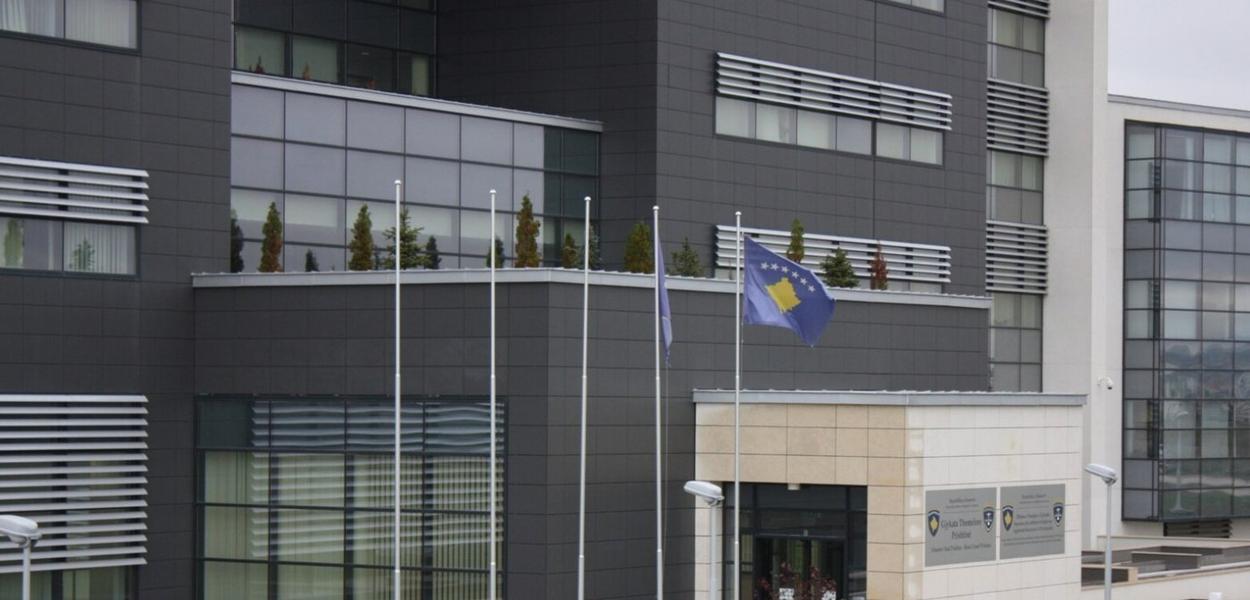
The Basic Court in Prishtina on Friday, 3 July, sentenced Ekrem Bajrović to 12 years of imprisonment in a retrial for war crimes against the civilian population committed during the 1998-99 Kosovo war.
Bajrović was again found guilty of war crimes against Albanian civilians in the villages of Staradran, Žač, Gurakoc and other nearby villages in the Municipality of Istok in early 1999.
He was convicted in a retrial after the Supreme Court last year ordered the case to be reheard.
The Basic Court had previously sentenced him to 12 years of imprisonment in July 2024, and the Court of Appeals upheld that verdict in 2025, dismissing the defence's appeal.
However, in 2025, the Supreme Court upheld the defence's appeal and quashed Bajrović's conviction, noting that several witnesses had testified during the trial that they had also given statements to UNMIK and EULEX investigators, but that those statements were not included in the case file.
The Court held that those statements should have been obtained and examined together with the other evidence.
Bajrović also has the right to appeal the current first-instance judgment.
What crimes was Bajrović convicted of?
According to the judgment, on 7 and 8 May 1999, Bajrović took part in an operation carried out by Serbian forces against the Albanian civilian population in villages in the Istok municipality. Civilians were forced to leave their homes and ordered to make their way to Albania.
According to the Court, Bajrović separated men and women from a column of civilians heading towards Albania, robbed them of their money and valuables, after which Serbian forces took them to a house in Staradran, where „at least 16 Albanian civilians were executed“.
The Court further found that on 7 May 1999, Bajrović participated in the „arrest and abuse of 84 Albanian civilians, who were initially separated from another column of civilians, stripped of all their money and other valuables, and then taken to a bar owned by S. Š. in Gurakoc, where they were subjected to inhuman abuse and torture“.
On 8 May 1999, the detainees were transferred to the police station in Gurakoc, with the column allegedly being led by the accused, Bajrović.
The time Bajrović has spent in pre-trial detention since 19 October 2022 will be credited towards his sentence.
During the Kosovo war, more than 13,000 civilians, mostly ethnic Albanians, were killed, while thousands of others disappeared.
More than 1,500 people, the majority of them ethnic Albanians, are still listed as missing.
Kosovo authorities have recently arrested a number of war crimes suspects and filed several new indictments relating to crimes committed during the conflict.
Since the end of the war, dozens of suspects have been convicted of war crimes before both domestic and international judicial institutions.
In the years following the conflict, from 2000 to 2008, war crimes in Kosovo were investigated by the United Nations Interim Administration Mission in Kosovo (UNMIK). From 2008 onwards, investigations were conducted by the European Union Rule of Law Mission in Kosovo (EULEX).
In 2018, EULEX transferred its remaining war crimes cases to Kosovo's domestic judicial authorities.