




Karlović Sabolić for Portal ETV: Mandić is a stumbling block between Podgorica and Zagreb, Montenegro could pay a high political price for his moves

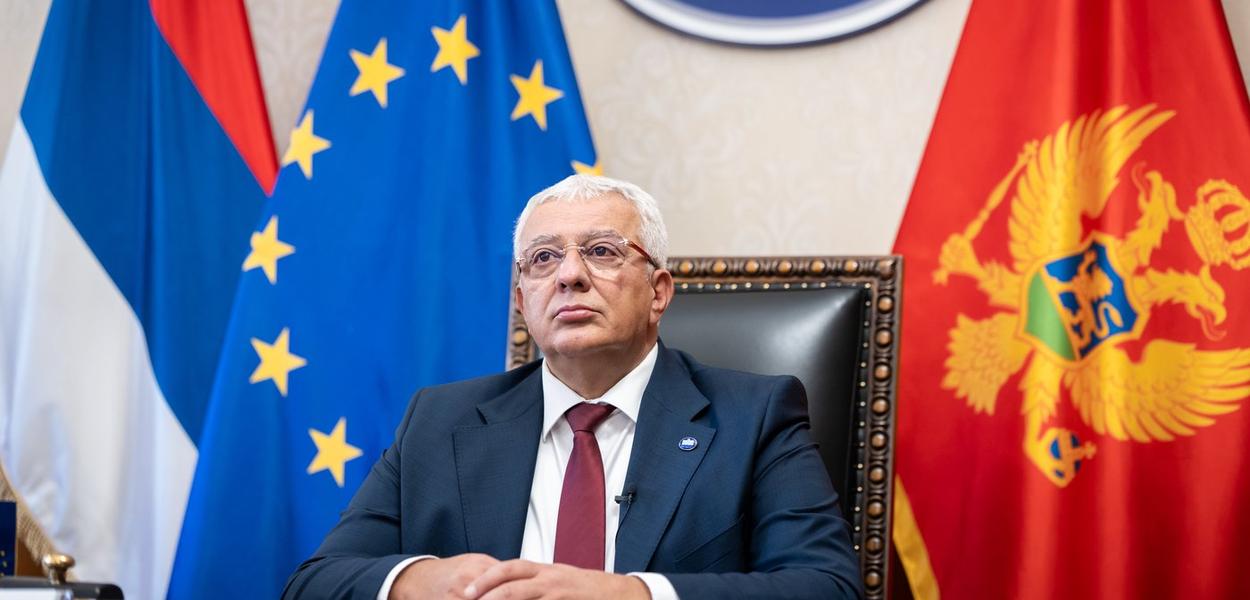
Relations between Montenegro and Croatia are once again under pressure, with the name of Parliament Speaker Andrija Mandić increasingly being linked in Zagreb to political moves that are straining relations between the two countries.
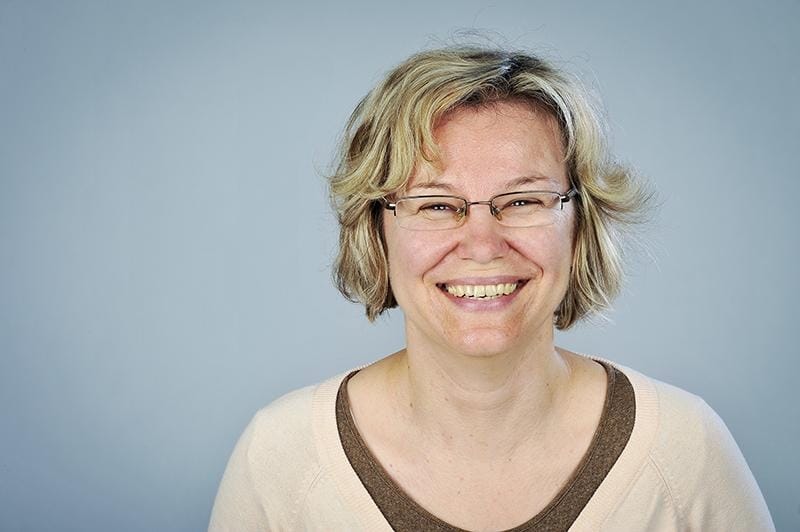
Marina Karlović Sabolić, Zagreb correspondent for Slobodna Dalmacija, told Portal ETV that Mandić represents a „stumbling block“ in relations between Podgorica and Zagreb, but warned that the problem lies not only in individual incidents, but also in the broader political direction in which Montenegro is moving.
She believes that Mandić alone cannot derail Montenegro’s European path, but that he can increase the political cost of that process and undermine the trust of neighbouring countries and European partners.
In an interview with Portal ETV, Karlović Sabolić discusses relations between Montenegro and Croatia, Mandić’s moves, the resolution on Jasenovac, attitudes towards war criminals and the Srebrenica genocide, and outstanding issues between the two countries...
MANDIĆ AS A STUMBLING BLOCK BETWEEN PODGORICA AND ZAGREB
Karlović Sabolić told Portal ETV that Montenegrin Parliament Speaker Andrija Mandić has become one of the key problems in relations between Montenegro and Croatia. According to her, Mandić’s latest statements and actions cannot be viewed in isolation, but rather in the context of previous moves that triggered strong reactions in Zagreb.
- There is really no great dilemma here. Parliament Speaker Andrija Mandić is a stumbling block in relations between Croatia and Montenegro - Karlović Sabolić says.
She believes it would be wrong to view Mandić’s latest episode involving Ratko Mladić as an isolated incident.
- Before that, we had the resolution on Jasenovac, and it is no coincidence that Mandić has become persona non grata in our country - Karlović Sabolić says.
In her interpretation, Croatia is, with the exception of Slovenia, practically the only former Yugoslav republic where Vučić’s „Serbian world“ does not have a firm foothold.
- Milorad Pupovac, the representative of Serbs in Croatia, defeated by a landslide at the last parliamentary elections the candidate representing Vučić’s Greater Serbian paradigm. For us, figures such as Mandić belong to a long-gone era, and it is really not surprising that the government in Zagreb does not want to have anything to do with them - she says.
ZAGREB SUPPORTS MONTENEGRO’S EUROPEAN PATH, BUT THERE ARE LIMITS
Speaking about Montenegro’s European integration and Zagreb’s attitude towards the process, Karlović Sabolić stresses that, in her view, Croatia has no interest in holding Montenegro back on its European path.
- Croatia has no interest in stopping Montenegro on your path towards the European Union. Quite the opposite: for every government in Zagreb, having a stable and European Montenegro as a neighbour is of strategic importance - Karlović Sabolić says.
At the same time, she believes that European integration does not simply mean formally closing negotiating chapters, but also embracing the values on which the European Union is founded.
- But it is equally unrealistic to expect Podgorica to enter the European Union with one foot while, with the other, its top officials occasionally trample on the values on which that Union is based. The European path is not just about closing negotiating chapters. It also entails a certain choice of values, which certainly does not include glorifying convicted war criminals or denying the genocide in Srebrenica - she says.
Karlović Sabolić also points to outstanding issues between Montenegro and Croatia, which she believes will have to be resolved as the country moves closer to the European Union.
- There are, of course, also outstanding issues between the two countries, the most important of which, in my view, concerns missing and detained Croatian soldiers. Croats are very sensitive about this, and a solution acceptable to both sides will have to be found - she says.
MANDIĆ CANNOT SINGLE-HANDEDLY DERAIL THE EUROPEAN COURSE, BUT HE CAN INCREASE ITS COST
As for the possibility that Andrija Mandić’s actions could jeopardise Montenegro’s European path, Karlović Sabolić believes there is reason for caution, but no reason for panic.
- I think Montenegro has reason to be cautious, but not to panic. Mandić alone can hardly derail the country’s European perspective overnight. Today, that perspective is much broader than one party and one politician - she says.
She points out that Montenegro, as she notes, has made the most progress among the candidate countries, has provisionally closed more than half of the negotiating chapters, and that the European Union is already preparing its accession treaty.
- That is serious political capital, and it cannot easily be squandered overnight - Karlović Sabolić says.
However, she warns that the Parliament Speaker’s political moves could have a different effect.
- But Mandić can do something else, perhaps even more dangerous: constantly increase the political cost of that path - she believes.
She illustrates the situation in Montenegro through the contrasting political directions within the country.
- Montenegro today somewhat resembles a car in which Prime Minister Milojko Spajić is pressing the accelerator towards Brussels, while Mandić occasionally pulls the handbrake in an attempt to steer it back towards Belgrade. The car is still moving forward, even quite quickly, but such driving nevertheless leaves consequences - both for the car and for the passengers - Karlović Sabolić says.
In her view, the greatest danger is not that Mandić could, with a single move, halt Montenegro’s European course, but that a series of political incidents could damage relations with neighbouring countries and undermine the country’s European credibility.
- It seems to me that the greatest danger is therefore not some spectacular move by Mandić in which he announces one morning that Montenegro is abandoning Europe. A much more realistic concern is a series of smaller political fires that will repeatedly reignite tensions with neighbouring countries and call into question the country’s European credibility. In the final stages of the accession negotiations, these could become a trigger for a delay - she says.
SPAJIĆ TOWARDS BRUSSELS, MANDIĆ TOWARDS BELGRADE - TWO POLITICAL DIRECTIONS IN THE SAME COUNTRY
Speaking about the current political situation in Montenegro, Karlović Sabolić says she views it with optimism, but also with a degree of reservation.
- I look at Montenegro today with a fair degree of optimism, but without rose-coloured glasses. You have two opposing political directions, and, judging by everything, they will be forced to coexist for quite some time - she says.
In her view, one of these directions is represented by the European policy of Prime Minister Milojko Spajić’s government.
- One is European, and the government of Milojko Spajić has achieved very solid results in that area. Brussels recognises Montenegro as a frontrunner in the enlargement process; you have 18 provisionally closed chapters, and preparations for drafting the accession treaty have begun. This is no longer some abstract story about the distant future - Karlović Sabolić says.
At the same time, she points to another political direction, which she describes as pro-Serbian, and whose most visible representative, she says, is currently Mandić.
- At the same time, the other political direction is pro-Serbian. At this moment, as Parliament Speaker, Mandić is its most visible representative - Karlović Sabolić says.
She stresses that, in her view, the problem does not lie in citizens of Montenegro identifying nationally as Serbs.
- The problem is not that there are people living in Montenegro who feel Serbian. That is their absolute right and part of Montenegro’s reality. The problem arises when their political representatives behave as though they are being remotely controlled from Belgrade - she says.
WHO WILL DEFINE MONTENEGRO’S POLITICAL IDENTITY?
For that reason, Karlović Sabolić believes that one of the key questions for the country’s future will be the definition of its political identity.
- That is why I think the most important question is who will ultimately define Montenegro’s political identity. Will it be a civic, independent and European state that enters the EU with its different identities, or will it remain a space of constant tug-of-war between Brussels and Belgrade - Karlović Sabolić asks.
As she adds, her view is that it would be important for Montenegro, Croatia and the region for the country to continue along the European path.
- Personally, I would prefer the former. I think such a Montenegro is good for its citizens, for Croatia and for the entire region - she says.
Finally, Karlović Sabolić points to what she sees as a paradox in the current situation: Montenegro is, in her assessment, closer to the European Union than ever before, while at the same time certain political moves could jeopardise the progress already achieved.
- The paradox is that Montenegro may be closer to the European Union today than ever before, while at the same time a few political moves could cause enormous damage. When you are one kilometre from the finish line, it is hardly wise to start puncturing your own tyres. Unless that is precisely someone’s main goal - Karlović Sabolić concludes.