




Mićanović: Montenegro demonstrated on May 21 that it belongs to Europe, it must not remain adrift without an anchor

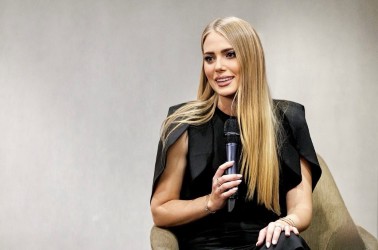
As Montenegro stands before perhaps the most important political and social turning point since the restoration of its independence, the question is no longer how close we are to the European Union, but how close we are to becoming a state in which institutions function properly, laws apply equally to everyone, and knowledge is valued more than party affiliation. Between European ambitions and domestic weaknesses, the country faces a choice that will determine its future for generations to come.
- The greatest anomaly is that we have begun to perceive anomalies as normality - warns political scientist Dr. Anđela Mićanović in an interview with ETV Portal, assessing that Montenegro today faces a much more serious challenge than merely closing negotiation chapters with the European Union. While formally moving closer to membership, the country continues to struggle with party-based employment practices, declining trust in institutions, and a political culture in which, as she puts it, citizens increasingly distrust ideologies and programs because they feel that „the only real ideology is staying in power for one more term“.
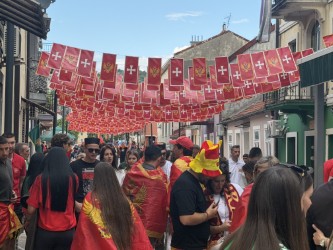
Speaking about Montenegro on May 21, Mićanović emphasizes that on that day the country appeared dignified and united, and that younger generations demonstrated that independence is no longer merely a political decision from 2006 but a sense of shared belonging that they naturally adopt as their own value. She stresses that Montenegro does not belong exclusively to anyone, but is the common home of all its citizens, and that this is precisely why it appeared that day as a country that naturally belongs to Europe.
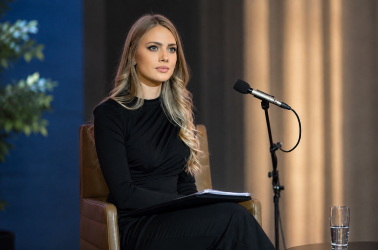
In the continuation of the conversation, she warns that EU membership is not guaranteed in advance and that the essence of European integration lies not in laws and closed chapters, but in institutions that protect citizens regardless of who is in power. She also speaks about a system that rewards loyalty instead of competence, causing the most talented people to leave the country. If Montenegro misses its European opportunity, she believes that the greatest loss will not be the absence of membership itself, but the missed chance to finally put its own house in order.
MONTENEGRO THAT BELONGS TO EUROPE
ETV Portal: What did Montenegro look like to you on May 21 this year? Was it finally a European Montenegro?
Mićanović: The most beautiful thing was that Montenegro appeared dignified and united that day. It looked like a society that, at least for a moment, emerged from its constant tension and divisions. There were many young people who were not celebrating someone else’s defeat, but their own vision of the future, and that is precisely where the key difference lies. They sang to their country sincerely, and I believe that this is the most important change we were not fully aware of until that day.
My brother told me how, in the crowd, he accidentally bumped into someone while passing by, and both of them immediately apologized. It may seem trivial, but it illustrates how much normalcy and consideration existed among people that evening, something we often lack. Those who were older and had fought for this idea two decades ago could see that it is no longer merely a political decision from 2006, but is slowly becoming something deeper: a sense of shared belonging that new generations adopt naturally, without anyone imposing it on them.
I belong to precisely that generation I am talking about - those for whom old divisions mean less and less, and who are far more interested in what kind of country they want to build and whether they see their future in it. Perhaps that is why this day was not only politically significant, but also significant for an entire generation. It is not about where someone comes from, how they think, or what they believe in. Montenegro is large enough for all of us, and that is exactly where its strength lies.
It does not belong exclusively to anyone, nor does it have to. It is enough that we see it as our common home, and in a home there is room for everyone who wishes to belong.
And perhaps this is where we resemble Europe the most today. Was it „finally a European“ Montenegro? Perhaps it would be more accurate to say that it looked like a Montenegro that truly belongs to Europe.
BETWEEN PROGRESS ON PAPER AND REAL REFORMS
ETV Portal: We are on the threshold of EU membership. Have we fulfilled the basic criteria, not only to become an EU member state, but also to become a functional state, a developed and mature society, orderly and ready to progress?
Mićanović: It depends on what we mean by „basic criteria“. If we are talking about formal criteria - adopted laws, opened and technically closed chapters, harmonization with the EU acquis - then Montenegro is indeed making progress. The latest European Commission report gave us our highest average score so far, and on paper we are the most prepared country in the region.
However, we must be cautious about progress „on paper“, because the essence of accession criteria, especially in Chapters 23 and 24, is not simply that a law is adopted, but that institutions and society begin functioning in accordance with it, even when doing so does not suit those in power. Here, the gap between form and practice remains considerable. For example, we may have an anti-corruption strategy and an agency that formally exists, yet in practice remains vulnerable to political pressure.
What should also concern us is the belief among part of the public and political elite that membership is almost guaranteed in advance, that it is enough to technically close chapters and wait for admission because enlargement is supposedly a geopolitical interest of Brussels. However, that is not the case.
Although it is clear that some closed chapters are more the result of Brussels’ goodwill than our actual performance, this is a dangerous trap because goodwill is finite and the window of opportunity is closing. Therefore, our criterion should not simply be closing chapters, but using the process to build a state in which institutions protect citizens regardless of who is in power. Only then will we be able to say that we have truly fulfilled the fundamental requirements.
WHEN ANOMALIES BECOME NORMALITY
ETV Portal: How do the political elites governing the country behave today? Are there anomalies that should be corrected?
Mićanović: I believe the greatest anomaly is precisely that we have started perceiving many things that are de facto anomalies as normal. When party membership becomes the primary path to employment, when public office is viewed as spoils rather than responsibility, when promises are made for election night rather than for an entire mandate - these are all deviations from what politics should be. Yet they have been repeated for so long that they no longer surprise us. And a society that ceases to be surprised by its own anomalies also ceases to correct them.
Our elites, regardless of who is in power, live within electoral cycles, thinking only a few years ahead until the next election. But states are not built in that rhythm. The rule of law, strong institutions, education and healthcare systems, and a healthy business environment are projects that require a decade or more. They rarely bring political points to those who begin them, but rather to those who come afterward. That is why few are willing to undertake them. Here I see the key anomaly: a system that rewards short-term survival while punishing long-term work.
Another thing I would change is the relationship toward knowledge and accountability. In mature democracies, public office implies both competence and accountability. In Montenegro, we have lost both. Party affiliation has long become more important than expertise, so jobs, contracts, and promotions are most often obtained through networks rather than through knowledge and ability.
This is not merely unfair to individuals, rather it is a functional problem for the entire state, because a system in which advancement depends on loyalty rather than competence simply performs worse for its citizens. And perhaps worst of all, such a system drives away the most capable people.
In this kind of political bargaining, the boundary of political absurdity has disappeared. Everyone can cooperate with everyone else, even the most nonsensical policies can be justified, and every previous statement or position can be declared „taken out of context“. Consequently, citizens increasingly distrust any ideology, program, or principle because they feel that the only real ideology is remaining in power for one more term.
Can this be corrected? Yes, but not overnight. It can be corrected when poor political behavior becomes politically and socially costly. This requires institutions that function independently of political parties, media that ask questions instead of merely transmitting statements, an academic and professional community unwilling to remain silent, and citizens who refuse to accept that „things are just the way they are“. Elites change when they realize that the old pattern is no longer profitable. Our task, those of us outside the government, is to make it unprofitable.
ADRIFT WITHOUT AN ANCHOR
ETV Portal: What would it mean for a small country like Montenegro to miss the opportunity to become an EU member? Where could that irreversibly lead us?
Mićanović: Saying, „If we do not join the EU, we are doomed“, is not only inaccurate but dangerous, because this very kind of fear has for years empowered politicians across the region who present themselves as the sole alternative to chaos. The greater the fear, the greater their power. Montenegro has survived much more difficult periods and will continue to exist regardless of the outcome. But there is a difference between survival and progress. What we would lose is not something we already possess, but an opportunity to become what we have not yet managed to be.
Membership was never an end in itself; it was an incentive to finally put our own house in order: to build an independent judiciary, institutions that serve citizens rather than parties, and an economy capable of retaining young people. The damage would not lie in failing to obtain a membership card for a particular club, but in losing the external incentive to implement these reforms at all. Experience shows that when left entirely to ourselves, we rarely carry them out.
And that, I believe, is the essence of the matter for our small country. Large states have the capacity to wander and then correct themselves through their own strength. We rely on frameworks, on rudders that keep us on course when our internal discipline weakens. Missing EU membership would not mean sinking; it would mean remaining adrift without an anchor in waters where the currents have never been kind to small and independent nations.
Therefore, if we ever return to this conversation, I would like it to be proven that we seized the opportunity, not because Europe saved us, but because in Europe we finally became serious about ourselves. And if we fail to seize it, let it at least be recorded that it was not a necessity denied to us from outside, but an opportunity we ourselves allowed to slip away.
EUROPE AS A STANDARD, NOT A REWARD
ETV Portal: And what does life within the European Union’s system of values bring us?
Mićanović: Above all, it gives us a better frame of reference, and that may be more important than any direct benefit. A person, like a state, progresses when measured against those who perform better. Not because we are less valuable, but because an environment that sets high standards pushes us to grow. That is the difference between a society that compares itself with its past and says, 2We are better than yesterday“, and one that compares itself with the best and asks, „Why couldn’t we have this as well?“.
Life within the EU value system generally means that rules apply equally to everyone, that institutions protect citizens rather than the powerful, and that success is built on what you know rather than whom you know. We already nominally accept these values, but there is a difference between having them written down and actually living by them.
Europe acts as a good mentor in this regard: it does not do the work for us, but it does not allow us to stand still. It sets standards and gives us room to reach them. A good mentor is someone who hopes that one day you will surpass them. That is the essence of a healthy environment - one in which others push us forward rather than keep us where we have always been.
This brings us to something that must be said very openly. For years, the Balkans have promoted the idea that the entire region should move toward the European Union together, at the same pace, the so-called „regatta principle“, according to which everyone waits for the slowest participant. This approach is often presented as a sign of regional solidarity and good-neighborly relations. In practice, however, it frequently produces the opposite effect.
Someone who genuinely wishes you progress will not insist that you slow down in order to wait for them; they will support you in moving as fast as you are capable of moving. Insisting that the entire region progress simultaneously can easily become a mechanism for maintaining permanent stagnation. The reality is that not all countries share the same level of political will, institutional readiness, or foreign-policy orientation.
Within such a framework, the most prepared countries become hostages to those that lag behind or deliberately prolong the process. This suits various political and geopolitical actors who prefer a region that waits, hesitates, and remains dependent rather than one that rapidly integrates into the European political space. True regional partnership does not require everyone to move at the same time. It means that those who advance create opportunities for others to move faster toward membership and a better future, as Slovenia and Croatia are doing for us today, rather than keeping everyone in place under the pretext of unity.