




Montenegro is a small country with a big heart, my friends and a part of me will remain here
I remember the first images from Cetinje, Montenegro’s historic royal capital, very well. People were already dying in Ukraine, millions were fleeing their homes, and local residents, guided by their hearts, took to the streets every day carrying Ukrainian flags. And they did not do so for just a week or two. They gathered every day for the first hundred days and continued their demonstrations in the months that followed... As for my personal feelings, I am leaving Montenegro with deep gratitude and, of course, sadness. During my four years here, I have made wonderful friends and colleagues - people with whom I now share not only professional but also personal bonds. I have genuinely grown to love your country, and I am leaving a part of my heart here

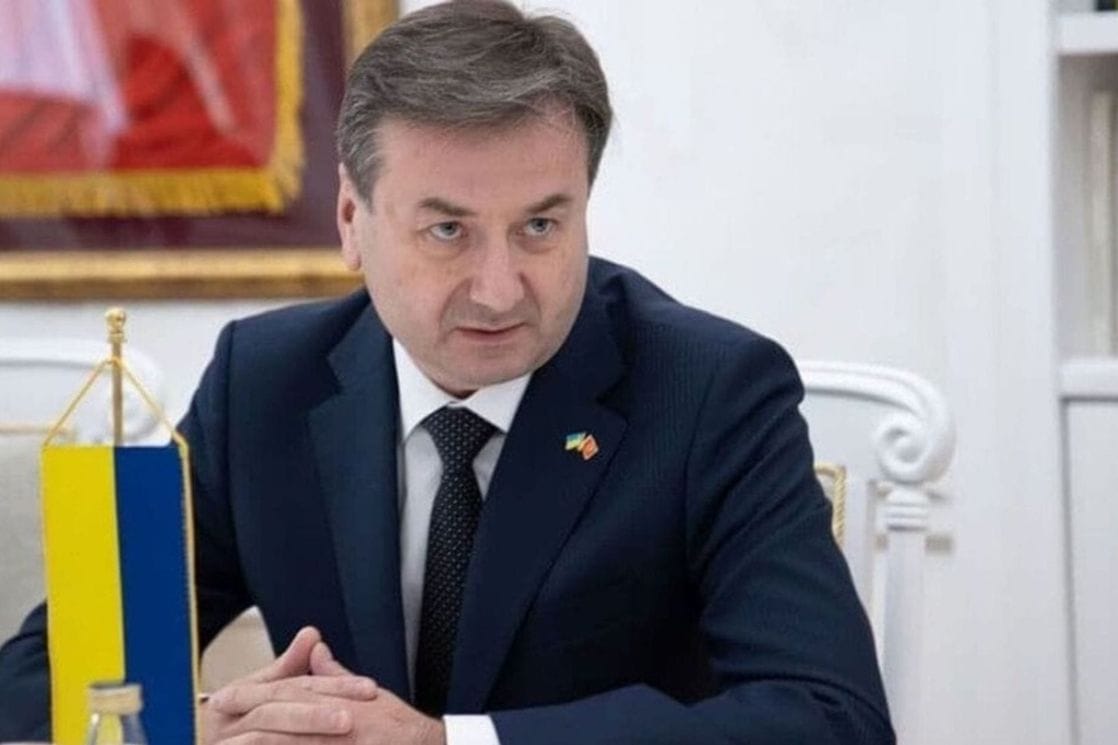
After four years in Montenegro, Ukrainian Ambassador Oleh Herasymenko will soon be leaving Podgorica. His term began just a few months after the start of Russia’s full-scale invasion of Ukraine and unfolded in the shadow of a war that is still ongoing. Instead of a conventional diplomatic agenda, the Embassy’s day-to-day work was shaped by the war, assistance to Ukrainian citizens, the fight against disinformation, efforts to secure international support, and the need to keep the world’s attention focused on what was happening in Ukraine.
Under these circumstances, Montenegro stood by Ukraine, Herasymenko says. Governments and political circumstances changed, but, he stresses, Montenegro’s position on the territorial integrity and sovereignty of his country did not. He particularly remembers citizens who publicly expressed solidarity with Ukraine, as well as the thousands of Ukrainians who found refuge in Montenegro after the war began.
In this interview, ahead of his departure from Montenegro, Herasymenko reflects on four years in which the line between diplomacy and the realities of war was often almost entirely blurred. He discusses the assistance Ukraine received from Montenegrin institutions and citizens, the situation of the Ukrainian community, the European future of both countries, and what a just peace means to Kyiv. He speaks candidly about his expectations for the future, as well as his personal attachment to a country where, as he puts it, he has made true friends.
ETV PORTAL: Looking back on your four-year term in Montenegro, what do you consider your greatest achievement? Where had you hoped to accomplish more, and what feelings are you leaving Montenegro with?
HERASYMENKO: My entire term as ambassador to Montenegro has coincided with the Russian Federation’s full-scale war against Ukraine, which, unfortunately, is still ongoing. Under these circumstances, our main task was, of course, to secure reliable support for Ukraine while continuing to develop our relations with Montenegro. I believe we succeeded in doing so. Over these four years, our political dialogue has become more intensive and our cooperation more substantive. Most importantly, Ukraine has been able to count on Montenegro on matters of principle. The people of Montenegro have also shown that they are friends of the Ukrainian people at a time when we have been going through great hardship.
However, I would not want to suggest that everything has already been accomplished. We have considerably greater potential in trade, investment, education, culture, and cooperation between our cities. There are also specific initiatives that need to be pursued further. One of them is a visit to Montenegro by President Volodymyr Zelenskyy. We are working to organise it. The recent meeting between our presidents in New York once again confirmed their interest in such a visit. I would very much like it to take place as soon as possible. It would be an important event in our bilateral relations and would give fresh impetus to other projects, particularly in security, political cooperation, and economic cooperation. Another important milestone in our bilateral relations was the signing, late last year, of the Protocol amending the Free Trade Agreement between our two countries.
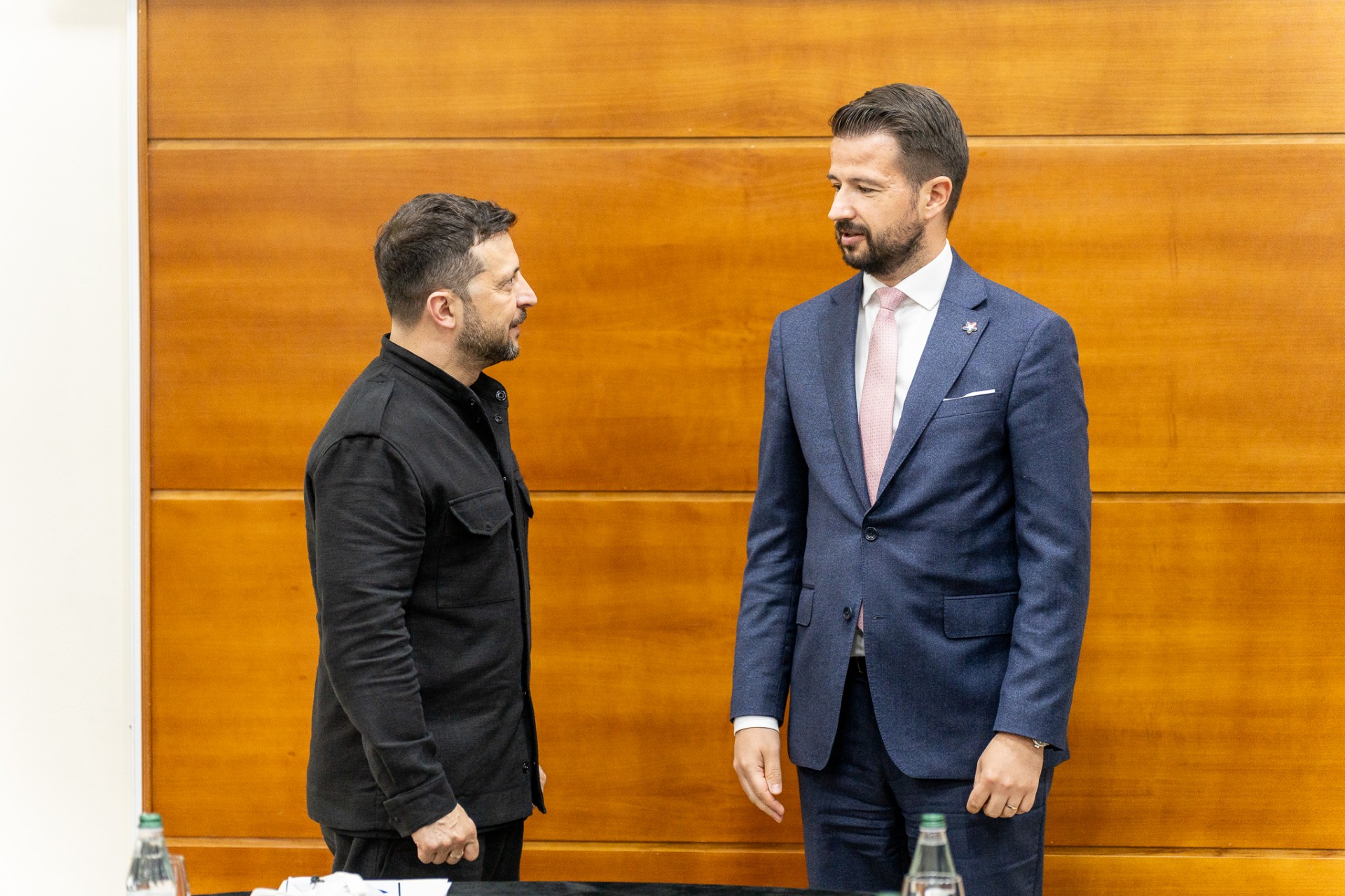
My successor in Montenegro will therefore have a solid foundation on which to build, but there will also be plenty of work ahead.
As for my personal feelings, I am leaving Montenegro with deep gratitude and, of course, sadness. During my four years here, I have made wonderful friends and colleagues - people with whom I now share not only professional but also personal bonds. I have genuinely grown to love your country, and I am leaving a part of my heart here.
ETV PORTAL: Your term began just a few months after the start of Russia’s full-scale invasion. How did the war change the priorities and working methods of the Ukrainian Embassy in Montenegro?
HERASYMENKO: I have practically had no conventional, peacetime period of diplomatic work in Montenegro. I arrived in the summer of 2022, when Russia had already launched its full-scale armed aggression and millions of Ukrainian families were seeking safety abroad. From the very beginning, therefore, we had to work under extraordinary circumstances: we needed to manage bilateral relations, provide practical assistance to our citizens, and maintain constant engagement with the Montenegrin authorities and society.
The war presented us with new challenges every day. Following new Russian attacks, we had to explain the situation in Ukraine to our partners, keep international public attention focused on the conflict, counter disinformation, and work to secure assistance. Consular and humanitarian issues became another major area of work. Behind every request for help was a real person, often an entire family that had lost its home or been forced to separate from loved ones. These were frequently genuine human tragedies.
The year 2022 was particularly difficult. On this occasion, I would like to thank our dear Ukrainian community once again for its extraordinary commitment and assistance during that especially challenging period. In the first year of the full-scale war, Ukrainians in Montenegro found more effective ways to organise themselves. The Ukrainian association Dobro djelo was established, and four Ukrainian centres opened in Podgorica, Budva, Bar, and Herceg Novi.
It was an extremely difficult period both for Ukraine and for our diplomatic service. Nevertheless, we could not focus exclusively on the immediate challenges of wartime. We also had to work for the future: strengthening political ties, developing economic contacts, and expanding cooperation on European integration. The war will end, and these relations must continue to grow.
ETV PORTAL: How do you assess the support provided to Ukraine by Montenegrin institutions during your term? In your opinion, has Montenegro done enough, and where could it have done more?
HERASYMENKO: We greatly appreciate Montenegro’s support, and in particular its consistency. During my term, governments and political circumstances changed, but the country’s position on Ukraine’s sovereignty and territorial integrity remained clear. The friendly attitude of society as a whole remained unchanged as well.
This support was not limited to statements and declarations. Montenegro joined the EU’s sanctions policy, provided military and technical assistance, supported Ukraine in international organisations, participated in European and NATO assistance mechanisms, and joined the International Coalition for the Return of Ukrainian Children.
I would particularly like to highlight Montenegro’s reception of our citizens who were forced to flee the war. For a small country, this is a truly significant contribution. As I have emphasised several times in previous interviews, Montenegro is a small country with a big heart.
Of course, when Ukraine is fighting such a difficult war, we need substantial practical support. There are opportunities for further cooperation in security, the implementation of humanitarian programmes, medical treatment and rehabilitation, as well as future reconstruction. It is also important to implement the bilateral agreements we have already been working on. However, I would not want to measure friendship by compiling a list of things that have yet to be done. Montenegro has acted within the limits of its objective capabilities and remained on the side of international law. Ukraine will not forget that.
ETV PORTAL: Since the beginning of Russia’s aggression, many Montenegrin citizens have publicly expressed their support for Ukraine. How much did this grassroots solidarity mean to you, particularly the protest marches in Podgorica and the prolonged gatherings in Cetinje?
HERASYMENKO: It meant an enormous amount to us. I remember the first images from Cetinje, Montenegro’s historic royal capital, very well. People were already dying in Ukraine, millions were fleeing their homes, and local residents, guided by their hearts, took to the streets every day carrying Ukrainian flags. And they did not do so for just a week or two. They gathered every day for the first hundred days and continued their demonstrations in the months that followed.
I have spoken about this before: it was an expression of a deeply considered position held by people who understand what the right of a nation to freedom and its own state means. I am very grateful to everyone who supported Ukraine in other Montenegrin cities as well.
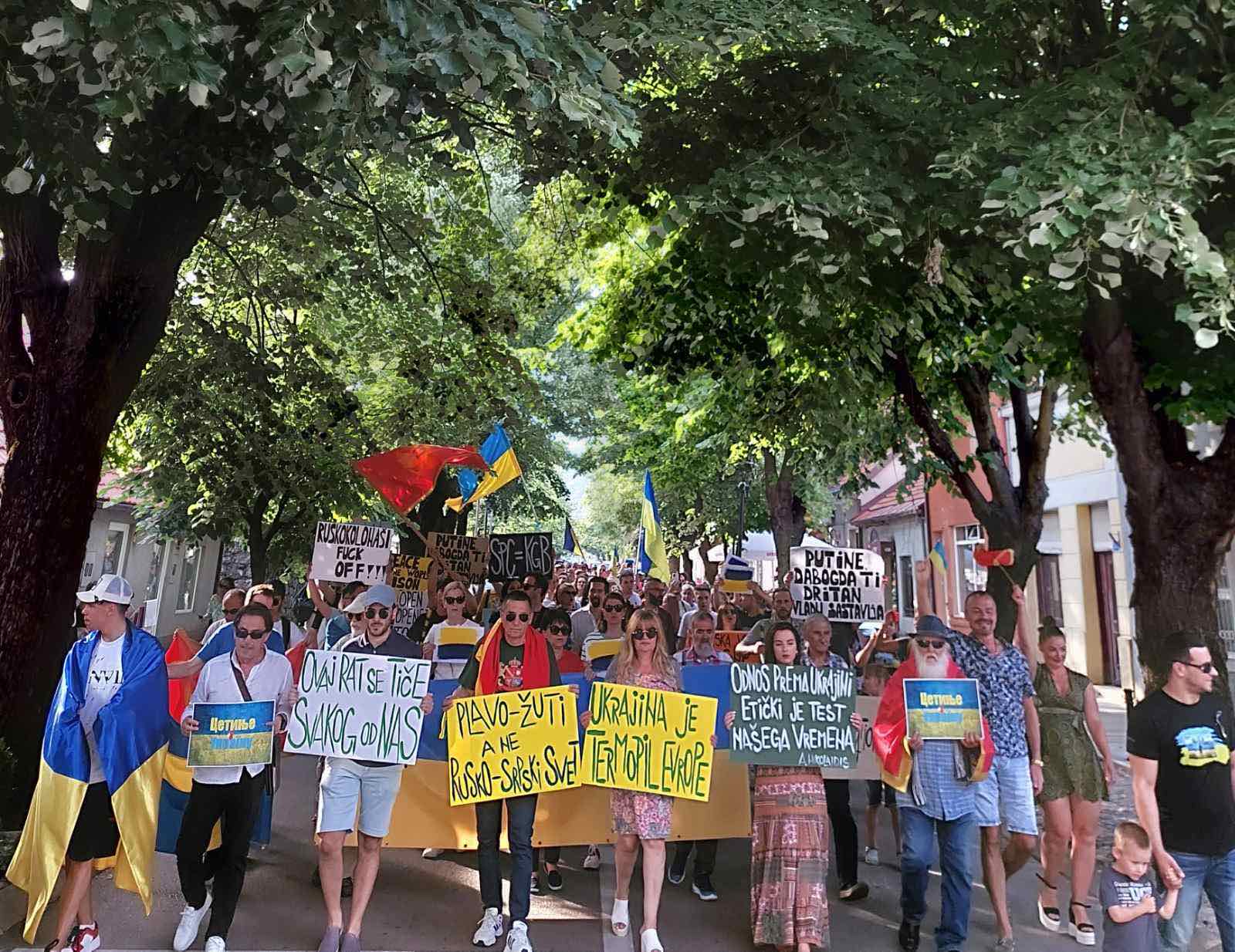
What happened beyond the protests was no less important. Some people helped Ukrainian families find accommodation; others brought essential supplies, helped children, or simply offered support to people who found themselves far from home. When I speak about the friendship between Ukraine and Montenegro, it is precisely these actions by ordinary people that I remember first. When Russia’s war machine began destroying Ukraine’s energy infrastructure in the depths of freezing winter, Montenegrins joined the #WarmthForUkraine campaign. This helped secure energy equipment for kindergartens, schools, and other civilian facilities.
ETV PORTAL: During your term, the reception of Ukrainian citizens who came to Montenegro because of the war was also a major issue. How do you assess Montenegro’s treatment of these people, and what, from your perspective, could have been done better?
HERASYMENKO: First and foremost, I would like to express my sincere gratitude to the Montenegrin state and its people. Thousands of Ukrainians found safety here. Many arrived in 2022 carrying only the bare essentials, not knowing how long the war would last or whether they would have a home to return to. Montenegro welcomed these people and provided them with temporary protection, while society demonstrated great humanity. At the height of the influx in 2022, there were approximately 40,000 temporarily displaced people from Ukraine in Montenegro. Although many have since returned home, this was one of the highest figures in Europe relative to the host country’s population.
It is understandable that accommodating such a large number of people posed a serious challenge for a small country. And when a temporary stay stretches into years, new questions arise: employment, healthcare, children’s education, documentation, and integration. There is always room for improvement in these areas, and I hope the dialogue on these issues will continue. At present, I can say with confidence that our citizens are not facing systemic problems in your country. Moreover, Ukrainians are contributing to Montenegro’s development. Nevertheless, I want to emphasise that our strategic goal remains the return of as many of our people as possible to their homeland. One day, peace will come and the war will end. And we will have an enormous amount of work to do.
But my main impression from these years is the attitude of Montenegrins towards Ukrainians. I know that our citizens have felt supported here. That means a great deal to people who have endured war. I am personally grateful for this humanity.
ETV PORTAL: Montenegro is a NATO member and a candidate for European Union membership, while Ukraine is also pursuing European and Euro-Atlantic integration. How important is Ukraine’s European future today for the security of Europe as a whole?
HERASYMENKO: Russia’s aggression has shown that European integration and security can no longer be considered separately. If, in modern Europe, it is possible to change borders by force and deny a neighbouring state the right to independence, that poses a threat to everyone, especially smaller countries. The way the war against Ukraine ends will therefore have consequences for the security of the entire continent.
Ukraine is genuinely interested in Montenegro successfully concluding its EU accession negotiations. As I have said before, when your country becomes a member of the European Union, we will have another good friend within the Union. This matters to us both politically and in terms of practical cooperation. Montenegro has already covered a substantial part of the accession negotiation process, and its experience is valuable to Ukraine. We are ready to continue cooperating actively and substantively in this area. In March this year, officials from our governments signed a Memorandum of Cooperation on European Integration. We will implement it.
I am pleased that the EU enlargement process has regained momentum. Ukraine and Montenegro are at different stages, but we share the same European goal. I very much want to see Montenegro join the EU as soon as possible. This would be an achievement for your country and, at the same time, a significant success for the EU’s enlargement policy.
ETV PORTAL: There is increasing discussion of the war in the context of a possible peace agreement. What does a just peace mean for Ukraine, and what guarantees are essential for such a peace to be acceptable?
HERASYMENKO: Before discussing a peace agreement, we must clearly understand Russia’s objective in waging this war. Some people still try to portray and discuss it as a dispute over particular territories or as an alleged attempt to protect Russian-speaking populations. These interpretations are fundamentally wrong. The Kremlin’s real objective remains unchanged: to destroy Ukraine as an independent state and Ukrainians as a distinct nation. Russia’s political leadership has spoken openly about this on numerous occasions. Moscow wants Ukrainians to stop being Ukrainians and become Russians. And for those who disagree, who want to preserve their own state, language, and identity, it offers the well-known Stalinist methods of Soviet history: repression, mass rape, deportation, forced displacement, and murder. We are already witnessing forced Russification, persecution in occupied territories, and the abduction of our children. In effect, the Kremlin is presenting us with a choice: become Russians or disappear.
Look at what Russia is doing now. We are constantly confronted with horrific images from central Kyiv and other Ukrainian cities. On 28 September, a Russian jet-powered attack drone struck the building of the National Academy of Sciences of Ukraine in the very heart of the capital. A fire broke out, and people were killed. This is one of our country’s principal scientific institutions. The attack, in the context of relentless strikes on residential buildings and civilian infrastructure, became yet another indication of the current escalation. We believe the Kremlin is using terror to break Ukrainian society’s will to resist. It will stop at nothing to achieve its objective.
There is another issue that people in Europe are not always willing to discuss openly. There is still a widespread assumption that, in the 21st century, wars are conducted according to rules, that conventions exist, and that there are limits one side will not cross. Our experience has shown the opposite.
I have seen footage recorded by our reconnaissance personnel showing how Russian soldiers treat their own comrades. A Russian soldier was dragged out of cover, shot by his fellow soldiers, and left where he was killed. This is by no means an isolated incident. The scale and brutality of their treatment of their own people are shocking. What is more, Russians themselves circulate these videos online. If they treat their own people this way, there should be no illusions about how that army will treat Ukrainians.
Ukraine
Russia’s invasion of Ukraine — illustration. (Photo: epthinktank.eu)
And this is not simply a matter of individual soldiers. Over the years of war, we have seen how deeply imperial thinking and contempt for Ukraine have penetrated Russian society. For many Russians, the very idea that Ukrainians can have their own state, language, and identity remains unacceptable.
We are witnessing a system in which brutality is justified in the name of state necessity and moral constraints are regarded as weakness. Even the leadership of the Russian Orthodox Church openly supports state policy and provides it with religious justification. After everything we have witnessed, we have no grounds for illusions: Russian aggression can be stopped only through force and determined resistance, when Moscow realises that it cannot achieve its objectives through weapons.
That is precisely why we must endure. If Ukrainians fail to withstand this struggle, the very existence of our state and nation will be at risk. This is something everyone who urges Ukraine simply to accept new Russian demands in exchange for a rapid ceasefire must bear in mind.
We want peace more than anyone. We are ready for serious diplomacy and a cessation of hostilities. But we need a peace that will not become a pause before another act of aggression. This requires reliable security guarantees, a strong Ukrainian military, long-term support from our partners, and continued pressure on Russia. No decisions about Ukraine can be made without Ukraine. And, of course, any settlement must provide for the return of our deported children, prisoners of war, and civilians who have been unlawfully detained.
We can no longer rely solely on promises from Moscow. Peace must give Ukraine the ability to live in its own state and determine its future independently. That is what we are fighting for.
ETV PORTAL: Which moment from your four years in Montenegro will you remember most fondly?
HERASYMENKO: It is difficult for me to single out one particular day. Over four years, there have been many meetings and events, including some very difficult ones. Of course, I will remember the support for Ukraine in Cetinje and Podgorica, as well as the holidays and recreational stays enjoyed by Ukrainian children in Kotor and other cities. But when I think about my personal memories, the people I worked and spoke with every day will come to mind first.
I was born in Kyiv, and for me there is no better city than my hometown. At the same time, I said in one of my previous interviews that if I were unable to live in Kyiv for a while, I would gladly live in Podgorica. My view has not changed over these years. I like your city and your country, but above all, I like your people. I have made true friends here. They are precisely the people I will miss most after I leave.
ETV PORTAL: Finally, after everything you have experienced and accomplished during your term in Montenegro, what message would you like to convey to the citizens of our country?
HERASYMENKO: First and foremost, I want to say a very big thank you to the people of Montenegro. Thank you for standing by Ukraine throughout all these years. Thank you for your country’s principled position, for the Ukrainian flags in your streets, and, above all, for the way you welcomed our citizens fleeing the war. We will never forget it. I am grateful to my colleagues at Montenegro’s Ministry of Foreign Affairs and other state institutions, with whom I met almost every day. I greatly appreciate their understanding and empathy, as well as the thoughtful attention they gave to my requests and representations.
I sincerely wish Montenegro success, above all on its path towards the European Union. We in Ukraine are truly rooting for you. I wish your country stability, prosperity, and peace, and I hope our two peoples will develop even closer ties. I am convinced that we still have a great deal of work to do together. My term is coming to an end, but it is important that the work we have begun continues. I hope my successor and the entire diplomatic team at the Embassy will be able to make full use of the potential our relations now offer.
On a personal note, I want to thank you once again for these four years. In a few days, I will leave Montenegro as Ukraine’s ambassador, but I am not saying goodbye to the country itself. My friends, many wonderful memories, and a part of my heart will remain here.
I very much hope to return - this time as a guest - and meet again the people who have become so dear to me.
Thank you from the bottom of my heart for everything. Until we meet again, Montenegro.