




Vuksanović on the concession of Airports of Montenegro: Behind the bombastic announcements lie numerous open questions to which the public still has no answers

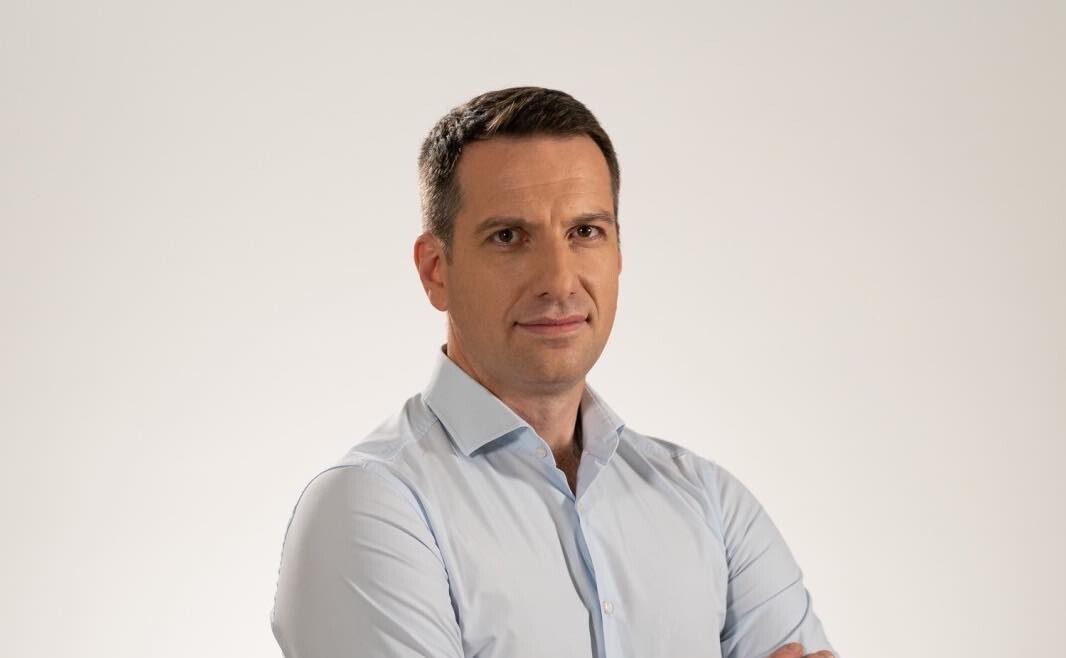
The decision of the Government of Montenegro to continue and effectively finalize the concession procedure for Airports of Montenegro, accompanied by a propaganda campaign about „a billion euros for the state“, requires a serious, well-argued, and responsible response, because behind the bombastic announcements lie numerous open questions to which the public still has no answers – stated Advisor to the President of Montenegro for Internal Policy and Economic Development Nebojša Vuksanović.
The Office of Jakov Milatović calls on Members of Parliament of Montenegro to decide, when the issue of the Airports of Montenegro concession comes before them, exclusively in the interest of the state and its citizens.
His statement is reproduced in full below:
„First and foremost: what is the economic logic behind treating the initial concession fee of €100 million as relevant and adequate today, even though it was defined seven years ago? Is there today in Montenegro any product or service that has the same price as in 2019? In the meantime, we have witnessed strong price growth, as well as significant growth in the business revenues of Airports of Montenegro, along with nearly doubled operating profit compared to 2019. At the same time, the estimated value of the company’s assets has almost doubled. How is it possible that under such circumstances there is insistence on financial parameters from a completely different economic moment?
Second: the Government persistently ignores the fact that Airports of Montenegro, as a profitable state-owned company, has a real capacity to invest independently. With a moderate annual profit growth of 5–6%, estimates show that over the next 30 years the company could accumulate between €850 million and €1 billion in profit. European investment funds and financial institutions are open to companies that operate profitably, which further refutes the claim that investments are only possible through concessions and foreign operators. The assertion that there can be no development without a concessionaire is simply not true.
Third: why is the concession being granted for as long as 30 years? There is no comparable example in the region, or even more broadly, of such a valuable infrastructure resource being granted for such a long period without additional safeguards and periodic reviews of the terms. This effectively locks the country’s development potential for an entire generation.
Fourth: the Government must clearly answer the question of jobs. When a concession fee of 35% of revenue is being announced, basic economic logic dictates that the concessionaire, in order to make a profit, will have to significantly reduce operating costs. In practice, this means rationalizing the number of employees. How many workers will lose their jobs, and how will this issue be addressed?
Fifth: why is there silence about potential lawsuits and arbitrations? Two companies that participated in the process have already announced legal action. What is the estimated financial and reputational damage to the state? It is particularly concerning that even some members of the Government and the concession commission have publicly spoken about the compromised nature of the process itself, distancing themselves from it. Why, then, despite everything, is there insistence on completing a process that has been burdened with serious doubts since its inception?
It is also problematic that those who once criticized this process are now completing it under the terms defined by the previous government, without any substantive reassessment.
Our position is clear: we are not against investment, nor against foreign capital and expertise. The problem is not the concession itself, but the fact that it is being implemented under financial and market parameters that are no longer realistic. Serious analyses indicate that, if the concession procedure were carried out under current conditions, the concession fee could be twice as high.
A new valuation further imposes the obligation for the Parliament of Montenegro, as the highest representative body of citizens, to take a position on this issue. In the given circumstances, there is no ideal solution, but there is a responsible one: suspending the current procedure and launching a new one, based on current economic parameters, transparent rules, and clear criteria. Before that, a comprehensive analysis of all management models is necessary, including professionalized state management.
Therefore, we call on Members of Parliament of Montenegro to decide, when this issue comes before them, exclusively in the interest of the state and its citizens. If we want responsible governance, decisions about airports must be transparent, fair, and based on the public interest. Anything else is a continuation of old policies, only with worse excuses.”