


Zenović for ETV Portal: A sovereign Montenegro chooses the EU, Russia lies outside the European value framework due to its aggression against Ukraine

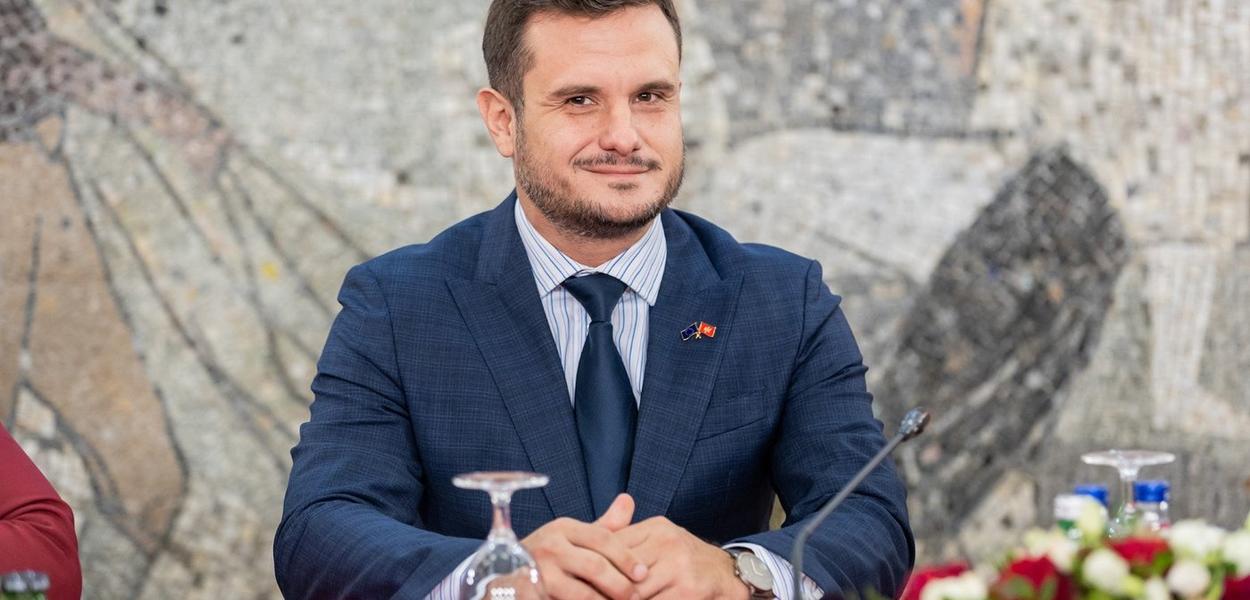
Montenegro is in a decisive phase of negotiations with the European Union, at a time when EU enlargement policy is being reaffirmed and the Western Balkans is receiving renewed strategic attention. Speaking to ETV Portal about Montenegro’s capacity to close negotiating chapters, political challenges, possible external influences, and the role of good-neighbourly relations is Montenegro’s Chief Negotiator with the European Union Predrag Zenović.
External influences and Montenegro’s European path
ETV Portal: How do you view the political influence of Serbia, and according to some assessments also Russia, on internal developments in Montenegro? Is there a real concern that these influences could slow down or even destabilize Montenegro’s European path?
ZENOVIĆ: Montenegro is a sovereign state with clearly defined foreign policy priorities, among which membership in the European Union is the central strategic goal, while good-neighbourly relations are the path toward achieving that goal.
Russia has voluntarily excluded itself from the European value and strategic framework through its aggression against a sovereign European state, and thus also from any role as a power that, based on historical ties, could support Montenegro’s European ambitions. The Russian community in Montenegro, on the other hand, in clear opposition to the official Kremlin, is establishing liberal universities and supporting the European aspirations of the country that is now their new home. I do not see any actors with democratic capacity and legitimacy who would allow malignant influence of any power in Montenegro.
The essence is that the European path must remain a democratically led process, within a political dynamic between a sovereignty-based Montenegro, the European Commission, and the Member States, grounded in reforms, principles, and values we share with the Union. Everything else constitutes important, but not decisive, political and diplomatic contexts. Strengthening the rule of law, transparency, and independent institutions - which consolidate the European path - along with strong mechanisms to combat disinformation and hybrid forms of warfare, represent the best protection against any undesirable influence, whether coming from the region or the broader international scene. Considering that EU membership is the goal for all countries in the region, Montenegro’s path is a guarantee that enlargement remains a living policy, and once Montenegro joins the EU, the integration of the rest of the Western Balkans will become its primary foreign policy objective.
Support of Member States and the issue of Hungary
ETV Portal: Is there a risk that Hungary could block the drafting of the Accession Treaty between the European Union and Montenegro? I ask this in the context of messages from Prime Minister Viktor Orbán that there can be no Western Balkans integration without Serbia, and that Serbia is a key segment of the integration process.
ZENOVIĆ: Allow me to state the following: all 27 EU Member States support Montenegro’s European path. That is the first and most important point. The EU accession process is, in its essence, a process of shared political will among Member States and EU institutions, based on clear rules but also on continuous political dialogue. At this stage of negotiations, Montenegro enjoys strong and visible support for continuing and completing the process, as confirmed by messages from Brussels as well as from all European capitals.
At the same time, one should not lose sight of the fact that this is a politically sensitive process in which each Member State has the right to articulate its own interests and perspectives, which may not always align with those of other Member States. This creates a diplomatic and foreign-policy challenge for Montenegro, but it is part of the political reality of EU decision-making that we must take into account. Diplomatic, communication, foreign-policy, and strategic elements of this process will become increasingly important and visible as Montenegro becomes technically more mature for membership day by day.
The drafting of the Accession Treaty is neither a simple nor a unilateral act, it is the result of the maturity of the negotiating process and the trust achieved in the reform capacity of the candidate country, while also serving as a model for the future course of enlargement policy. That is why Montenegro’s European integration is crucial for enlargement policy as a whole, and why our task is correspondingly more complex and goes beyond the framework of Montenegro’s own European path.
Capacity to close all chapters by the end of 2026
ETV Portal: Does Montenegro have the capacity, institutional strength, and political readiness to close all negotiating chapters by the end of 2026?
ZENOVIĆ: In the previous period, Montenegro has built a serious institutional and administrative capacity for completing the negotiations. That administrative structure has had its ups and downs, but its foundation has remained strong enough for the remainder of the process. A large number of chapters are already „technically mature2, while the remaining ones are in the final stage of preparation, as confirmed by assessments of the European Commission and the dynamics of chapter closures during 2024 and 2025.
This Government received a positive IBAR for Chapters 23 and 24 and closed nine negotiating chapters. From a technical standpoint, this is extremely ambitious, but achievable. However, the fundamental prerequisites remain clear: A stable political framework, a basic consensus around the European goal, and the readiness of institutions to ensure that reforms are not a one-off effort, but a lasting practice. Montenegro today has a clear European orientation and a real chance to achieve that goal. We must demonstrate that we already behave as a future Member State of the European Union. It is precisely in this political mindset that the difference lies between European ambition and EU success.
The most difficult chapters and reform challenges
ETV Portal: In which negotiating chapters, in your opinion, will Montenegro face the most work and the greatest challenges in the closing process?
ZENOVIĆ: The most demanding part of the process, as since the very beginning of negotiations, remains Chapters 23 and 24 - rule of law, judiciary, fundamental rights, and the fight against high-level corruption and organized crime. These chapters are the foundation of the process, the essential test of system functionality and trust in institutions, both for the European Union and for Montenegro’s citizens. From a technical perspective, the green and energy agenda - Chapter 27 (environment and climate change) and the related Chapter 15 (energy) - represents one of the most complex challenges in technical, financial, and value-based terms.
In this area, it is not only about harmonizing legislation, but about a deep transformation of policies, infrastructure decisions, and social habits. Chapters related to food safety and veterinary policy, customs, and the free movement of goods are also important, as Montenegro will become an external border of the EU upon accession and an entry point to the common European market. Chapters concerning human capital (2 and 19) require complex institutional and administrative mechanisms - there is still much work ahead of us there. In short, challenges exist, but reforms must be implemented thoroughly, planned wisely, and carried out without delay - there is no more time to wait.
Media freedoms and European standards
ETV Portal: Compared to practices and conditions in EU Member States, can Montenegro be considered a country with media freedom?
ZENOVIĆ: Media freedoms are an integral part of European standards and one of the key segments of Chapter 23, while Chapter 10 addresses the media as digital and traditional carriers of information. In recent years, Montenegro has improved its normative framework and opened space for strengthening institutional protection of journalists and media pluralism. At the same time, a realistic and responsible assessment requires acknowledging that practice still presents certain challenges - from the economic sustainability of media outlets to the polarization of the public sphere.
I would remind you that Montenegro has improved its position in the media freedom index of Reporters Without Borders. Media freedom is a goal in itself, but also a prerequisite for a mature democracy. I believe that investigations into the murder of Duško Jovanović and attacks on journalists and editors will lead to more comprehensive truths about political or other backgrounds, and that, despite the unacceptable passage of time, we will come closer to justice for the victims and their families, as well as justice for society as a whole.
Political stability as a condition of membership
ETV Portal: According to assessments from Brussels, does Montenegro have sufficient political stability to become the next Member State of the European Union?
ZENOVIĆ: Political stability represents one of the key systemic prerequisites for successfully completing negotiations, especially in the final stages of the process, when a high level of institutional coherence is required. The European Union clearly sends the message that the reform process must be protected from political crises and social divisions. However, democracy is characterized by dissensions, differences, and political struggles, but a minimum of common understanding about fundamental values and the European path makes the process more resilient and predictable. The experience of other countries shows that without such consensus, there is no success. This is therefore a joint undertaking of the Government and the opposition, institutions and civil society, the administration and citizens - in short, if we are to reach the goal, we must walk this path together.
Croatia and bilateral issues
ETV Portal: Is there concern that Croatia, due to open and complex bilateral issues, could at some point slow down or complicate Montenegro’s progress toward EU membership?
ZENOVIĆ: As I have said, good bilateral relations with neighbors represent an important element of European policy and part of the broader concept of regional stability. Montenegro consistently advocates open dialogue and the resolution of outstanding issues in a spirit of partnership and European values. Croatia has supported Montenegro’s accelerated European path both politically and at the expert level, and it is important to acknowledge that rather than speak of any kind of blockade.
At the same time, the European framework offers mechanisms that allow bilateral issues not to become obstacles to the overall process, but to be resolved in parallel and constructively. Experience shows that sustainable progress comes precisely through dialogue, not politicization, and that it is in the interest of both Member States and candidate countries to build regional cooperation on trust. Montenegro remains committed to such an approach, convinced that the European path should connect rather than create new lines of division, and that even the most sensitive bilateral issues should be viewed in the light of a shared European future.