




Amendments to the Law on Internal Affairs under Brussels’ examination
Generally speaking, Montenegro needs to ensure that police recruitment procedures are merit-based, as well as that appropriate procedural safeguards exist to prevent undue political interference in the work of law enforcement bodies, the EU Delegation told Pobjeda

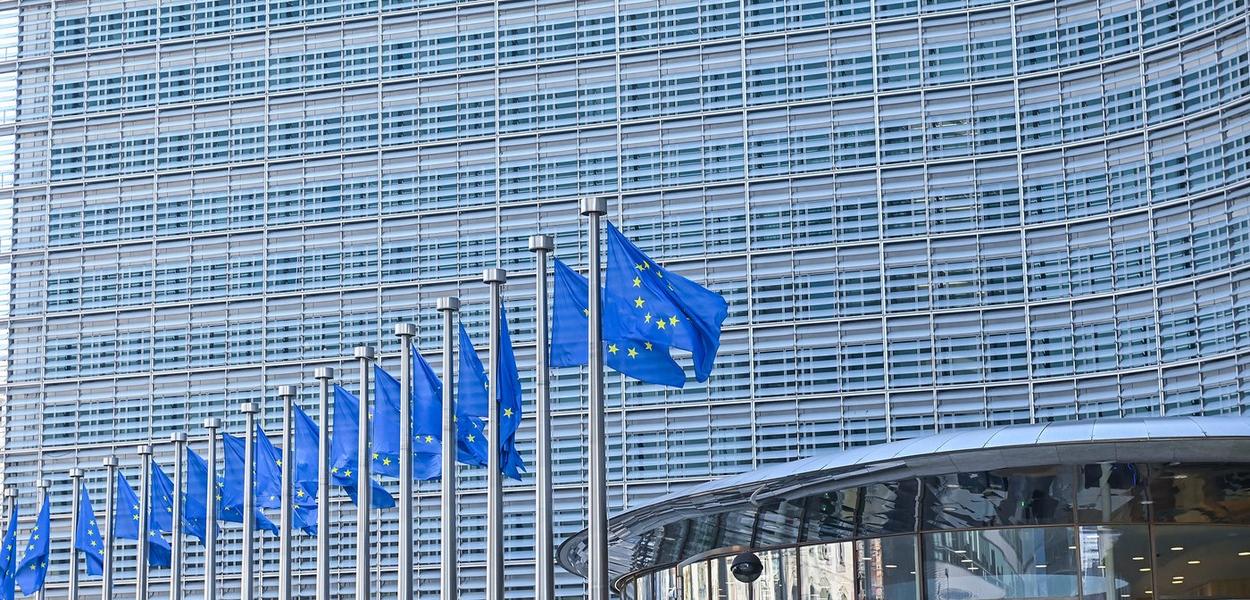
The European Commission will submit detailed comments on the draft amendments to the Law on Internal Affairs in the coming period, which arrived in the Montenegrin Parliament last week as a Government proposal for urgent consideration, the Delegation of the European Union in Montenegro stated for Pobjeda.
- The revised version of the amendments to the Law on Internal Affairs has been submitted to the Commission and is currently under assessment by services of the Commission – is stated in the response to that newspaper.
They also specified that „the European Commission will provide detailed comments on the draft law in the coming period”.
- Generally speaking, Montenegro needs to ensure that police recruitment procedures are merit-based, as well as that appropriate procedural safeguards exist to prevent undue political interference in the work of law enforcement bodies - the EU Delegation pointed out.
Pobjeda reported on Friday that controversial amendments to the legal act were once again placed on the agenda of the seventh session of the autumn sitting of the Parliament of Montenegro, which began last week.
These are slightly revised versions of the amendments proposed at the end of July by the Democrats, whose party official Danilo Šaranović is the Minister of Internal Affairs. Due to controversial provisions regarding the manner of reorganization and recruitment contained in that proposal, the law was withdrawn from procedure following numerous criticisms from the civil sector and European institutions.
However, five months later, the same draft is once again before member of parliaments, but this time not as a party initiative, but as a Government proposal, which was approved at one of the electronic sessions and ultimately signed personally by Prime Minister Milojko Spajić. Although formulated differently, the amendments have essentially remained the same, enabling easier hiring and dismissal solely on the basis of a decision by the top of the Ministry of Internal Affairs, that is Minister Šaranović.
The proponents argue that, instead of their legislative solutions being viewed as „a cause for concern“, the proposed amendments should be seen as „a positive example of the transposition of European values into the domestic legal system, which will be very easily measurable in the first few months of the application of this law, should it be adopted“.
- The aforementioned amendments have not been aligned with primary and secondary sources of EU law - they state immediately thereafter.
In the document that entered parliamentary procedure under an urgent procedure, one of the key novelties is the determination of eligibility for employment in the Ministry of Internal Affairs and the Police Directorate. In the future, this will be checked by a special Commission for the verification of security impediments.
Although it is emphasized that all five members of this body will have to undergo the same vetting process, the very fact that this is decided exclusively by the minister (for the time being – Šaranović) sufficiently indicates the possibilities and manner of influence over who may be engaged in the security sector. The manner in which security impediments for service work will be verified is also defined.
- The most important functional advancement relates to the fact that the determination of security impediments now constitutes grounds for termination of employment by law, without the need for lengthy disciplinary procedures, in which numerous procedural abuses are possible, leading to avoidance of responsibility and the impossibility of deciding on disciplinary liability and imposing disciplinary measures, which was the case until now - the proponents believe.
In explaining the procedure that has already been the subject of numerous criticisms, it is stated that it is considered that „security impediments for further work“ exist if a police officer „maintains connections with persons who unlawfully collect classified and other data, terrorists, saboteurs, members of organized criminal groups, or persons reasonably suspected of belonging to such groups“.
Given that the position of European institutions is that „Montenegro needs to ensure that police recruitment procedures are merit-based“ and that „appropriate procedural safeguards exist to prevent undue political interference in the work of law enforcement bodies“, the proposed new legal framework will hardly meet these criteria.
The proposed amendments to the Law on Internal Affairs were criticized yesterday by the President of the Management Board of the Institute Alternative Stevo Muk, who stated that, despite announcements of police professionalization, they do not guarantee legal certainty and judicial protection in procedures for determining security impediments, and that they were submitted under an urgent procedure, without a public debate and without the opinion of the European Commission. Muk stressed that members of parliament must raise questions of compliance with the standards of the European Court of Human Rights during the debate and seek extensive amendments.
- Provisions on the conduct of security checks and potential decisions on the termination of employment of a police officer must be prescribed in a way that ensures predictability, i.e. legal certainty, judicial protection, including a reasoned decision and a defense based on information, which the proposed amendments to the Law on Internal Affairs do not guarantee - Muk said.
He also emphasized that by submitting a new draft law by the Government under an urgent procedure, there is an attempt to exclude the interested public from influencing the proposed provisions that fundamentally change the manner in which certain issues are regulated.
- The Government’s explanation that a public debate was not conducted due to the existence of extraordinary, urgent, or unforeseeable circumstances is unacceptable. Almost five months have passed since the previous law was withdrawn from the parliamentary agenda. During that period, from August to December, there was sufficient time to organize a public debate on the proposed solutions. All additional explanations used to justify the absence of a public debate indicate precisely that this is a matter of systemic problems, rather than extraordinary and unforeseeable circumstances - Muk stated.
He emphasized that the proposed amendments remain contentious and leave numerous open questions.
- For this reason, we believe that members of parliament must seek answers from the minister durgin the debate, but also invite the Protector of Human Rights and Freedoms and the representative of Montenegro before the European Court of Human Rights, and consider whether the proposed solutions comply with the requirements of the European Court of Human Rights regarding the quality of law. Members of parliament have the option to refrain from adopting such a draft law or to carry out extensive amendments that would introduce the necessary improvements - Muk said.
Regarding the determination of security impediments, Muk believes it is necessary to prescribe that three members of the Commission who are police officers be appointed upon the proposal of the Director of Police, in order to ensure that the majority of members are appointed upon the proposal of the Director of Police who is a professional. He also notes that the issue of more precise regulation of the procedure for determining security impediments has been entirely omitted both in the Law on Internal Affairs and the Law on the National Security Agency, and that there is no separate law regulating this procedure.
- Montenegro, unlike, for example, the Republic of Croatia, does not have a solid legal basis for conducting security checks, such as their special law, the Security Vetting Act. It appears that the professional fate of an individual, in this case a police officer, is placed in the hands of an anonymous officer at the National Security Agency, who, in accordance with their internal acts (or without them), conducts a certain procedure and issues an opinion on the existence (or non-existence) of a security impediment, the reasoning of which will not be made known either to the Commission for Security Impediments (or will be made known in a manner that remains unknown and cannot be confirmed or verified), nor to the police officer to whom such an assessment relates. Ultimately, on the basis of such an unreasoned opinion, a decision on the termination of employment of the police officer will be automatically adopted - Muk said.
He adds that the Institute Alternative is concerned that the proposed provisions entirely deprive police officers of the possibility to become acquainted with the allegations against them, to present a defense, and to have an opportunity to protect their rights within the procedure. Muk also notes that the provision extending the deadline for recruitment under a special procedure until 2027 is in direct contradiction with the Operational Conclusions of the Special Working Group on Public Administration Reform between Montenegro and the EU, adopted in November this year.
- One of the conclusions is that Montenegro will ensure merit-based recruitment and selection of candidates in public administration, inter alia through ensuring transparency and availability of data on the number of decentralized recruitments, particularly in accordance with the Law on Internal Affairs, and the re-establishment of centralized recruitment in this area. From the above, it is clear that extending the duration of the special recruitment procedure directly affects the fulfillment of criteria under Chapter 23 - Muk concluded.