




Đenero categorical: Croatia believes in the work and good intentions of Gorčević and Ibrahimović, but not of Bečić, Mandić and Knežević

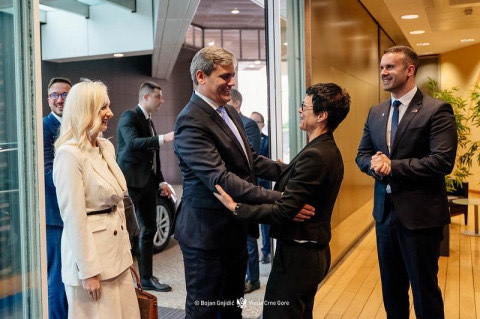
Montenegro is at a pivotal moment in its European integration process, and political maneuvering within the ruling majority, according to analysts, is seriously jeopardizing the country’s progress to date. This warning has also been voiced by Croatian analyst Davor Đenero, who points to growing obstruction and divisions within the Montenegrin government.
Speaking to Portal ETV, Croatian analyst Davor Đenero said that when the Croatian Ministry of Foreign Affairs previously declared three parliamentary actors in Montenegro - Andrija Mandić, Milan Knežević and Aleksa Bečić, that is, the leaders of three parliamentary parties that at the time made up the parliamentary majority - persona non grata in the Republic of Croatia, it clearly defined how it viewed Montenegro’s EU accession process.
- Throughout this entire process, both during the administrations of the Democratic Party of Socialists and under the current government - bearing in mind that during the period of the Krivokapić government and the transitional Abazović government the accession process was frozen - Croatia supported Montenegro’s accession to the European Union - Đenero said, adding that despite this, the attitude toward the process over the past year and a half has become „divided“.
According to him, there is „a sincere belief in the Minister of European Affairs Maida Gorčević and the Minister of Foreign Affairs Ervin Ibrahimović, and there is confidence that they represent the interests of the politically European-oriented majority in Montenegro“. However, he emphasized that it is evident that pro-Russian and Greater Serbian political options are also operating within the government – „precisely the three highlighted by Croatia when it declared their leaders undesirable“ - and that it is clear these actors are working within the ruling coalition with the aim of obstructing the accession process.
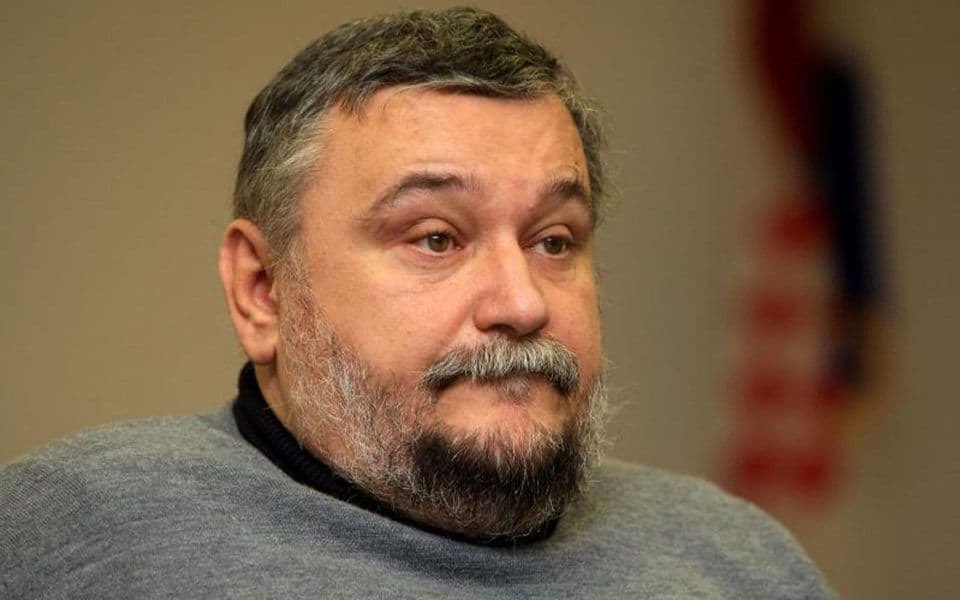
Đenero also referred to developments following the New Year’s incident in Botun, stating that „the political maneuver of Milan Knežević leaving the coalition and Andrija Mandić’s 'change of heart', combined with his remaining in a position of controlling power, that is, a position from which he can block political processes in the country“, in the opinion of Croatian diplomats and analysts, seriously jeopardizes Montenegro’s chance of closing the remaining twenty negotiating chapters this year.
- Montenegro is in an extremely sensitive phase of negotiations. Momentum has been achieved, and now is the time to swiftly complete the remaining obligations - Đenero said, adding that it is evident that Mandić and Knežević are planning to divert the parliamentary agenda - from European topics to quasi-identity issues, from issues where agreement that brings added value is possible and leads to a positive outcome, to issues that generate divisions and undermine the foundations of Montenegro’s constitutional order.
Speaking about Croatia’s position, Đenero noted that „despite some open issues, most of which could remain unresolved even after Montenegro’s accession to the European Union, Croatia’s interest is for Montenegro to be brought 'under the roof' as soon as possible and, through EU membership, to be protected from pathogenic influences“.
Nevertheless, as he concluded in his statement to Portal ETV, „many analysts and diplomats remain skeptical“, fearing that „this clearly defined political group could carry out a regressive strike and halt Montenegro’s pre-accession dialogue“.