




Đenero: The „invisible hand“ of Vučić and the Mandić-Bečić bloc are striking at a European Montenegro

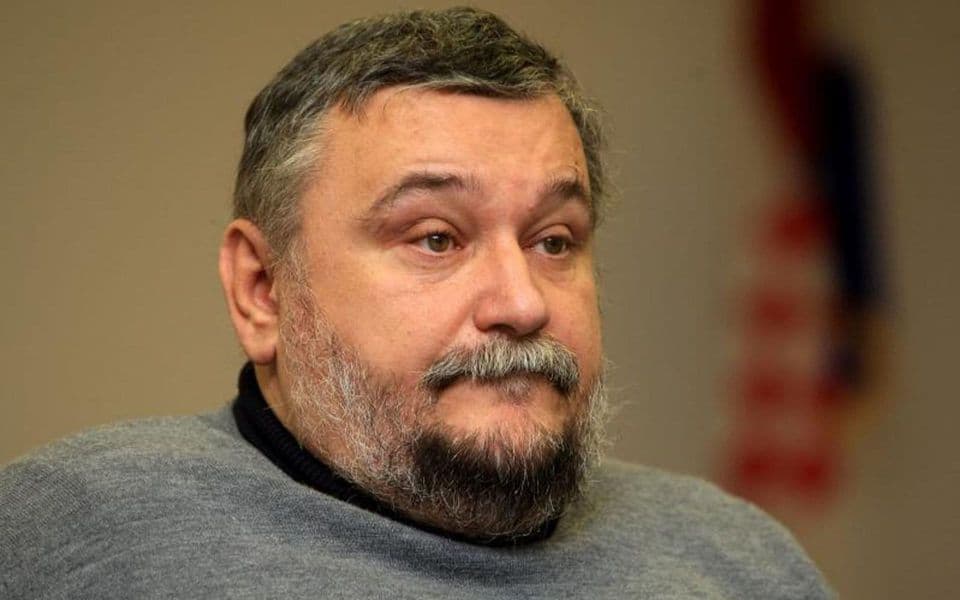
Davor Đenero, a prominent Croatian political analyst and expert on developments in Montenegro, in an interview for Portal ETV analyses the current political situation in Montenegro and the prospects of its accession to the European Union. Đenero takes an in-depth look at the challenges Montenegro must overcome, possible political blockades, and the influence of regional powers on Montenegro’s European integration path.
Can Montenegro join the EU with the current government?
ETV Portal: Can Montenegro join the EU with the current government, or is a reconstruction of power necessary before membership?
ĐENERO: The year we are entering should be decisive for closing the accession negotiations, and in that year Montenegro should close as many as 20 chapters. At the end of last year, the „gold plating“ was stripped from the narrative about the capacities of Montenegro’s negotiating team and the readiness of the public administration for membership. This happened with two chapters - agriculture and fisheries - which are extremely important from a budgetary perspective and open space for the misuse of European funds.
Although through diplomatic efforts both chapters were „provisionally closed“ at the end of last year, it became clear that part of the current Government is not doing its job properly, that the Ministry of Agriculture proved to be incompetent, and that the minister - who comes from a party outside the European bloc in Montenegro - aggressively claimed that this was a case of political obstruction.
Just as the conflict between the Minister of Defence, who is not part of the bloc of parties advocating Montenegro’s European integration, and the President of the state contaminates the political scene, as well as the President of Parliament’s demands for constitutional reform - which do not concern adapting Montenegrin institutions to the acquis but represent an attempt to undermine Montenegro’s constitutional definition, and just as the actions of populist politicians in Botun aimed at blocking the fulfilment of criteria for closing the environmental protection chapter - so too can we expect additional attacks this year from parties within the For the Future of Montenegro coalition and Bečić’s Democrats.
For Montenegro, it is crucial to conclude the negotiations with a parliamentary majority that is pro-European and that will establish an agreement on the rapid resolution of all outstanding preconditions for EU membership. Equally important is that such a political majority be maintained after the parliamentary elections in 2027, so that it can complete the sensitive process of ratifying the Accession Treaty in the parliaments of all EU member states.
I am confident that Montenegro can complete accession negotiations only with a consistent pro-European majority, that is without the Democratic Front (DF) and the Democrats, but it is equally important that such a majority remains in power after negotiations are concluded in order to carry out the highly sensitive task of ratification.
Will Croatia slow Montenegro down?
ETV Portal: Will Croatia, due to current political developments and certain political actors, tighten its stance and potentially slow Montenegro’s path toward the EU?
ĐENERO: Croatia’s interest is for Montenegro to become an EU member as soon as possible, as this would consolidate Montenegrin statehood and close the space for pathogenic influences from the totalitarian regime in Moscow and the authoritarian regime of Aleksandar Vučić.
However, Croatia has no interest in opening the European space to Montenegrin political options that are under the influence of Belgrade and Moscow and that could potentially introduce unnecessary instability into the Union - similar to the instability Montenegro generated within NATO after 2020.
Belgrade - Podgorica relations
ETV Portal: What will Belgrade’s attitude toward Podgorica be as Montenegro’s integration path advances?
ĐENERO: I fear that what we already witnessed last year will continue in Montenegro - the operation of „Vučić’s invisible hand“. It will become increasingly clear that the DF–Democrats bloc, acting on instructions from Belgrade, is making Montenegro’s accession process more difficult.
The mines have already been planted - some we have already mentioned (constitutional changes, the wastewater treatment plant), while others are already blocking the closure of chapters (respect for the principle of succession of military property). It is hard to imagine what could happen across as many as twenty negotiating chapters and which minister might repeat what Minister Vladimir Joković and his team did at the end of last year.
One thing is certain: the regime in Belgrade does not look favourably upon the possibility that Montenegro could complete accession negotiations next year, just as it did not look favourably upon Montenegro’s accession to NATO in 2016. The difference is that actors who were in opposition at that time are today formally part of the governing coalition, and one of them, as Speaker of Parliament, de facto performs a supervisory function in Montenegro.
Hungary and the potential influence of Serbia
ETV Portal: Is there concern that Hungary, due to Serbia’s potential influence, could become a stumbling block for Montenegro?
ĐENERO: Montenegro should focus on issues that are within the reach of its own administration. As the case of French reservations demonstrated, the narrative about Vučić’s influence over President Macron was completely misguided. The French administration used reservations to protect the future EU budget and prevent the misuse of funds.
In the coming year, shortcomings in Montenegro’s legal system that were neglected by Joković’s ministry will be remedied. Hungary, regardless of who is prime minister or what coalition governs the country, has no reason to particularly favour Vučić’s regime. No EU member state will make decisions based on the interests of a „friendly“ non-EU country, but rather on the protection of the acquis and its own interests.
The influence of „Vučić’s invisible hand“ should not be sought in Brussels, where a favourable climate for Montenegro’s EU accession prevails, but on Montenegro’s domestic political scene.
The Prevlaka issue
ETV Portal: Will the issue of Prevlaka be reopened, and how can it be resolved?
ĐENERO: That depends exclusively on Montenegro. There was only one moment when the issue of the Prevlaka border could have become a serious bilateral problem that might have jeopardised EU accession. This happened when the incompetent government of Zdravko Krivokapić attempted to raise the issue of land border delimitation, which had already been resolved by the decisions of the Badinter Commission and through succession.
By calling this into question, Krivokapić’s government would have effectively blocked its own accession process. Land delimitation has been definitively resolved, and at sea a „temporary agreement“ is already in force, shaped by the distinguished Croatian international and maritime law expert, Professor Bakotić. Since its entry into force, no incidents at sea have been recorded.
Therefore, unless the „usual suspects“ within the Montenegrin coalition, all the likes of Mandić, Knežević, Bečić, and their followers, question the existing order, the bilateral issue of maritime delimitation between Croatia and Montenegro will not be on the agenda this year.