




Đukanović chronologically presented the construction: The main goal of the „tobacco affair“ was to divert Montenegro from the idea of independence
Zoran Đinđić was supposed to be eliminated from Serbia’s political scene to establish a monopoly of political power for his rival, Vojislav Koštunica. I was supposed to be eliminated to remove the threat posed by Montenegro’s independence. As a notorious Serbian nationalist, Koštunica wanted Montenegro within Serbia’s orbit, because as long as Montenegro is there - the idea of Greater Serbia remains alive - Đukanović emphasized.

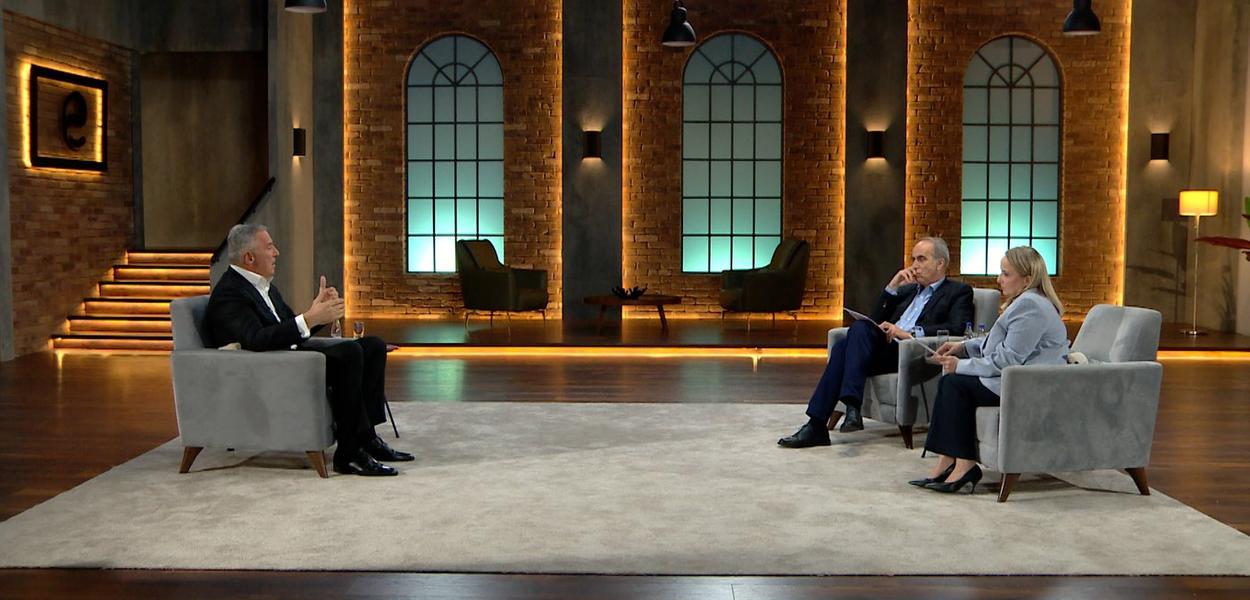
The so-called „tobacco affair” was the product of security and intelligence agencies from Belgrade and the European Union (EU), and its main goal was to divert Montenegro away from the idea of independence, said former President of Montenegro Milo Đukanović, long-time Prime Minister and leader of the Democratic Party of Socialists (DPS), honorary president of DPS, in a second lengthy interview for Television E marking the 20th anniversary of the restoration of Montenegro’s independence.
In the second part of the program „A Trace in Time,” Đukanović spoke about the affairs that were created during the preparation process for the referendum. In particular, he referred to the so-called „tobacco affair,” which, although it has long received a judicial epilogue in the form of acquittals, still continues to intrigue both domestic and international public opinion.
Chronology of the construction
Although he has spoken many times in public over the past decades about the motives behind the so-called „tobacco affair” and its outcome, in an interview with Television E, he recalls, chronologically and with documentation, both the causes and the consequences it produced.
- The affair gained momentum in 2001, when information arrived from Bari about the launch of an investigation into cigarette smuggling across the Adriatic, from Montenegro to Italy. It was the product of intelligence and security agencies from Belgrade and the EU, and its main objective, along with secondary ones, was to divert Montenegro from the idea of independence - Đukanović says.
He notes that it was launched at a moment when Montenegro was clearly moving toward independence and when Belgrade was strongly opposing that idea.
The first article in the Croatian magazine „Nacional,” titled „The Main Mafia Boss of the Balkans,” with a photo of Đukanović, was written by well-known journalist Jasna Babić. At the same time, all those articles from „Nacional” were being reprinted by the daily newspaper „Dan,” the outlet of the counterintelligence service of the Yugoslav Army.
- They did not bother, as would be usual, to reprint foreign articles the following day. The publications happened simultaneously, which clearly indicated that behind it there was a „chief editor” from the security-intelligence apparatus - Đukanović says.
„If Montenegro exists, then the idea of Greater Serbia remains alive, when Montenegro is gone, then that very retrograde, but also very dangerous and persistent idea can be put to an end.”
He emphasizes that the main political targets of that affair were Zoran Đinđić and himself.
- Zoran Đinđić was supposed to be removed from the political scene of Serbia to establish a monopoly of political power for his rival, Vojislav Koštunica. The political and organizational inspiration was provided by Koštunica’s ominous advisory team, which mobilized the military-security apparatus for that purpose. I was supposed to be eliminated to remove the danger of Montenegro’s independence. As a notorious Serbian nationalist, Koštunica wanted Montenegro within Serbia’s orbit, because as long as Montenegro exists, the idea of Greater Serbia remains alive. When Montenegro is gone, then that very retrograde, but dangerous and persistent idea can be put to an end – Đukanović states.
“The entire story was the product of a joint action by the intelligence and security agencies of Serbia, acting for their own reasons and objectives, and the security agencies of the EU.”
Đukanović notes that tobacco producers, most often large American companies such as Philip Morris and Reynolds, delivered their products into Europe through the continent’s busiest ports.
- Those cigarettes had their transit routes to their final destinations of consumption. How many countries are there, for example, between the Netherlands and Montenegro? All those cigarettes passed through those countries just as they passed through Montenegro, yet only in Montenegro did the story of large-scale cigarette smuggling emerge. Why? Because there were political and commercial interests for that affair to be developed in both domestic and international public opinion - Đukanović stated.
Opposition attempt to profit from the affair
He states that the campaigns launched from Belgrade also suited the then Montenegrin opposition, which insisted on forming a parliamentary commission to deal with the writings of „Nacional.” They, he says, tried to use that topic to bring about a change of government and thereby stop Montenegro’s path toward independence.
At the same time, Đukanović recalls, the European Union launched a major effort to seek substantial financial compensation from American tobacco manufacturers, namely Philip Morris and Reynolds, based on similar experiences of individual U.S. states.
- Namely, in 1998, 46 U.S. states sued Philip Morris and Reynolds, seeking compensation for damages to national economies caused by cigarette smuggling, for which they held the tobacco manufacturers responsible. There was no court ruling, but rather a common practice in the United States, a settlement. The two companies paid those states 246 billion dollars. The legal fees alone in that out-of-court settlement amounted to eight billion dollars. This encouraged the EU, together with initially 10 member states, later joined by others, to launch a lawsuit before U.S. courts against the same tobacco manufacturers. The coordination of the entire action was led by the OLAF - Đukanović explains.
In the reasoning behind that lawsuit, as Đukanović states, the Balkan countries were identified as a critical point for the development of the illegal cigarette trade in Europe.
He notes that it is logical that, at least in the Montenegrin public perception, Italy took on the dominant role on behalf of the EU, even though it was not the only country conducting the investigation. Investigations were also carried out in France, Germany, Cyprus, Greece, Liechtenstein, and many other countries, and all of their intelligence services, Đukanović notes, worked on the issue.
- That is why I say that the entire story was the product of a joint action by the security and intelligence agencies of Serbia, acting for their own objectives, and the security and intelligence agencies of the EU - Đukanović claims.
„Cigarette smuggling or regular transit business”
Đukanović recalls that he has repeatedly stated in public that this business in Montenegro was carried out legally, in accordance with the customs law of the Federal Republic of Yugoslavia. When asked by journalists whether there could have been anything illegal in it, he replies that, to his knowledge, there was not.
- And to immediately close the space for thinking that I am withholding something. We all know that there was a grey market for cigarettes in Montenegro, as in every other country, but I do not believe it stemmed from this business – he says.
Đukanović emphasizes that the Montenegrin market was not the final destination for the transit of cigarettes, but that they were routed onward to other countries.
- Therefore, the correct answer to your question is: No! There were no hidden private interests. It was a business from which Montenegro collected transit fees during a time of severe international sanctions, when tourism had completely collapsed, when KAP, as the main producer and exporter, was operating at only 10 percent of its capacity. And when the government’s obligation was to ensure conditions for the survival, education, and healthcare of all citizens of Montenegro. This was later confirmed by the Italian judiciary – Đukanović states.
„They did not drop it because of my immunity, but because they became doubtful about the quality of their evidence after a several-hour conversation with me”
Đukanović also recalls his voluntary trip to Bari, at a time when he was not holding state office, and giving a statement to dispel suspicions of the Italian prosecution.
- I spoke for hours with prosecutor Schelzi and his associates. I returned to Montenegro, and after some time, I think less than a year passed, the Italian prosecution informed me that it had closed the investigation against me and dropped the indictment because of my immunity. I believe that was not the real reason, because they did not withdraw because of my immunity, but because they became uncertain about the quality of their evidence after the several-hour conversation with me - Đukanović emphasizes.
He notes that other Montenegrin citizens were also included in the investigation, none of whom had immunity. Unlike him, indictments were brought against them, and all of them were finally acquitted with what is known as a „full formula” acquittal. This means, he explains, that they were not acquitted on procedural grounds, but because there were no facts to support the charges against them.
„Italian court: It is as clear as day that transit fees, like any other fiscal revenue, represent income of Montenegro and could be used to cover the needs of public institutions and public expenditures”
- The act that prosecutor Schelzi tried to construct against me is one of the most serious under Italian criminal law - the formation of a mafia-type criminal organization, for which multi-decade prison sentences are prescribed - Đukanović recalls.
The prosecutor’s constructions are absolute nonsense
He explains that the prosecutor based his construction on five elements.
- The first was that I allowed the import of cigarettes into Montenegro, the second was that I allowed Zetatrans to provide forwarding services, the third was that I allowed Jugopetrol to supply fuel to transport vehicles. The fourth was that I controlled the collection and use of transit fees, and the fifth was that, with the help of Montenegro’s security apparatus, I provided shelter to Italian criminals who were wanted by Italian judicial authorities – Đukanović said.
It is clear, he emphasizes, that the first three elements were completely nonsense.
- Why? Not only in Montenegro, but in any country in the world, you do not need any permission to import or transit legally produced goods. Likewise, you do not need to give any permission to a freight forwarding company registered with the Commercial Court of Montenegro to provide forwarding services. Third, no permission is required for any vehicle owner to refuel. Therefore, absolute nonsense - Đukanović stresses.
Verdict a serious blow to the Italian prosecution
The best response to the fourth element of the planned indictment, that he controlled the collection of transit fees and their use, Đukanović says, is contained in the ruling delivered by the Italian judge who issued an acquittal in the case of Miroslav Ivanišević.
- It cannot belong to the prerogatives of one state to assess and discuss the legality of the use of revenues of another state. And in the sequel: „It is as clear as day that transit fees, like any other fiscal revenue, represent income of Montenegro and could be used to cover the needs of public institutions and public expenditures, especially in a period that was particularly critical from an economic standpoint, in which embargoes and sanctions were in force.” The Italian judge, by issuing this assessment, delivered a serious blow to the Italian prosecution - he stated.
The response to the fifth element of the planned indictment is that the Government of Montenegro, at the expense of its own sovereignty, decided to allow the Italian Ministry of Interior to open an Interpol office in Bar.
- That was our wish, to build trust and develop cooperation. That cooperation was impeccable, and through it 42 people were extradited from Montenegro to Italy - Đukanović says.
An affair that justified a murder
At the same time, a campaign was launched in Serbia aimed to prove that then-Prime Minister Zoran Đinđić was a criminal cooperating with the Montenegrin mafia. Đukanović claims that such propaganda led to his assassination.
- I have zero dilemma, all of that was a story meant to justify his murder, because immediately after the assassination attempts were made to push versions that Zoran died in a clash between criminals. No, Zoran Đinđić was killed because he wanted to take Serbia to the West. It is true that on that path toward the West, he planned to „hand over“ in The Hague some „deserving“ Serbs, and then those people were, through the actions of these ominous intelligence and security structures, used for the assassination of Zoran Đinđić. The consequences of that crime are still deeply felt today in Serbia and the region - Đukanović concluded.
„Monta must have made a mistake“
Đukanović also refers to events in Croatia, where the media spin of the tobacco affair was initiated.
- Jasna Babić, who wrote the first article in „Nacional,” received instructions from her editor, Ivo Pukanić, to meet with Vojislav Koštunica in his office, to present additional arguments against Zoran Đinđić. She went and met with Vojislav Koštunica, who offered her nothing except gossip about Zoran Đinđić being involved with Montenegrin criminals. When she returned to Zagreb, disappointed, she complained to her editor that it had been a completely pointless trip and that she had received nothing. Pukanić commented: „Monta must have made a mistake.” Monti refers to William Montgomery, the U.S. ambassador first in Zagreb and then in Belgrade - Đukanović recalls.
„An affair helped further develop the informant’s craft of serving others against the interests of Montenegro”
Đukanović states that, although a large part of this political earthquake was prepared for Montenegro, the government did not fall. On the contrary, it achieved a historic mission that this affair was supposed to obstruct.
The parties that led the tobacco affair from Montenegro, he says, have in the meantime become extra-parliamentary. Today, he notes, they cannot even reach census.
But it, he believes, helped further promote the informant’s craft of serving others against the interests of Montenegro. He also points out and warns how such servitude is valued by the users of „spy material from Montenegro.”
For that purpose, Đukanović cites prosecutor Schelzi in his closing statement in one of the trials of Montenegrin citizens.
- He said that valuable information was received from Montenegro from Predrag Popović and Novak Radulović, which was handed over to him in a direct conversation by Vuksan Simonović, the chairperson of the parliamentary commission for investigating this case. Thanking for the information obtained, he, not knowing what professions their authors performed, thanks members of the aviation-helicopter unit of the Montenegrin MIA, Predrag Popović and Novak Radulović. So much for respect for parliamentary functions when they are placed in such roles. Of course, with an obligatory apology to the real honorable members of the aviation-helicopter unit – Đukanović said.
„An obsession called Milo Đukanović -1,260 negative headlines in 240 days”
Although he believes that part of the public, after the thoroughly presented facts about this affair, will better understand what actually happened, Đukanović does not doubt that the long-term media contamination, carried out from Serbia but also from within Montenegro, to discredit him, left a mark.
- I remember a later example from 2020 when, in the first eight months alone, a single media outlet in Montenegro, namely“Vijesti,” published 1,260 negative articles about Milo Đukanović. Eight months have 240 days, in 240 days, 1,260 negative articles about Milo Đukanović were published. I think that is an obsession - Đukanović said.