




Grlić Radman on compensation for Morinj camp detainees: It could happen soon, we are waiting for a response

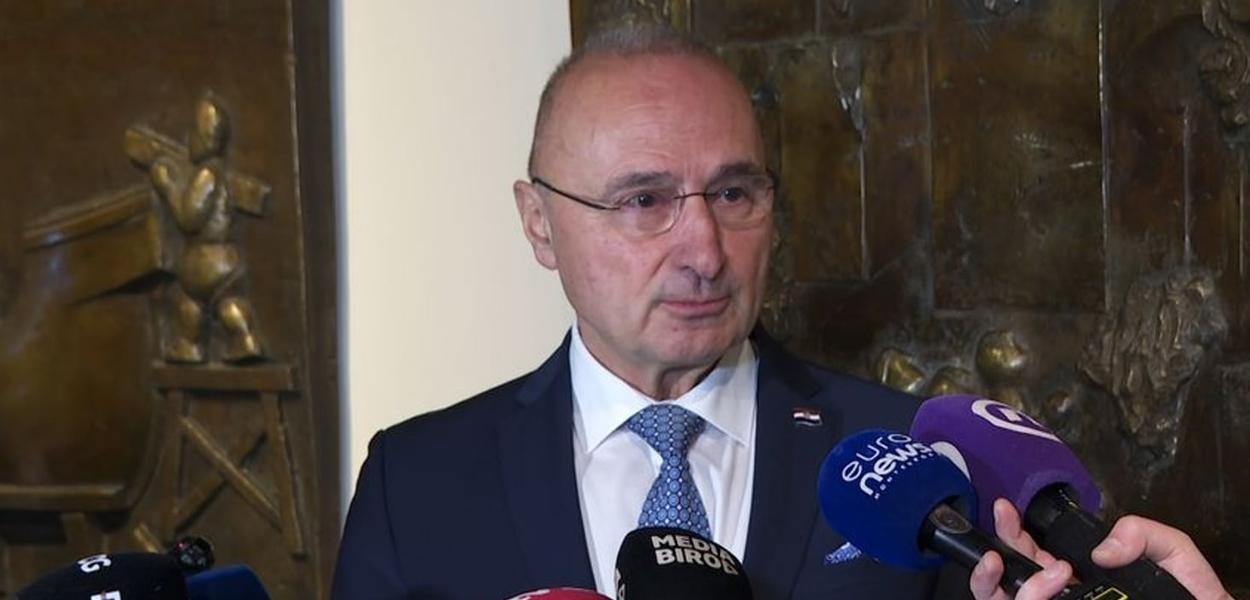
Compensation for former detainees at the Morinj camp could be granted in the near future, Croatia is only waiting for a response from the Montenegrin side - Croatian Minister of Foreign and European Affairs Gordan Grlić Radman told HRT, adding that all eight requests Zagreb has submitted to Podgorica could be resolved.
He said the maritime boundary issue could also be resolved after Montenegro joins the European Union, while Croatia’s position on the land border was „not in question“.
Grlić Radman said the breakup of the former Yugoslavia had unfolded in such a way that Croatia and Bosnia and Herzegovina had been the most severely affected.
- There was no so-called civil war, because if there had been one, hostilities would have taken place in every former republic. However, there was no such fighting in Serbia or Montenegro. Montenegro did not experience the war, but we did. The aggression came from the east, from Serbia and Montenegro - Grlić Radman said, as reported by Standard.
The Croatian foreign minister said Croatia had welcomed the Montenegrin Government’s decision to protect the memorial plaque in Morinj and make it accessible to visitors. He also welcomed the decision to change the name of the swimming pool in Kotor, which had been named after former water polo player Zoran Gopčević for the past five years.
Grlić Radman said Gopčević had been a world-renowned water polo player, but that he had also been „at the time a notorious guard at the even more notorious Morinj camp“.
- These are two of the eight issues that Prime Minister Andrej Plenković told his hosts in Tivat on 5 June needed to be resolved. All these issues are resolvable, and they are also part of the accession negotiations because they concern fundamental values. They are not bilateral issues in the sense that we tend to think of them. The maritime boundary is a bilateral issue. We can resolve that even after Montenegro joins the European Union. However, Montenegro wants to resolve the land border issue, which, from Croatia’s perspective, is absolutely unquestionable, as it is based on the findings of the Badinter Commission, which stated that the republics’ administrative boundaries would become international borders. We currently have a provisional arrangement in place, and we have adopted a protocol governing that arrangement. Croatians are, in fact, the owners of the land there, and the two surveying commissions came close to reaching an agreement in 2015. There may be some minor discrepancies, perhaps 150 to 200 metres, but everything else is absolutely precise - the Croatian minister said.
He recalled that Croatia was also seeking compensation for private property which, he said, had been confiscated from Croatian families in the Bay of Kotor.
- If property has been returned to other minorities, then we expect it to be returned to Croatians in the Bay of Kotor as well. Otherwise, we will consider it discrimination against Croatians in Montenegro - he said.
He added that, alongside the issue of 14 missing persons, Croatia also wanted to see war crimes prosecuted on the basis of command responsibility.
He reiterated Croatia’s position that the Jadran training ship belongs to Croatia.