




Knežević: Racism did not begin on the bus, but where prejudice is learned, hatred is justified and difference is portrayed as a threat

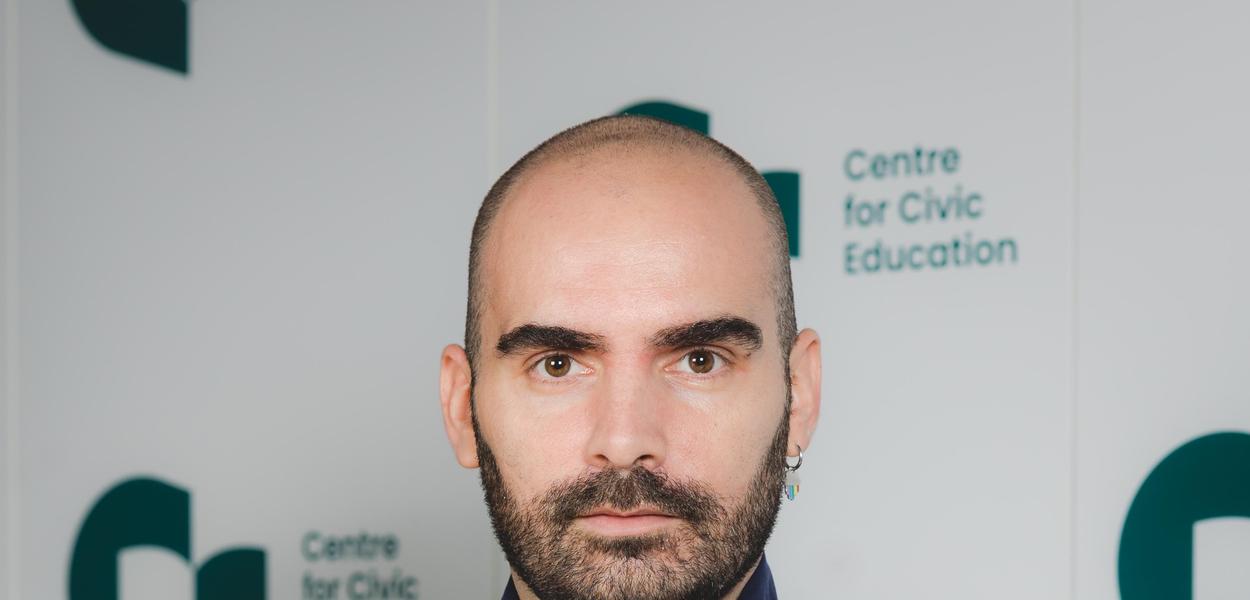
The tourist who was subjected to harassment sent Montenegro a message that it must do better. That message should be understood as a call to confront our own prejudices rather than downplay them or conceal them behind stories of traditional hospitality. Racism does not begin when someone records it on camera. It begins much earlier - where prejudice is learned, hatred is justified and difference is portrayed as a threat, said Development Coordinator at the Centre for Civic Education (CCE) Miloš Knežević.
The non-governmental organisation strongly condemned the racist harassment of an Asian tourist on a bus travelling between Kotor and Perast, reportedly perpetrated by a group of minors.
- This incident is not merely an example of unacceptable behaviour, but also a serious warning about the prejudices that persist in our society and the values we pass on to younger generations. The footage showing a group of minors mocking, insulting and harassing a tourist because of her presumed ethnic origin raises an important question: how have we reached a point where young people perceive difference as a reason to humiliate others and racist behaviour as entertainment - Knežević asked.
He stressed that racism is not childish mischief, nor does the age of those responsible make it any less dangerous.
- Young people do not develop their attitudes in a social vacuum. They grow up in an environment where nationalism, xenophobia, hate speech and the denigration of difference are too often downplayed, justified or portrayed as harmless jokes. Such messages come from families and immediate social circles, through social media and traditional media, and from the public sphere, where even those holding the highest public offices all too often exploit divisions and prejudice for political purposes - Knežević pointed out.
According to him, we cannot expect young people to respect diversity if adults, including those who should serve as role models in society, demonstrate the opposite on a daily basis.
- It is particularly concerning that the incident took place in the municipality of Kotor, which has for centuries been a meeting place for different cultures and is one of Montenegro’s most recognisable tourist destinations. Yet openness to the world is not measured by the number of tourists we welcome, but by how we treat people who are different from us. The issue, therefore, is not merely what image of Montenegro one tourist will take home with her, but what kind of society we are building for those growing up in it - Knežević said.
He added that the incident also raises questions about the responsibility of the education system.
- To what extent do schools genuinely foster empathy, critical thinking, intercultural understanding and respect for human rights? Do young people learn about discrimination, racism and hate speech in ways that help them understand their consequences, or is this content reduced to a formal exercise in fulfilling curriculum requirements? If young people leave the education system without understanding that humiliating another person because of their origin is unacceptable, we must reconsider not only what we teach them, but also what we fail to teach them - Knežević stressed.
He added that the Centre for Civic Education has for years warned about the consequences of the marginalisation of civic education in Montenegrin schools and advocated for its systematic strengthening.
- Civic education must not be a privilege reserved for students who choose it as an elective; it must be an integral part of every child’s education. Knowledge of human rights, equality, tolerance, responsibility and democratic values is not secondary but essential to developing generations capable of recognising and rejecting discrimination. These values cannot be instilled through occasional workshops, one-off campaigns or appeals to multiculturalism alone - Knežević said.
The Centre for Civic Education is also calling on the Police Directorate to investigate the circumstances of the incident and determine whether there are grounds for further action, while fully respecting the rights of the minors involved and protecting their identities.
- The Ministry of Education, Science and Innovation must recognise this incident as an additional reason to strengthen civic education systematically and introduce more concrete measures to prevent discrimination, racism and hate speech in schools. Responsibility cannot be left solely to teachers and school support staff; it requires a clear institutional policy, appropriate curriculum content and continuous engagement with children, parents and teaching staff - Knežević concluded.