



Zvrko: Montenegro is the only country in the region without a law guaranteeing the right to sign language

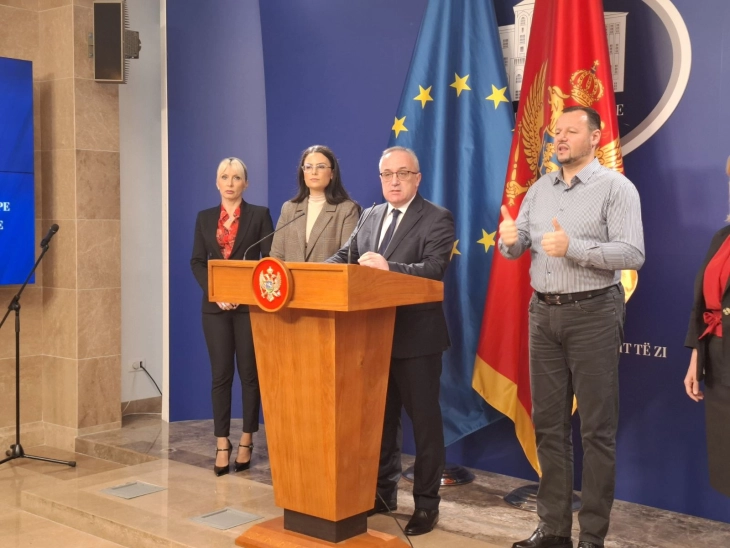
The parliamentary group of the Democratic Party of Socialists (DPS) will submit a Draft law on the use of sign language today into parliamentary procedure, announced member of Parliament of this political party Elvir Zvrko.
He said, at a press conference, that Montenegro is the only country in the region that still does not have a law guaranteeing the right to sign language.
- There are more than 16.000 citizens in Montenegro with hearing impairments, over 1.000 of whom use sign language as their primary and only means of communication. However, they face numerous barriers and institutional invisibility on a daily basis - Zvrko said.
According to him, the country has remained silent toward their needs for far too long.
Zvrko recalled that the Government adopted the Strategy for the protection of persons with disabilities from discrimination and the promotion of equality for the period from 2022 to 2027.
- However, when it comes to sign language, nothing has been done since 2022 - Zvrko stated, adding that Montenegro is additionally bound in this area by the European Union’s Strategy for the Rights of Persons with Disabilities for the period from 2021 to 2030.
He said that work on the sign language law has been ongoing for some time and that the issue has been approached in a very systematic manner.
- First, an expert analysis was conducted through the Parliament’s Research Center in order to carry out a comparative analysis of similar legal solutions in the region and the EU and to identify important international standards - Zvrko said.
He added that they subsequently involved the Association of the Deaf and Hard of Hearing of Montenegro and took their suggestions into account, particularly regarding the definition of interpreters, licensing, and the role of the Association in administering examinations.
Zvrko said that the Association had informed them a few days ago that the Government plans to form a working group to draft a sign language law and that the Association would continue its work within that working group.
That decision, he said, is respected and understood as their choice to assess which institutional framework is most appropriate for their further engagement.
- However, as members of Parliament, we are obliged to work on improving the position of the most vulnerable groups in our society. That is precisely why we believe we have a responsibility to, in parallel with the discussions between the Association and the Government, open space in Parliament for further development of the legislative text - Zvrko said.
He stated that they are offering the Government, the Association, the professional community and members of Parliament a legislative text intended to serve as a platform for further work, so that in the next phases everyone can contribute to improving the text and achieving a higher-quality solution.
- The law we are submitting provides for the recognition of sign language as a language in official use, standards and procedures for taking proficiency exams in sign language and for licensing interpreters, and the obligation to ensure the availability of interpreters before public authorities in healthcare, education, the judiciary, and the media - Zvrko said.
As he explained, the law also provides funding from the country and local government budgets, as well as sanctions for obstructing access to communication and for non-compliance with legal provisions.
- The state must see and hear its most vulnerable citizens, our goal is inclusion, equality, and dignity. We are not seeking political points, we are offering legal certainty and equal rights for deaf and hard-of-hearing persons - Zvrko emphasized.
He said that this is why they are submitting the law into procedure and called on all interested parties to take part in improving the proposed text.