




Gorjanc Prelević: We are hostages of a government gambling with Montenegro’s European future; Radulović: Knežević’s speech constitutes a particularly serious form of hate speech

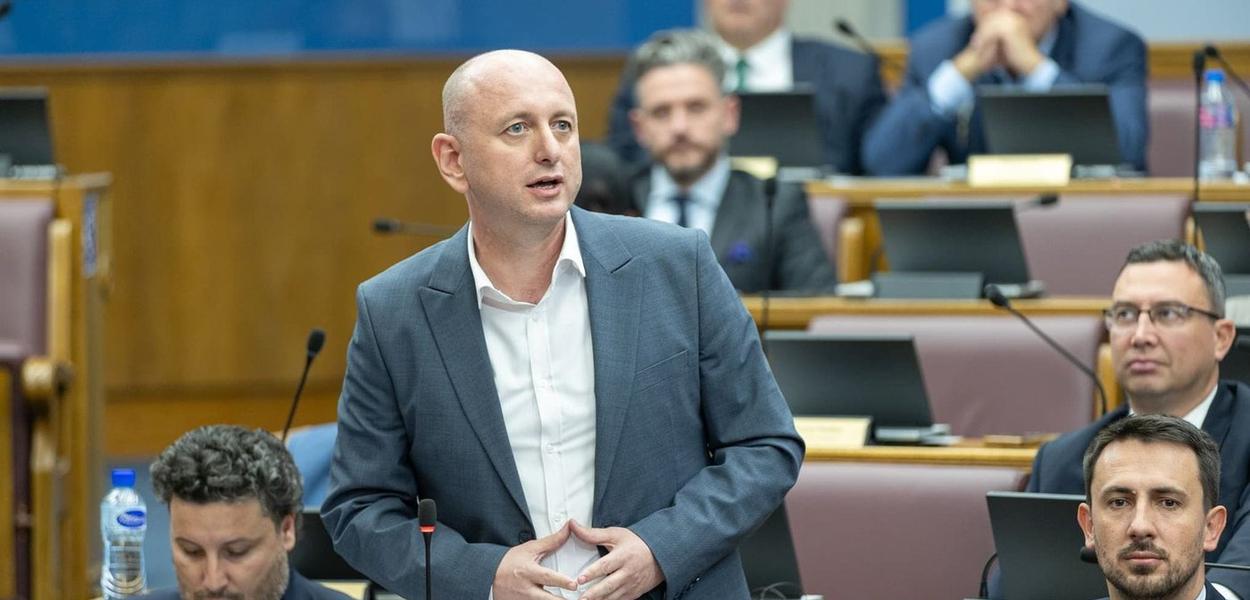
The Higher State Prosecutor’s Office must respond to statements by MP Milan Knežević, who described Ratko Mladić, finally convicted of genocide and war crimes, as a war hero and challenged the Hague Tribunal’s verdicts, interlocutors told Antena M.
Director of Human Rights Action, Tea Gorjanc Prelević, stressed that freedom of expression does not include the right to glorify individuals convicted of genocide. She warned that the authorities’ passivity in the face of such conduct threatens the dignity of victims and Montenegro’s European future.
- Freedom of expression protects discussions about history, including court verdicts, but it does not grant the right to celebrate a man convicted of genocide. That is precisely what Knežević did: he called Mladić a hero and rejected the Hague Tribunal’s verdicts. Such speech undermines victims’ rights, incites hatred and deepens divisions. The Criminal Code prohibits this, parliamentary immunity does not protect anyone from criminal liability, and the prosecution must act - Gorjanc Prelević said.
She added that Montenegro’s Criminal Code prohibits the public approval, denial or gross trivialisation of genocide established by a final judgment of an international or domestic court, such as the genocide in Srebrenica.
- When someone publicly calls a person convicted of genocide a hero and declares that they do not recognise those verdicts, this is not merely an opinion but conduct defined by law as a criminal offence - she said.
Gorjanc Prelević warned that the glorification of war criminals was no longer a marginal phenomenon but was instead being presented as the norm from within parliament, without any consquences.
- There is no such thing as a so-called pro-European government that would protect the dignity of the victims of these crimes and European values. All of this is taking us back to the wartime atmosphere of the 1990s, which Europe certainly does not need. Unfortunately, we are all hostages of a government that fails to grasp the seriousness of this historic moment and is gambling with this country’s European future - she concluded.
During a parliamentary debate yesterday, Knežević rejected the characterisation of the crimes as genocide and declared that the Serbian people would continue to honour Mladić, regardless of resolutions and court verdicts.
- What gives me satisfaction is that, following the death of General Mladić, his grave has become a kind of pilgrimage site. Young people in Podgorica and across Montenegro sing the songs „Ruzmarin“ („Rosemary“) and „Đenerale, neka je tvojoj majci hvala“ („General, May Your Mother Be Thanked“). And I will add just one more thing: „Do not believe them, son, and be proud that Ratko’s heart beats within your chest. Glory to General Mladić“ - Knežević said.
Lawyer Veselin Radulović believes this was not an isolated political statement and that the prosecution should initiate proceedings ex officio.
- Unfortunately, this is not the first time we have heard statements that downplay genocide and war crimes and glorify war criminals who have been finally convicted. Under the Criminal Code, this constitutes a criminal offence. It represents a particularly serious form of hate speech. I regret that we are currently living in an environment in which the prosecution fails to respond adequately to such occurrences - Radulović said.
He added that previous responses by the prosecution, including summoning Milan Knežević to provide information, had merely given him an opportunity to repeat the controversial statements and continue to downplay genocide and war crimes.
- It is troubling when we see such passivity on the part of the state prosecution service. It is probably guided by an assessment of whether initiating proceedings or taking any other action might trigger certain political consequences. Unfortunately, this is not the only case, nor is this the only act that could be classified as a criminal offence in which the prosecution acts in a similar manner - assessing whether a decision might have political consequences before taking any action - Radulović said.
He concluded that it was difficult to escape the impression that the Higher State Prosecutor’s Office was subject to a degree of political control.