




Kalezić files complaint with Ombudsman: Budva recognises same-sex partners before a registrar, but erases them from the family when distributing housing subsidies

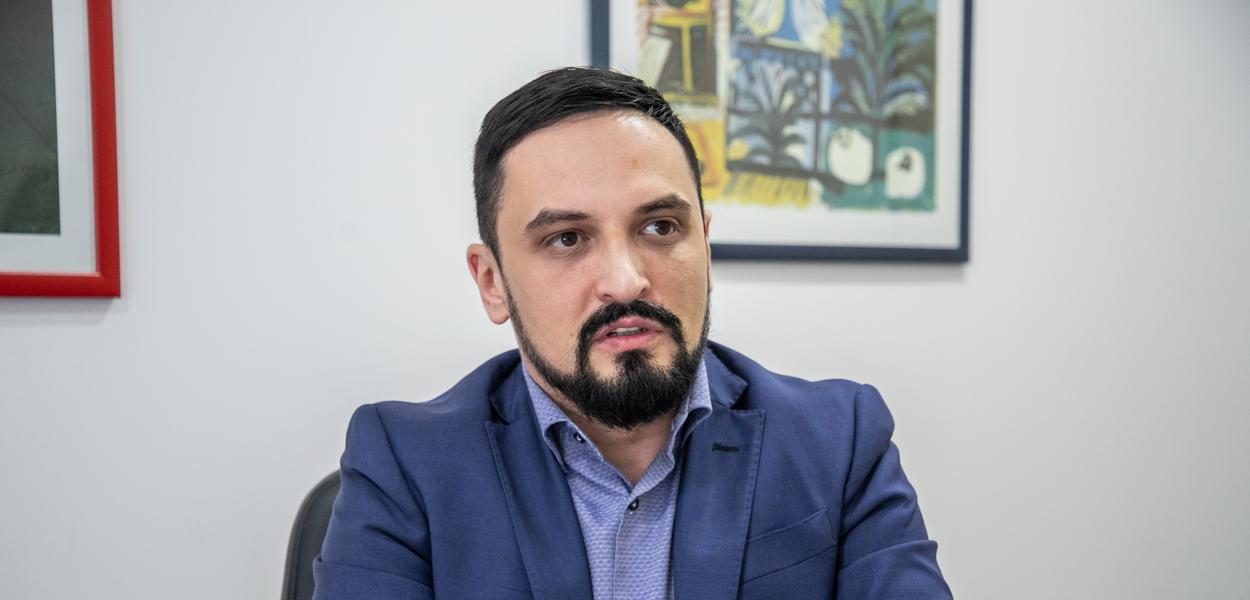
Human rights activist Danijel Kalezić has filed a complaint with the Protector of Human Rights and Freedoms of Montenegro over discrimination against LGBT people who have entered into a registered same-sex life partnership under the Municipality of Budva’s housing loan repayment subsidy scheme. At the same time, he sent an open letter to the Secretariat for Social Affairs, Budva Mayor Nikola Jovanović and President of the Budva Municipal Assembly Petar Odžić, demanding that the discriminatory provisions be removed without delay.
The complaint concerns the Decision on Social Housing Subsidies, adopted by the Budva Municipal Assembly on 31 December 2025, the Public Call for the Allocation of Housing Loan Repayment Subsidies, No. 08-082/26-711/1, dated 30 July 2026, and the prescribed application form. In his complaint, Kalezić argues that the Municipal Assembly adopted a discriminatory regulatory framework and that the Secretariat subsequently incorporated it into the public call and application form used to distribute public funds.
- The essence of the problem is that the Municipality of Budva recognises married and unmarried couples as families, while treating a legally registered same-sex life partnership as though it does not exist - Kalezić said.
Married and unmarried couples recognised, life partners excluded
The Decision and the public call define the term „young families“ in terms of marriage and unmarried partnerships, but do not mention life partnerships. According to the complaint, this denies life partners the same age-related eligibility criterion that applies to married and unmarried couples.
The same documents recognise a spouse and an unmarried partner as members of a household, but do not recognise a life partner. Kalezić points out that a life partnership and an unmarried partnership are not the same legal institution, meaning that the omission cannot be remedied through an arbitrary interpretation by the Commission or officials.
The exclusion of a life partner may directly affect the ranking of applicants, as the scoring system depends on the number of household members. The Decision awards five points for a one-member household, ten points for a household of up to three members, and 20 points for a household of four or more members. If a life partner is not recognised as a household member, the number of points may be lower precisely because a legally established partnership status is not recognised.
The problem is also reflected in the application form, which contains no category for a life partner and does not provide for an extract from the Register of Life Partnerships as evidence. At the same time, it is unclear whether, when decisions are made, the life partner’s income, assets, health condition, disability status and previous ownership or disposal of real estate are taken into account. Such a legal gap, the complaint states, creates room for inconsistent and arbitrary treatment.
The Decision also links the continuation of a subsidy following the death of the beneficiary to a member of the family household. Since a life partner is not included in that definition, a surviving partner is left facing legal uncertainty that married and unmarried partners do not face under the wording of the decision itself.
„This is clear discrimination against LGBT people“
Kalezić argues that people in life partnerships are in the same, or at least a comparable, position to married and unmarried partners when they share a home, income, assets, maintenance obligations and the need to resolve their housing situation. Nevertheless, marriage and unmarried partnerships are expressly included, while life partnerships are excluded precisely because of the legal status available only to same-sex couples.
For that reason, the complaint asks the Protector of Human Rights and Freedoms to establish that discrimination has occurred on the grounds of life partnership, sexual orientation, and marital or family status. The Law on Protection of Equality and Prohibition of Discrimination expressly protects these grounds and applies to local self-government bodies, social benefits and housing. Amendments to that Law entered into force on 16 July 2026, before the disputed public call was published, while legislation protecting LGBT people from discrimination had already been in force prior to that. The Law on Life Partnership of Persons of the Same Sex also prohibits discrimination on the basis of partnership and recognises the partners’ shared life, home and social rights.
- Budva cannot be a municipality where a life partnership exists before a civil registrar but disappears before the commission distributing public money. A partnership is not a ceremony without legal consequences, and a family is not a privilege reserved for heterosexual couples - Kalezić said.
Amendments to the decision, public call and application form requested
In his open letter, Kalezić asked the Secretariat to immediately publish a formal correction to the public call and a new application form that would expressly and equally include life partnerships in the definition of a young family and household, as well as in all related conditions and criteria. He also requested that an extract from the Register of Life Partnerships be accepted as valid evidence and that the Commission and officials be provided with public and binding instructions on equal treatment.
Kalezić requested that the ranking and decision-making process be suspended until the discriminatory rules are corrected, and that the application deadline be extended or reopened so that all interested persons have a full period of at least 30 days from the publication of the corrected documents to apply.
He asked the Mayor to urgently prepare draft amendments, and the President of the Budva Municipal Assembly to urgently consider and adopt amendments to Articles 4, 7, 12 and 20 of the Decision, as well as all related provisions. The Municipality was also asked to publicly publish the adopted acts, provide them to the Protector and the complainant, and review other local decisions, public calls and application forms to ensure that the same exclusion is not repeated.
Deadline until Friday
The authorities have been given until the end of the working day on Friday, 14 August 2026, to remedy the irregularities through formally adopted and publicly published acts. Kalezić said he was prepared to withdraw his complaint to the Protector and refrain from further legal proceedings if the discriminatory treatment is corrected by that deadline, and to provide assistance free of charge throughout the process.
- An announcement that the issue will be considered, verbal assurances that life partners „will not have a problem“, or a promise that amendments will be prepared sometime later do not constitute the removal of discrimination. Public funds can only be distributed according to rules that are equal, clear and lawful from the very first day - Kalezić said.