




There is no European path if the year continues as it began
How much they care about public opinion, both Montenegrin and international, is unequivocally demonstrated by the Government’s and parliamentary majority’s renewed attempt to adopt amendments to the Law on Internal Affairs and the Draft Law on the National Security Agency by „force“. These acts were removed from the parliamentary agenda last summer under pressure from experts and civil society, but have now reappeared in Parliament and are on the agenda of the Second Extraordinary Session

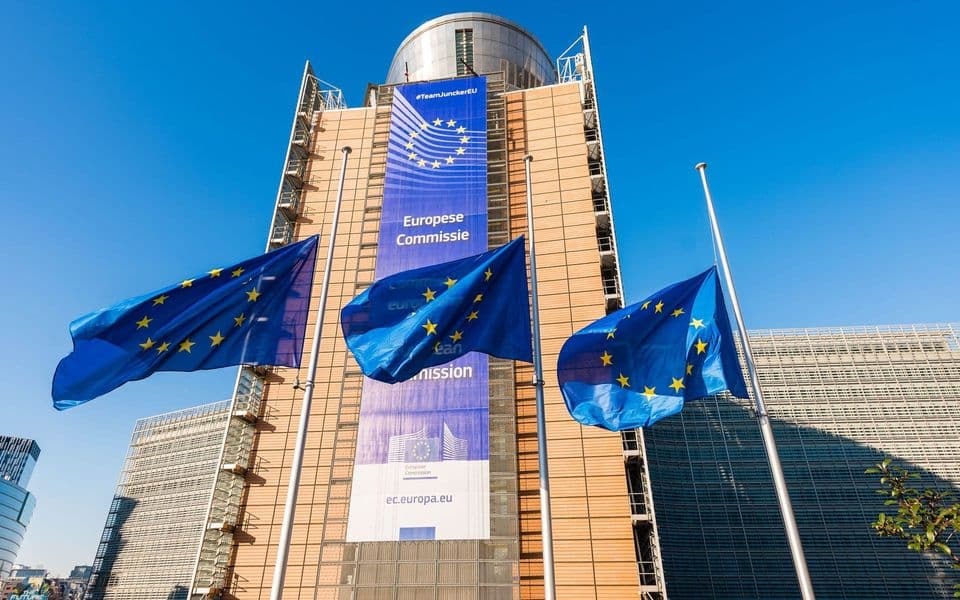
The Brussels administration has, according to sources of Portal ETV, increasingly been warning Montenegrin government officials in informal discussions that, with the current structure of the executive branch, Montenegro will find it difficult to fulfill the European agenda.
The key message is that there will be no European path if the year continues as it began, because the obstruction of the European agenda has become increasingly obvious to them as well - our unofficial sources close to the Brussels administration claim.
That patience is wearing thin was also confirmed by a statement from European Commission spokesperson Guillaume Mercier, following the actions of President of Montenegro Jakov Milatović, who last week first refused and then, two days later, nevertheless signed a package of 25 so-called „blue laws“, i.e. laws that have received the European Commission’s green light.
A „RACE AGAINST TIME“ FOLLOWS
- Persistent delays in key processes, such as the adoption of legislation and the appointment of vacant positions, if left unresolved, could pose a significant obstacle to Montenegro’s ambition to close all negotiating chapters by the end of the year - he warned on February 5 in a statement to the Radio Television of Montenegro.
However, it is not only the parliamentary majority, which is obstructing a number of important appointments such as judges of the Constitutional Court, nor the President of the state, who is „playing games“ with the „blue laws“, that are hindering Montenegro’s European path.
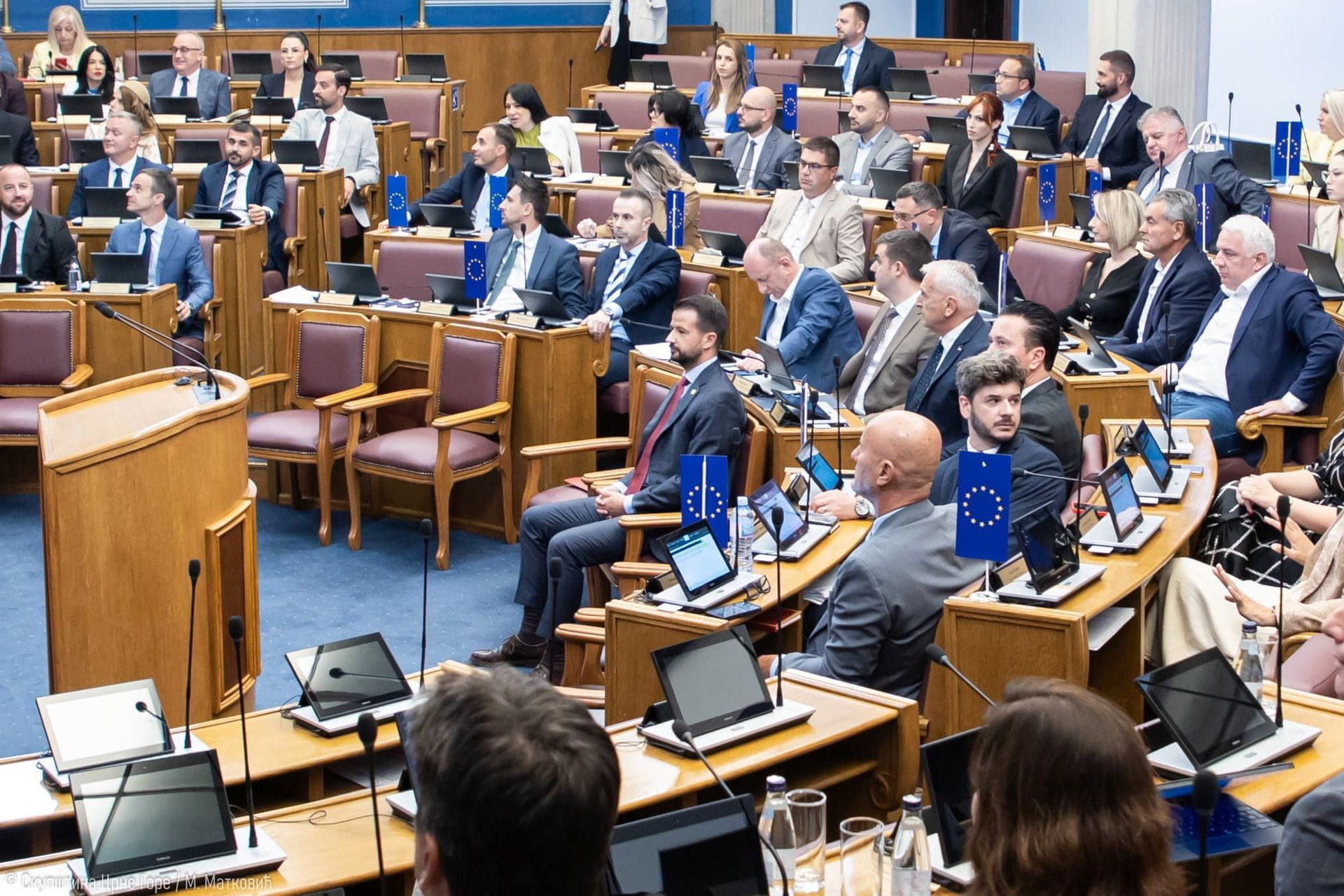
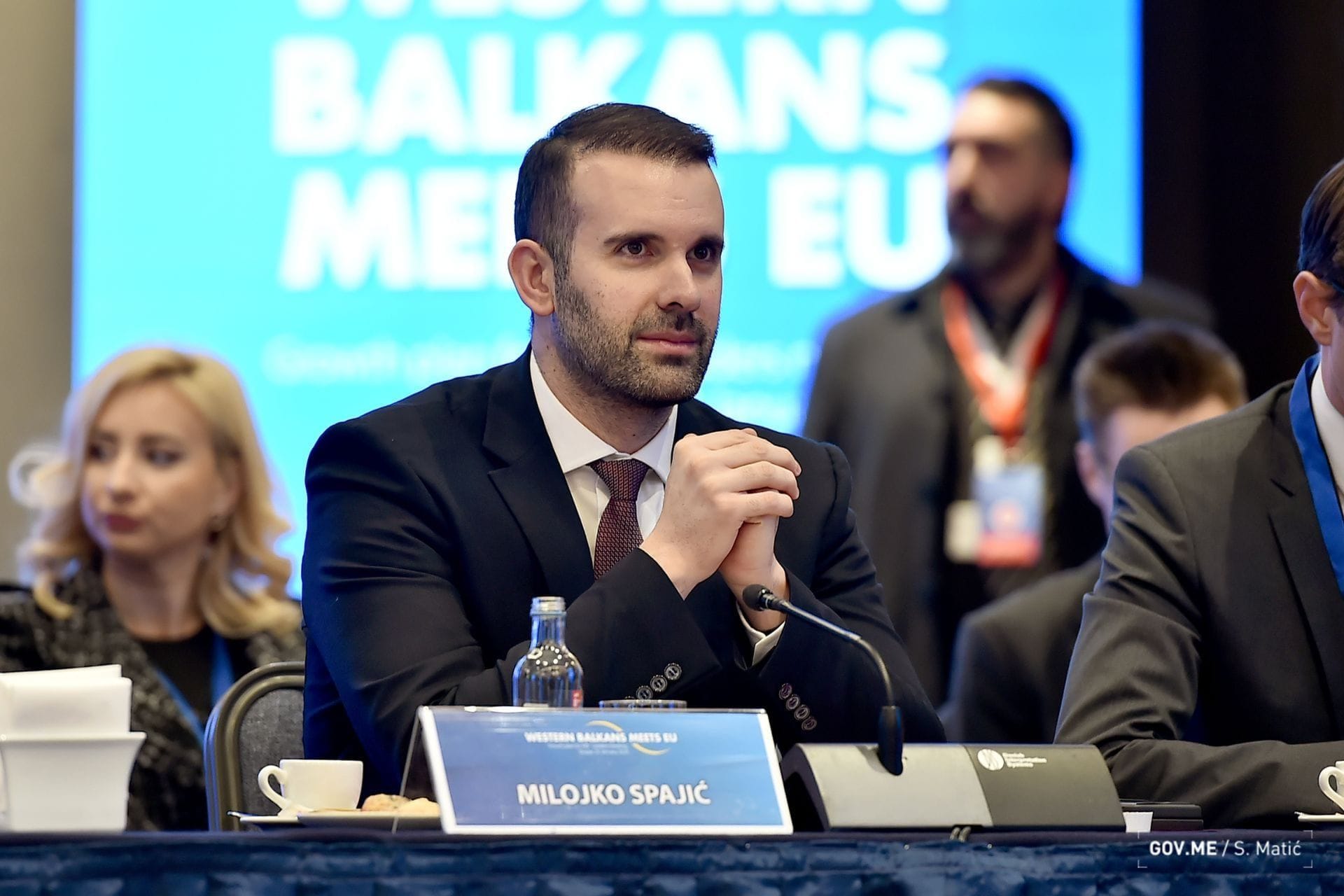
Prime Minister Milojko Spajić is facing serious problems within his bulky government, as the large number of ministers was necessary to satisfy the appetites of all constituents of the parliamentary majority. Many portfolios have fallen into the hands of party loyalists incapable of fulfilling the ambitious European agenda goal - closing all chapters by the end of this year.
According to sources of Portal ETV within the Government, the most serious problems and challenges are in the ministries led by Damjan Ćulafić (Democrats) and Vladimir Joković (Socialist People's Party). The Ministry of Ecology, Sustainable Development and Northern Development faces the serious task of meeting the criteria for closing the most complex and demanding negotiating chapter - Chapter 27: Environment and Climate Change. Government sources say there is significant concern over whether Ćulafić and his team will succeed, especially given the fact that not a single environmental hotspot has yet been remediated.
The Ministry of Agriculture, Forestry and Water Management, headed by Joković, is performing no better. This was already clear in December last year when, only thanks to intensive diplomatic communication by Prime Minister Spajić, France, which had blocked Chapter 11 (Agriculture and Rural Development) and Chapter 13 (Fisheries), eventually decided to lift the blockade.
Justifying the blockade, Joković claimed that his team had done an „excellent job“ and that the blockage occurred because „somewhere in some communications things got stuck“.
- European partners are increasingly warning both the Prime Minister and the Minister of European Integration, Maida Gorčević, that there are growing indications Montenegro will not meet all tasks and obligations by the end of the year - our sources say.
LACK OF COMMUNICATION WITH THE PUBLIC
Messages sent by the executive branch to the domestic public, however, are full of optimism and self-praise. A large number of ministers spend more time traveling to European and global capitals than in the country, claiming they are doing great things for Montenegro and its EU path.
Yet the more they travel, the worse the situation becomes at home. Instead of an atmosphere of joy and unity in a year that appears decisive for Montenegro’s European future, everyday life is marked by tensions and crises at all levels, threatening to halt the integration process.
As in previous years, the budget again allocates over eight million euros for official travel. Naturally, this budget line does not apply solely to the Government.
The communication strategy is also very poor - from laws not communicated to the public, to the complete failure to explain to Montenegrin citizens the essence of EU membership and the concrete benefits citizens will receive upon accession. Instead of organizing public forums across Montenegrin cities and engaging directly with citizens, ministers and their teams are travelling to global destinations.
How little they care about public opinion, both domestic and international, is once again clearly shown by the Government’s and parliamentary majority’s renewed attempt to forcibly adopt amendments to the Law on Internal Affairs and the Draft Law on the National Security Agency - laws removed from the parliamentary agenda last summer under pressure from experts and civil society, only to reappear now on the agenda of the Second Extraordinary Session.
THE PRIME MINISTER’S „PINK WORLD“
A group of non-governmental organizations reacted sharply once again, warning in a statement on February 3 that this move by Parliament and the Government 2represents a gross violation of the principles of transparency in the legislative process and a deliberate ignoring of domestic and international public opinion“.
The European Commission has still not issued its opinion on these two laws, yet they have been reintroduced into procedure, prompting NGOs to warn of the „unscrupulous persistence of the authorities to push through laws without public debate that seriously endanger human rights and freedoms - a hallmark of authoritarian practices, not of a country aspiring to EU membership“.
The authorities’ insistence on these two laws is particularly concerning given the fact that the security sector is in disarray, assigned to party control by two parties - the Democrats, who control the Ministry of Interior, police, and Ministry of Defense, and the Movement Europe Now (Pokret Evropa sad), which controls the National Security Agency (ANB), i.e. the secret service.
While the incompetence of the security services manifests itself almost daily - exemplified by the escape of Miloš Medenica from house arrest on the very day he was sentenced to ten years in prison - the country’s top police official, a man of the Democrats Lazar Šćepanović, irritated by journalists’ questions, threatened a reporter on live television and insulted and belittled the President of the High Court Zoran Radović, and the Minister of Justice Bojan Božović, while the Prime Minister allows two anti-European laws to enter parliamentary procedure and fails to react to Šćepanović’s scandalous behavior.
That Brussels’ favorite, Spajić, does not grasp the seriousness of the blows delivered to Montenegro’s European path by ministers from the Democratic Party is further evidenced by his silence regarding developments in the Ministry of Defense and the scandalous statements of Minister Dragan Krapović directed at neighboring Croatia - an EU member state that could, because of this, block negotiations.
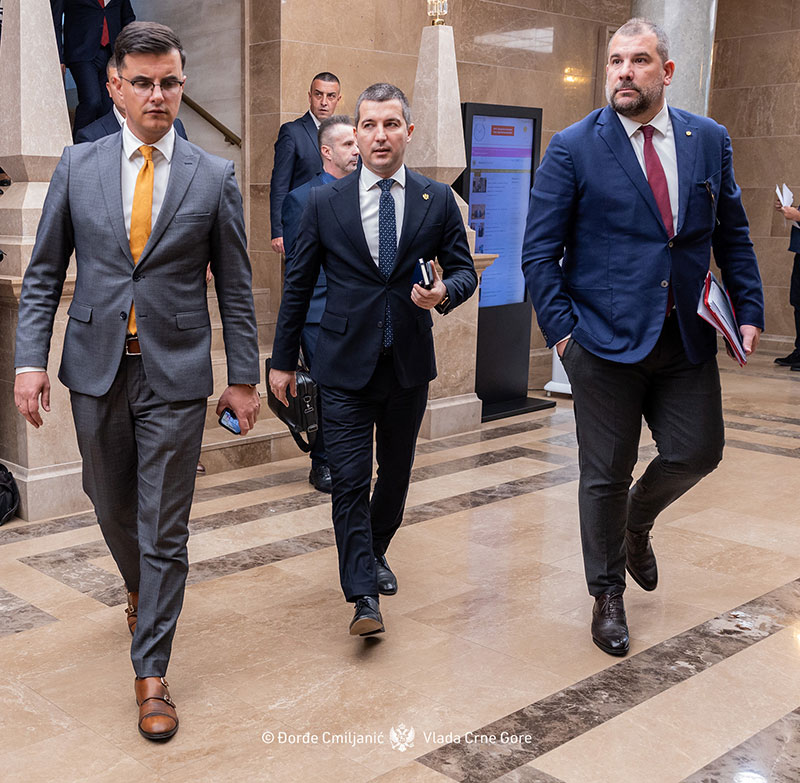
Spajić also remains silent regarding scandals in the Ministry of Culture and Media, headed by another Democratic Party official - Tamara Vujović.
The Prime Minister is equally silent about the collapse of the healthcare system, led by a cadre from his own party, Vojislav Šimun, as well as the destruction of Montenegrin tourism due to the incompetence of the relevant minister, Simonida Kordić, from the party New Serbian Democracy.
We see the Prime Minister more often in videos and photographs from Brussels to the United Arab Emirates than at home. He barely appears in the Montenegrin public sphere, behaving like a guest in his own country who views everything through „rose-colored glasses“, emboldened by Brussels’ support.
- We reaffirm our continued support for Montenegro’s ambitious goal of closing all remaining negotiating chapters by the end of the year, provided that all necessary criteria and conditions are fully met - European Commission spokesperson Guillaume Mercier said last week, making it clear that Brussels will closely monitor developments in Montenegro.
FEAR OF RECONSTRUCTION
At the end of January, the Government adopted the Report on the Implementation of Obligations from the Programme for Montenegro’s Accession to the European Union for 2025. The daily newspaper Pobjeda, which had insight into the document, quoted the assessment that „the achieved percentage indicates a moderate to good level of implementation overall, with significant differences between individual institutions“.
According to the document, none of the planned activities were fulfilled by the Office of the Deputy Prime Minister for Political System, Judiciary and Anti-Corruption, Momo Koprivica (Democrats), the Ministry of Sports and Youth, until recently headed by Dragoljub Šćekić (former member of the Socialist People’s Party), nor the Ministry of Tourism, led by Simonida Kordić (New Serbian Democracy).
According to our sources, the Government conducts monthly analyses and evaluations of the performance of the Prime Minister, deputy prime ministers, and ministers. Under this internal assessment, one deputy prime minister and as many as five ministers are ranked at the bottom with the rating „unsatisfactory“.
Since the summer, Prime Minister Milojko Spajić has been trying to find the least painful way to reconstruct the Government. However, aware that this could destabilize Montenegro during the final phase of EU negotiations, a concern also shared in Brussels, he is attempting to close negotiating chapters despite relying on an anti-European, anti-civic, pro-Russian and pro-Serbian parliamentary majority.
In EU accession negotiations, Montenegro has closed 13 out of a total of 33 chapters.
Under the new EU enlargement methodology adopted by the European Commission in 2020, negotiating chapters are grouped into six thematic clusters: Fundamentals, where Chapters 23 and 24 play a key role; Internal Market; Competitiveness and Inclusive Growth; Green Agenda and Sustainable Connectivity; Resources, Agriculture and Cohesion; and External Relations.